
How Dry Macular Degeneration Treatment is Evolving in 2025
Breakthroughs in Dry Macular Degeneration Treatment: What Patients Need to Know in 2025


Macular degeneration, particularly dry macular degeneration, is a leading cause of vision loss worldwide. This condition primarily affects older adults, impairing their ability to perform daily tasks such as reading, driving, or recognizing faces. While there is no definitive cure for dry macular degeneration yet, 2025 has brought promising breakthroughs in treatment approaches. Patients now have more hope than ever before.
This blog dives into recent advancements in dry macular degeneration treatment and explains what they mean for patients. Understanding these developments can help patients make informed decisions about their eye health.
What is Dry Macular Degeneration?
Dry macular degeneration is a condition that damages the macula, the central part of the retina responsible for sharp vision. Unlike the wet form of macular degeneration, which involves abnormal blood vessels, the dry form is characterized by the accumulation of yellow deposits called drusen. Over time, these deposits can lead to the thinning of retinal tissue, causing vision loss.
Key Symptoms of Dry Macular Degeneration:
- Blurry or fuzzy vision
- Difficulty seeing in low light
- Distorted or wavy central vision
- Loss of contrast sensitivity
- Blind spots in the center of the vision
While the progression is gradual, early detection is critical in managing the disease effectively.
Emerging Treatments in 2025
Advancements in macular degeneration research are shedding light on potential therapies. While some treatments aim to slow progression, others focus on repairing damage or preserving vision.
1. Gene Therapy
Gene therapy represents one of the most exciting developments in 2025. Scientists are exploring ways to alter or replace defective genes linked to macular degeneration. By delivering these corrected genes directly to the retina, researchers hope to slow the disease's progression or even restore lost vision. Recent trials in gene editing show exceptional promise, particularly in targeting inherited traits that increase macular degeneration risk.
2. Stem Cell Therapy
Stem cells are being explored as a potential tool to regenerate retinal cells lost to macular degeneration. This year, preliminary studies have demonstrated that transplanting healthy retinal pigment epithelial (RPE) cells derived from stem cells can potentially restore lost vision. While still in the experimental stages, the results are undeniably hopeful.
3. Nutritional Interventions and Antioxidants
Several studies in 2025 emphasize the importance of nutrition in slowing macular degeneration. A diet rich in antioxidants, particularly lutein and zeaxanthin, has been shown to support retinal health. Eye supplements containing vitamins C and E, zinc, and healthy omega-3 fatty acids continue to be part of recommended regimens.
Read more about dietary guidelines for eye health.
4. Artificial Intelligence in Diagnosis and Monitoring
Artificial intelligence (AI) has revolutionized how dry macular degeneration is diagnosed and monitored. Specialized software can now detect subtle changes in retinal scans with unparalleled accuracy, allowing for earlier interventions. Improved diagnosis tools, coupled with telemedicine, make management accessible to a wider population.
5. Low-Vision Aids
While not a cure, low-vision aids are evolving rapidly. Advanced magnifying glasses, electronic screen readers, and wearable technology are providing patients with greater independence. Innovations in this sector cater specifically to the needs of visually impaired individuals.
Comparing Existing and New Treatments
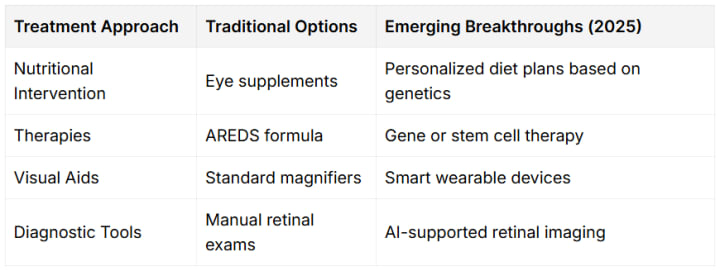
To provide better clarity, the table below highlights the differences between traditional and emerging treatments:
Pro Tip: To slow the progression of dry macular degeneration, incorporate spinach, kale, and yellow vegetables into your diet. These are excellent sources of lutein and zeaxanthin, which are crucial for eye health.
Lifestyle Changes to Support Eye Health
Making lifestyle adjustments can play a pivotal role in managing dry macular degeneration. Here are some patient-friendly recommendations:
- Quit Smoking: Smoking accelerates retinal cell damage.
- Use Sunglasses: Protect your eyes from harmful UV rays.
- Manage Chronic Conditions: Conditions like diabetes and hypertension can exacerbate macular degeneration.
- Monitor Vision Regularly: Tools like an Amsler grid can help detect changes in vision at home.
- Adopt a Healthy Diet: Include leafy greens, fish, and nuts in your meals.
Participating in Clinical Trials
If approved therapies don't address your specific condition, consider exploring clinical trials. These trials provide access to cutting-edge treatments while contributing to research that may benefit others. Websites like ClinicalTrials.gov list up-to-date studies recruiting participants for macular degeneration.
The Importance of Regular Eye Check-Ups
Routine eye exams remain a cornerstone of managing macular degeneration. Early diagnosis can slow the disease and reduce the risk of severe vision loss. Patients over 50, especially those with a family history of eye conditions, should visit their eye doctor annually.
Pro Tip: If you're noticing subtle changes in your central vision, consult an ophthalmologist immediately. Early intervention can make a significant difference.
Final Thoughts
The breakthroughs in dry macular degeneration treatment in 2025 give patients and their families a renewed sense of hope. While we are yet to find a definitive cure, advancements like gene therapy, stem cells, and AI-based diagnostics are pushing the boundaries of science. By staying informed and adopting preventative measures, patients can preserve their vision for longer.
For more information, visit the Retina Health Center’s Services and explore how they’re aiding patients with macular degeneration. It’s vital to stay proactive about your eye health today for a brighter tomorrow.
About the Creator
Franklin Norton
Franklin Norton is a dedicated health writer specializing in eye care. With a passion for vision health, he educates readers on eye conditions, treatments, and preventive care for optimal eye wellness.
Keep reading
More stories from Franklin Norton and writers in FYI and other communities.
Wet vs. Dry Macular Degeneration: Symptoms, Treatments & What to Expect
Macular degeneration is a leading cause of vision loss, especially in older adults. This condition affects the macula, the central part of the retina responsible for sharp and detailed vision. Two main forms of macular degeneration exist: wet and dry. Understanding its symptoms, treatments, and prognosis can help individuals manage their eye health effectively.
By Franklin Norton11 months ago in FYI
The Visionary Behind Modern Chhattisgarh
When Chhattisgarh was carved out as a separate state on 1 November 2000, the announcement marked only the beginning of a far more demanding journey. Creating a new state is not merely a political decision; it is an administrative test of the highest order. Systems must be built, institutions must be established, and continuity of governance must be ensured often under intense time pressure and public scrutiny.
By Muddasar Rasheed5 days ago in FYI




Comments