
Wet vs. Dry Macular Degeneration: Symptoms, Treatments & What to Expect
Wet vs. Dry Macular Degeneration: Key Differences & Treatments

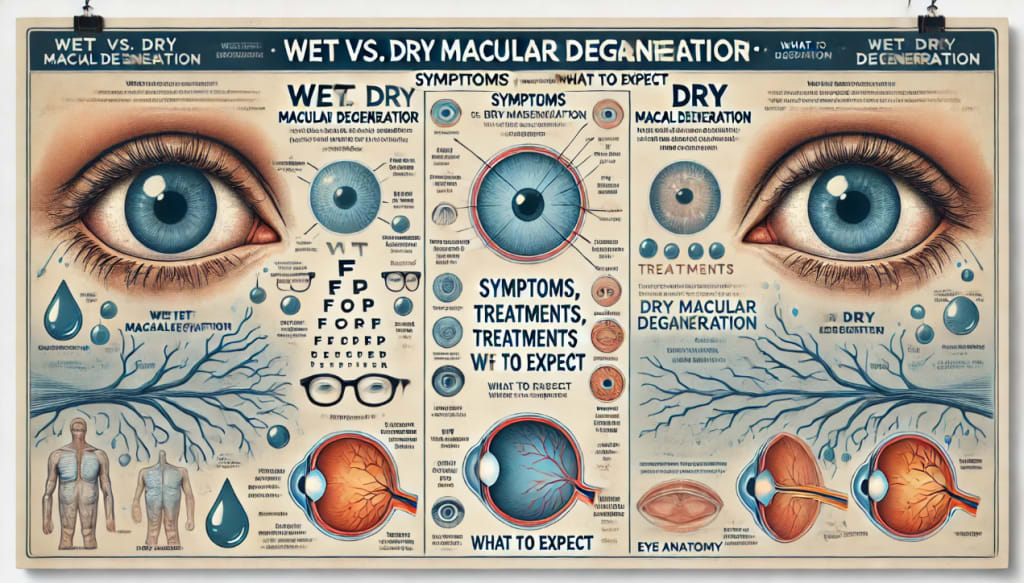
Macular degeneration is a leading cause of vision loss, especially in older adults. This condition affects the macula, the central part of the retina responsible for sharp and detailed vision. Two main forms of macular degeneration exist: wet and dry. Understanding its symptoms, treatments, and prognosis can help individuals manage their eye health effectively.
What Is Macular Degeneration?
Macular degeneration is a progressive eye disease primarily affecting those aged 50 or older. It occurs when the macula deteriorates, impairing the ability to see fine details, read, or recognize faces. The disease has two primary forms:
- Dry Macular Degeneration (the more common type)
- Wet Macular Degeneration (less common but more severe)
Dry vs. Wet Macular Degeneration
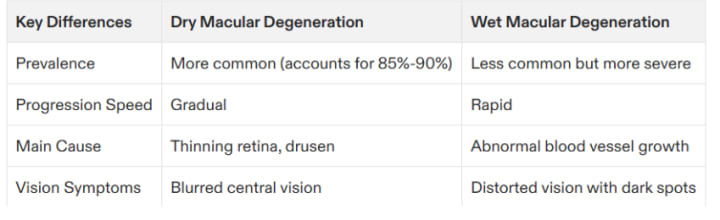
While both types target the macula, they differ in how they develop and affect vision.
Dry Macular Degeneration:
- Cause: The thinning of the macula and the accumulation of tiny clumps of protein called drusen.
- Progression: Gradual and slow, typically over several years.
- Vision Impact:
- Difficulty seeing in low light.
- Colors appear less vibrant.
- Gradual blurring at the center of your vision.
Pro Tip: Schedule regular eye exams, especially after age 50, even if you experience no symptoms, as early detection can slow progression.
Wet Macular Degeneration:
- Cause: Abnormal blood vessel growth under the retina leads to leakage of blood and fluid.
- Progression: Rapid and can lead to sudden loss of central vision.
- Vision Impact:
- Straight lines appear distorted or wavy.
- Sudden dark spots in the central field of view.
Symptoms to Look For
Macular degeneration symptoms often depend on the type and stage of the disease. Here's a breakdown:
Common Symptoms:
- Blurred or reduced central vision.
- Difficulty reading small print.
- Trouble recognizing faces.
Symptoms Specific to Wet Macular Degeneration:
- Straight lines appear bent or wavy.
- Dark spots or blind spots in the center of vision.
- The colors seem dull or faded.
Symptoms Specific to Dry Macular Degeneration:
- Gradually experiencing a hazy central vision.
- The need for brighter light when reading.
Dry Macular Degeneration Treatment
Although there's no permanent cure, there are effective management strategies to slow the progression of dry macular degeneration and maintain quality of life.
Key Treatment Options:
1. Lifestyle Changes:
- Follow a nutrient-rich diet with antioxidants like leafy greens, fruits, and fish.
- Avoid smoking, as it accelerates macular damage.
- Stay physically active to boost blood circulation to the eyes.
2. AREDS Supplements:
- Studies show that specific vitamins and minerals (AREDS formulas) may reduce the risk of progression to advanced stages.
- Common components include vitamins C and E, lutein, zinc, and copper.
3. Adaptive Technology:
- Use magnifying devices or special glasses to improve vision for daily tasks.
4. Routine Monitoring:
- Regular eye exams can track changes in the retina and adjust your care plan as needed.
You can visit the American Academy of Ophthalmology for more information about dry macular degeneration treatment.
Wet Macular Degeneration Treatment
Wet macular degeneration develops more aggressively, but there are highly effective treatments available to help manage symptoms:
Popular Treatment Options:
1. Anti-VEGF Therapy:
- Medications like ranibizumab or aflibercept target and block VEGF, a protein that promotes blood vessel growth.
- Delivered through injections into the eye, this treatment helps stabilize or, in some cases, improve vision.
2. Laser Therapy:
- A specialized light beam seals leaking blood vessels, slowing further damage.
3. Photodynamic Therapy:
- A combination of medication and laser activation to target abnormal blood vessels directly.
4. Close Monitoring:
- Individuals with wet macular degeneration need frequent eye check-ups to assess treatment response.
What to Expect During Treatment
Regardless of the type of macular degeneration, early diagnosis improves outcomes. Here's what you can expect during your treatment process:
- Frequent Follow-Ups: Your eye doctor will closely monitor the progression and response to therapies through regular visits.
- Ongoing Management: While treatments aim to control symptoms, they rarely restore lost vision. Maintaining a proactive approach is key.
- Lifestyle Modifications: Creating a low-vision-friendly environment, like using brighter lighting and minimizing glare, can make daily life easier.
Preventing Macular Degeneration
While not all cases of macular degeneration are preventable, healthy habits can significantly reduce your risk. Consider adopting the following:
- Eat a Balanced Diet: Focus on foods high in omega-3 fatty acids, zinc, and antioxidants.
- Don't Smoke: Smoking doubles your risk of developing macular degeneration.
- Protect Your Eyes: Wear sunglasses with UV protection to shield your eyes from harmful rays.
- Get Regular Eye Exams: Detect early signs of degeneration for timely intervention.
When to Seek Help
If you notice changes in your vision, including sudden blurring, distortions, or difficulty seeing clearly, consult an eye doctor immediately. Early medical intervention can significantly slow the process of vision loss.
For more information about macular degeneration and its treatments, visit this guide on macular degeneration services.
Pro Tip: If you notice sudden changes in your vision, such as wavy lines or blind spots, seek immediate eye care to prevent further damage.
Final Thoughts
While impactful, macular degeneration can often be managed with vigilance and proper care. Lifestyle changes, medical treatments, and assistive tools have proven effective for dry and wet macular degeneration treatment strategies.
By staying informed and working closely with your healthcare provider, you can take proactive steps to protect your vision and maintain your quality of life.
About the Creator
Franklin Norton
Franklin Norton is a dedicated health writer specializing in eye care. With a passion for vision health, he educates readers on eye conditions, treatments, and preventive care for optimal eye wellness.
Keep reading
More stories from Franklin Norton and writers in FYI and other communities.
7 Practical Steps to Protect Your Vision from Macular Degeneration
Maintaining healthy vision becomes more important as we age, especially when it comes to conditions that can slowly impact central eyesight. One such concern is macular degeneration, a progressive eye disorder that affects the retina. While you cannot control every risk factor, you can take smart steps to protect your sight. Many people today are also exploring dry macular degeneration treatment, but prevention and early care remain equally essential.
By Franklin Nortonabout a month ago in FYI


Comments
There are no comments for this story
Be the first to respond and start the conversation.