

The human brain is the most complex structure that we know of in the universe. So far. Made up of billions of cells with trillions of connections between them, it’s unfathomably complicated. It’s also the only thing that has ever named itself.
But, this is all common knowledge.
Here is the uncommon part.
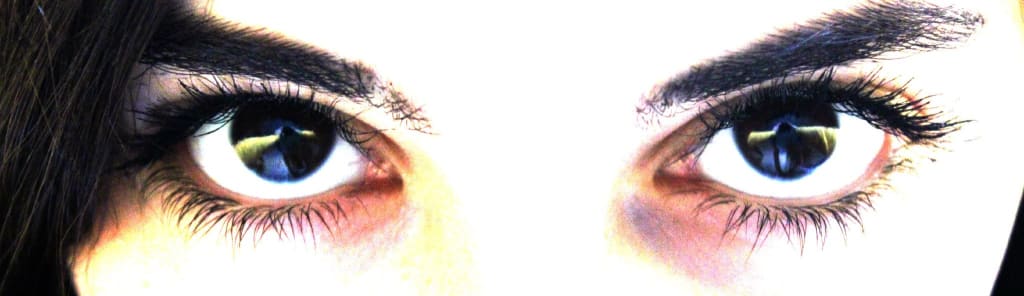
Did you know that your eyes are actually a part of your brain? Specifically the retina and optic nerve. It’s the only part of the brain we can see directly from the outside. Embryonic neural development studies have shown us how the eyes develop as part of the forebrain and protrude outwards with time.
Oh and the eyes don’t actually ‘see’ anything.
Put extremely simply, the eyes are scanners for light. We need light to see, which is definitely not a problem in our world today (#lightpollution). As light enters the eye through the pupil, it is concentrated onto the retina at the back of the eye. The light rays then get transformed into electrical impulses. Electricity is the language of the brain. These impulses travel via the optic nerve to the visual cortex, which essentially does the job of ‘seeing’ as it decodes the information.
So the eyes as we know them are organic machinery that, when awake, are constantly scanning the outside world for visual data.
But as it turns out, this is a two-way system.
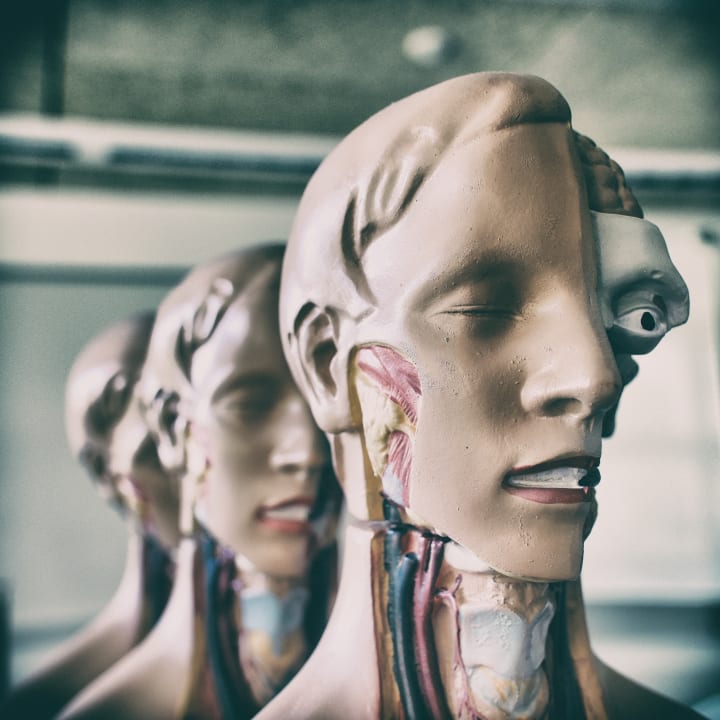
The eyes, in turn, provide a window - pun not intended - into the brain. Eye movement patterns are closely linked to a multitude of processes involving decision making, emotions, thoughts and memory amongst others. They reflect certain information about brain function and can also provide information into neurodegenerative conditions like Alzheimer’s, as well as cognitive ageing in general.
Suddenly, all those scenes in medical dramas where the doctor shines light into the patient’s eyes to assess neurological damage makes SO much sense.
Or how you and your best friend can communicate near-telepathically with one look. One look into each other’s eyes and you just know exactly what is being said.
Also brings to mind how whole eye transplants are currently not possible. But, when they become so, we’ll basically be attaching a part of someone’s brain onto another's. The eye being from presumably someone dead. Which brings to mind a whole other set of existential questions.
More interestingly, Leonardo da Vinci believed the soul to be located in the optic chiasm.
The optic chiasm is located at the bottom of the brain and is where the optic nerves from the eyes cross, forming an X shape. This structure is found in all vertebrates. So, if we assume Leonardo’s hypothesis to be correct, does that mean all vertebrates in fact have souls? Maybe.
Maybe not.
When it comes to theories about the location of the soul, suffice to say we have many intellectual heavyweight contenders who rose to the challenge.
René Descartes proposed the pineal gland as a possible location. His reasoning invoked symmetry within the brain as an explanation as he observed that every structure of the brain is coupled except for the pineal gland. This led him to believe the proverbial third eye to be the seat of the human soul.

Regardless of the specifics, the general sentiment remains strong. So the whole eyes being the windows to the soul thing might have some merit to it.
Especially if you are team #cephalocentricsoul. Like Pythagoras. And Plato. And Galen.
But let's not forget team #cardiocentricsoul. This group believed the soul to be located in the heart. Like the Stoics. And the Epicureans. And Aristotle.
I know what you're thinking.
Plato and Aristotle on opposing teams, what a shocker.
Personally, I’m not too concerned with the mechanics of it all. But the cephalocentrics might have this one.
Sorry Aristotle.




Comments
There are no comments for this story
Be the first to respond and start the conversation.