
Eight mysteries of the Moon
As the closest planet to us, the moon is often compared to Earth's eighth continent. We have almost as many wonderful ideas about it as there are unanswered questions about it. Returning to the moon will be a new journey to find answers and realize our dreams.
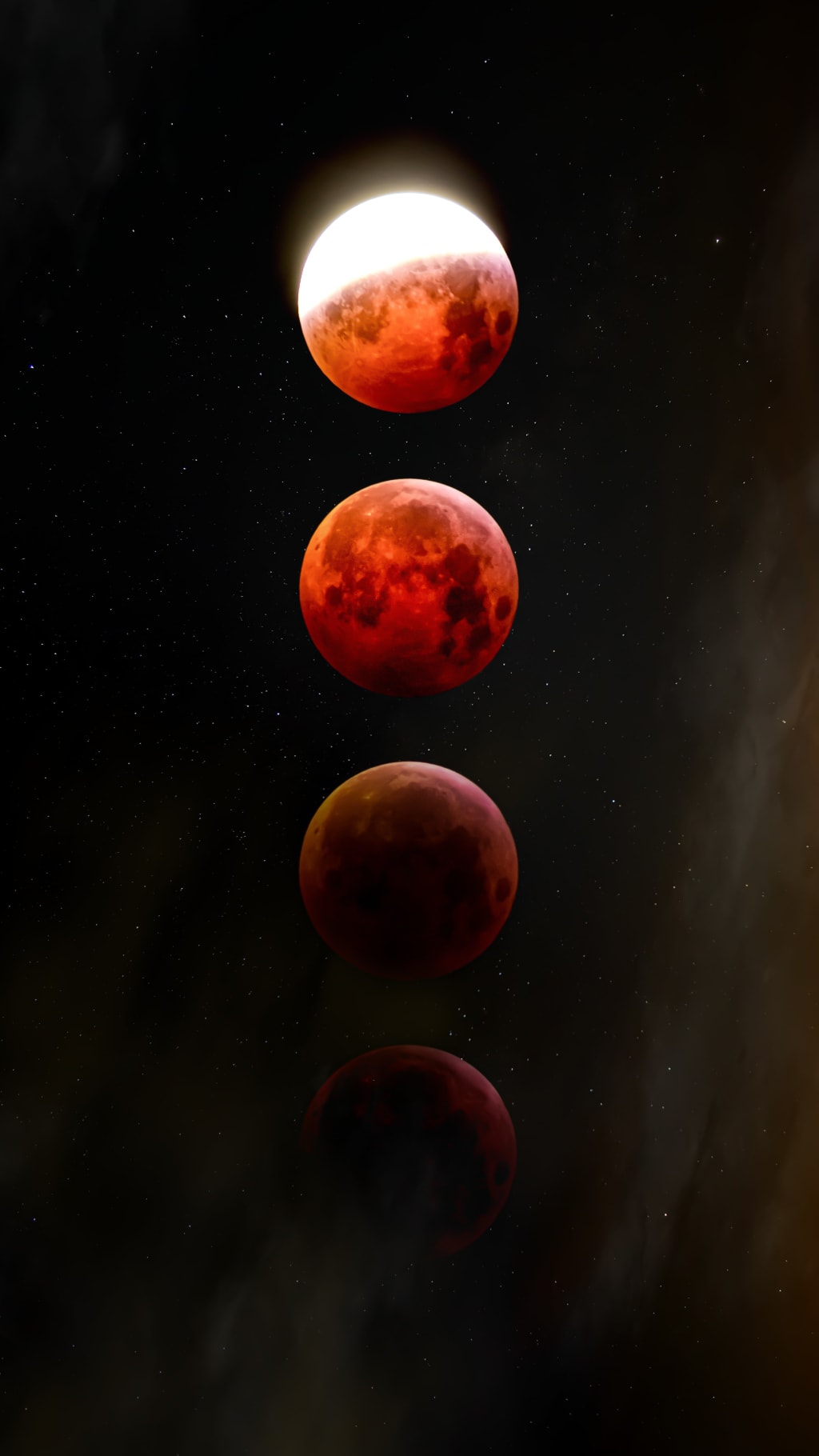
As the closest planet to us, the moon is often compared to Earth's eighth continent. We have almost as many wonderful ideas about it as there are unanswered questions about it. Returning to the moon will be a new journey to find answers and realize our dreams.
Mystery # 1: Where Did the Moon come from?
"The origin of the moon" is a very old question. The hypotheses of the origin of the moon since the 18th century can be divided into three categories: the homology with the earth, the splitting of the earth and the moon, and the capture of the earth and the moon. "Homology" is one of the earliest lunar origin hypotheses, which holds that the moon and the Earth have the same origin. According to the splitting theory, when the Earth was still melting in the early solar system, the Earth was spinning so fast that some of the material was thrown away and formed the moon. Some people even think that the Pacific Ocean is the scar left by the separation of the moon. The capture theory, proposed after the homology theory and the split theory, holds that the moon and the Earth were formed in different places. By chance, the Earth captured the moon moving nearby and became its satellite. All three hypotheses have been supported by some experiments, but they are difficult to justify themselves on some issues.
In the mid-1980s, an American astronomer came up with a new hypothesis that broke out of the three boxes. According to this hypothesis, in the early formation of the solar system, a primitive Earth and a Mars-sized celestial body formed in a space equivalent to the existing Earth-moon system. During their respective evolution, they formed metal cores dominated by iron, and the mantle and shell were composed of silicate. By chance the two bodies collided, knocking Earth out of orbit and shattering a Mars-sized body. The gas and dust from the earth's gravity "fall" around the Earth, through accretion, the first to form a few small bodies, and then like a snowball to form the moon. To some extent, this hypothesis is compatible with the advantages of the three classical hypotheses, and has been supported by some geochemical and geophysical experiments, but has not been conclusively confirmed.
Mystery # 2: The mystery of the age
Analysis of the rocks brought back from the moon has found that 99 percent of them are older than 90 percent of the oldest rocks on Earth. The first rock that Apollo astronaut Neil Armstrong picked up after landing in the Sea of Silence was 3.6 billion years old. Other rocks are 4.3 billion, 4.6 billion, and 4.5 billion years old. It's almost as old as the Earth and the solar system itself, and the oldest rocks on Earth are 3.7 billion years old. In 1973, the World Lunar Symposium determined that a moon rock was 5.3 billion years old. Adding to the mystery, these ancient rocks were taken from what scientists believe is the youngest part of the moon. Still, the rock is young compared to the surrounding soil. The lunar soil has been analyzed to be at least a billion years older than the rocks. When scientists performed chemical measurements, they found that the soil was unrelated to rock and appeared to have come from elsewhere.
Mystery 3: The mystery of shape
Back in the late 1700s, French mathematician Pierre Simon Laplace noticed that the irregularly shaped moon "shivers" as it rotates. "The mystery is that the moon is so flat," Maria T. Juber, a professor of geophysics and planetary science at the Massachusetts Institute of Technology, told The New York Times. The moon is not a regular sphere, but a celestial body with a polar diameter slightly smaller than the diameter of the moon's equator (hereinafter referred to as "the equator"). If you look closely at the shape of the moon, it looks as if it had been squeezed between the poles with your thumb and forefinger.
In the 1960s and 1970s, space probes found that the radius of the moon, which lies at the line between the moon and the Earth's core, was elongated, meaning that if the moon were split in half along the equator, the cross-section would not be a perfect circle, but rather an ellipse like a football, with the "tip" pointing towards the Earth. But no one has yet come up with a fully convincing explanation for the cause of the moon's current shape.
One hypothesis is that the orbit radius of a celestial body is related to the rotational speed of the celestial body, so a one-to-one rotation period ratio can explain the current irregular shape of the moon. Other scientists have hypothesized that the moon's initial rotation period ratio of 3 to 2, or three revolutions for every two revolutions, lasted for at most a few hundred million years before tidal forces slowed the moon's rotation to stabilize to its current ratio of 1 to 1. The calculations suggest that this period of faster rotation than revolution may have provided enough force to prepare the moon for its current shape.
Mystery 4: The mystery of quality
Another mystery about the shape of the moon is that the side facing the Earth is very different in material composition and appearance from the side facing away. The former has a much thinner crust than the other side and has vast plains of basalt, called moon seas, which are the result of volcanic eruptions on the moon's surface long ago. The side facing away from Earth has a much thicker crust, more craters, and almost no moon sea.
In part, the higher density of basalt in the lunar sea keeps the moon's center of mass away from its geometric center, by about 1. 6 km. However, the process of migration is not clear.
Mystery 5: The mystery of an escape
Laplace, a Frenchman who discovered the moon's irregular shape in the late 18th century, failed to see that it was moving away from the Earth. The moon moves away from the Earth by about 3. 8 cm. Scientists estimate that, instead of being about 380,000 kilometers apart today, the early moon and Earth were probably only about 2. Sixty thousand kilometers. As time goes on, the moon will move further and further away from us.
Mystery 6: The glassy surface of the moon
The Apollo astronauts found that many parts of the moon's surface were covered with a glassy material, suggesting that the surface appeared to have been scorched by hot fireballs. As one scientist pointed out: The moon is covered with glass. Analysis by experts proved that the glassy material was not the result of the impact of a giant meteorite. Some scientists believe it was the result of an explosion in the sun.
Myth # 7: The Moon's radioactivity
The fact that the moon's eight-mile-thick surface is radioactive is also striking. When the Apollo 15 astronauts used thermometers, they found surprisingly high temperatures, suggesting that the heat flow around the Apennines was really hot. It has been speculated that the moon's core must be hotter, but, puzzlingly, it is not. The heat is emitted from a large amount of radioactive material on the moon's surface, but where did the radioactive material (uranium, thallium, and plutonium) come from?
Mystery 8: The Moon's magnetic field
Earlier surveys and studies had suggested that the moon had a little magnetic field, but analysis of moon rocks has shown that it had a strong magnetic field. If the moon had ever had a magnetic field, it would have had an iron core, but solid evidence suggests that the moon cannot have such a core. And the moon cannot get a magnetic field from another body, such as the Earth, because if it were, it would have to be so close to the Earth that it would be torn apart by the earth's gravity.
About the Creator
How Trial and Error Built the Foundations of Aviation
When we think about aviation today, it’s easy to picture sleek aircraft, precise engineering, and highly controlled systems that make flying feel almost routine. But the reality is that aviation was not born from certainty or perfect calculations. It emerged from trial, error, and relentless experimentation, often driven by individuals willing to risk failure again and again. The foundations of aviation were not built in laboratories alone they were shaped in open fields, improvised workshops, and moments of painful learning.
By Beckett Dowhan6 days ago in FYI



Comments
There are no comments for this story
Be the first to respond and start the conversation.