
Three mysteries of maritime history
In world maritime history, there have been a lot of mysterious shipwrecks, and there have been a lot of missing mystery cases, among which, "Waratah", "Ming Heng" and "Jenny" and called "three mysteries in the world maritime history".
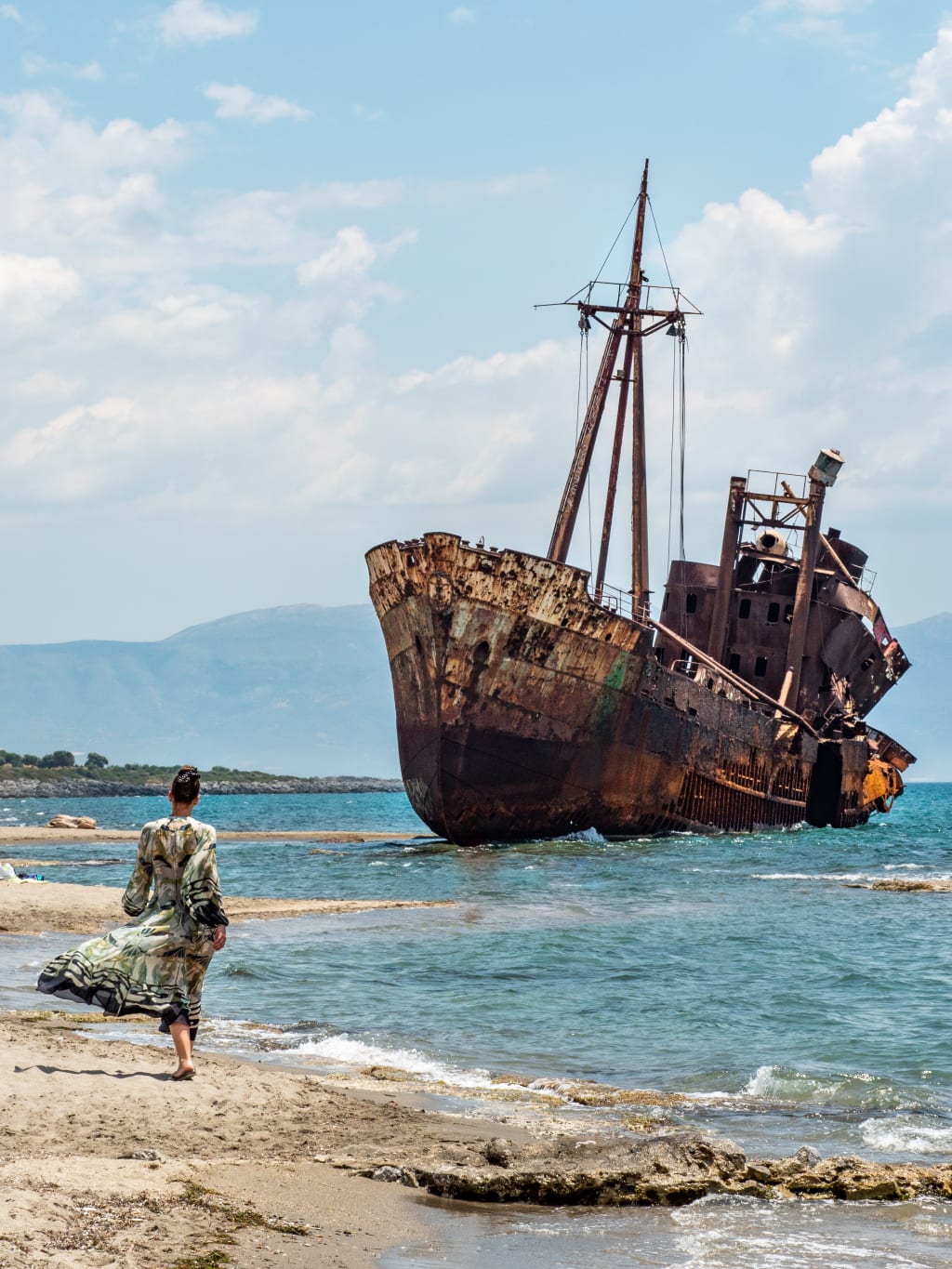
The mystery of the disappearance of Waratah
In 1908, the British Blue Anchor Line commissioned the Buckley & Curle Shipbuilding Company to build a 930,000-ton ship, about 140 meters long. The 10,000-ton vessel, named Waratah, was put to sea in November of that year.
During this voyage, the ship has been rocking and dangerous. During the voyage, some passengers were injured by the goods falling from the shelves because of the shaking. Some passengers were not seasick, but after taking the ship, they got vertigo because of the continuous shaking of the ship. Some passengers even swore that they would never take the ship again.
The first trial voyage was from London to Australia. William Bragg, professor of physics at the University of Leeds, was on board at the time. He was not satisfied with the ship. He thought that sitting on the ship was like sitting on a volcano. His life was in danger at any time. "The center of tilt of the ship was too low, under the center of gravity of the ship, and that was a mistake," he said. If the ship had tilted, it would have turned upside down!" All the 569 passengers and 154 crew members on the maiden voyage sensed the danger of Waratah.
In July 1909, the Waratah made her last voyage from London to Cape Town via Durban. Before sailing, Lloyd's, which inspected the vessel, announced that it had carried out a thorough inspection of the Waratah and that it was clear and seaworthy.
But the Waratah's chief engineer, Halder, was so frightened that he wrote a letter to his father before he set sail. His father later released the letter to the public. The letter read: "The ship is top-heavy and too unsafe. I won't be working here after this voyage..."
The Waratah weighs anchor and sails out to sea, but passenger Sawyer feels very uneasy. Three nights on the drive from Sydney to Durban, he had been dreaming, and it was the same nightmare. He dreamed of an evil spirit, clad in armor and covered in blood, brandishing a longsword and Shouting his name. When he woke up, he felt that the boat was going to turn over, as if it had been drifting in the sea and suddenly met with a storm. As soon as the ship had passed Melbourne, Sawyer felt that it was leaning to one side and would not recover for a long time, and then after a great deal of rocking, it came to a steady state. Meanwhile, many passengers fell from their bunks to the floor.
As soon as the Waratah arrived in Durban, Sawyer, in extreme nervousness, got off the ship with his luggage and switched to another boat. The crew and other passengers, seeing how nervous he looked, laughed at him from behind, but Sawyer insisted on getting off the ship amid jeers. But when the ship set sail again from Durban, on its way to Cape Town, it disappeared from the world forever.
The Waratah did not arrive in Cape Town on time. It was only after a few days that people took it seriously and began to investigate it. According to the tramp Harrow, the crew of the Harrow also saw the Waratah moving along the coastline on the morning of July 2. At the time, they said, the Waratah was not tilting or swaying, and it was riding reasonably well.
On July 28, a massive storm swept across the Indian Ocean. The captain of the Kranmahindy, which survived the storm, later spoke of the Waratah.
The captain said that before the storm, he had seen the Waratah and that it was traveling reasonably well. But the storm was so strong that the sea seemed to tip over and the Waratah was probably dead. In particular, none of the 211 passengers and crew survived, leading to speculation that the Waratah was lost in a storm and sank to the bottom of the sea. But why didn't it send out a distress signal?
Although many people suspected that the Waratah ship's quality problems since its wreckage have not yet been found, it is impossible to determine whether the Waratah ship's real sinking was caused by quality problems.
The mystery of the Geni ice drift
In the icy waters of the Antarctic Sea, with a sudden, deafening rumble, an iceberg has split open, revealing a strange ship.
This was the scene encountered by the British whaler Hope, which was operating in the area on 22 September 1960. Captain Blyton immediately ordered the whalers to approach the ship. The people aboard the ship were quiet and frightening. The hull is battered but intact. The scene inside was even more gruesome, with eight frozen bodies sprawled on the ground. One of them was a woman, perhaps the captain's wife, and beside it was the body of a dog. In the cabin, the captain reclined in his chair, pen in hand, in the same posture as when he had frozen to death.
A search was launched to find out what the ship was and a well-preserved sailing diary was found. When they opened it, people screamed. The ship was the Genie, which suddenly disappeared 37 years ago!
The captain of the Genie wrote in his last diary entry: "To this day... After 71 days, there is nothing left to eat. I am the last man to die.
On January 17, 1923, the Geni was sailing to Peru when it encountered an ice floe. It sank into a huge ice floe and was never able to escape. In this deathly quiet and cold iceberg floating on the sea, the people on board made a life and death struggle and finally died. Icebergs carrying a ship with eight dead bodies have been drifting ghostly in the boundless ocean for 37 years! Exactly how Genie drifted during those 37 years is a mystery.
The mystery of the Ming Hang sinking
"Ming HENG" IS THE most FAMOUS NAUTICAL transport ship in Britain in the 1960s. This modern container ship of 45,000 tons has been to four continents and five oceans. In December 1978, while sailing in the Atlantic Ocean into the North Sea, it disappeared without a sound. All 28 people on board survived. A few days later, several of the ship's life rings were found near the crash site.
To this end, the shipping company asked British Navy submarines to help find the Ming Hang. The submarine surveyed the seabed but found no trace of the wreck. In early 1979, the Bremerhaven Maritime Court opened an investigation into the crash of the Ming Hang. The investigation found that during the accident that day the whole sea area is not big, and the ship's equipment advanced, even if the reef also have time to send out a distress signal. But it is hard to believe that the ship did not say anything before it sank. It was not until June 1980, with the help of the Edinburgh Institute of Geography, that it became clear that there was only one possible cause for the sinking of the Ming Hang.
A 1979 survey of the North Sea floor by the Edinburgh Institute of Geography found that it was riddled with tightly packed craters. Most of these volcanoes are dead, but a few are still spewing lava. Marine geologists conclude that the "singing" crash, is likely to be when it is sailing in the crater of a live crater, and when its strong spewing lava, causes water mass disturbance sharply, causing "MingHeng" to fall into the trough, soon sank by the waves of the sea and hidden into the crater, suspension of magma and immediately covered the sunken ship. As for the life rings, which had been attached to the outer wall of the ship, they had risen with the water when the ship sank, and had escaped being destroyed with the ship.
But many experts say that will only be confirmed when Marine science reaches a point where the remains of the Ming Hang are found in a crater in the western North Sea larger than the size of the ship's hull. Therefore, IT IS DIFFICULT to uncover THE mystery of the disappearance of the giant ship "Ming Hang", let alone confirm that the "Ming Hang" is sinking.
About the Creator
Neutraceutical Packaging Market Size and Forecast 2025–2033
Neutraceutical Packaging Market at a Glance The Neutraceutical Packaging Market is projected to expand from US$ 4.92 billion in 2024 to US$ 7.63 billion by 2033, growing at a CAGR of 4.99% from 2025 to 2033. This steady growth reflects the accelerating global demand for dietary supplements, functional foods, herbal products, and wellness beverages. Rising health awareness, aging populations, sustainability expectations, the rapid growth of e-commerce, and evolving regulatory frameworks are reshaping how nutraceutical products are packaged, protected, and presented.
By Aaina Oberoiabout 3 hours ago in FYI



Comments
There are no comments for this story
Be the first to respond and start the conversation.