
Creating the perfect living room with a stunning plank table
Why Interior Design Is So Exciting
My journey to create the perfect living room began when I spotted an extraordinary oak plank table at a small woodworking shop. The craftsman explained how each plank told a story through its grain patterns and natural imperfections. That table became the centerpiece around which my entire living room design evolved. The raw beauty of solid wood brought warmth and character that no mass-produced furniture could match. From that moment, I understood that designing a living room around a quality plank table isn't merely about placing furniture—it's about creating a space where natural materials, thoughtful arrangement, and personal style merge. The table's organic presence grounds the room while allowing other elements to complement rather than compete with its rustic charm.
The hunt for the perfect plank table
Finding the right plank table changed everything about my living room design process. I spent weekends driving to small woodworking studios, exploring lumber yards, and visiting specialty furniture shops across three counties. Each place offered different wood types, finishes, and crafting techniques. Oak carried a traditional strength, walnut brought deep sophistication, while pine offered rustic charm at a gentler price point. I touched countless surfaces, feeling the difference between hand-planed smoothness and more textured finishes that preserve saw marks as character elements. The search narrowed when I met Marcus, a third-generation woodworker who specialized in reclaimed barn wood and using it for Danish design furniture. His workshop smelled of sawdust and linseed oil.
"Each table carries stories," Marcus explained, running his hand across a massive elm slab. "This wood stood as a tree for over a century before becoming a barn beam for another fifty years." The marks, nail holes, and color variations weren't flaws but character—evidence of time passing. Unlike factory-made pieces with their perfect uniformity, these planks displayed authentic personality.
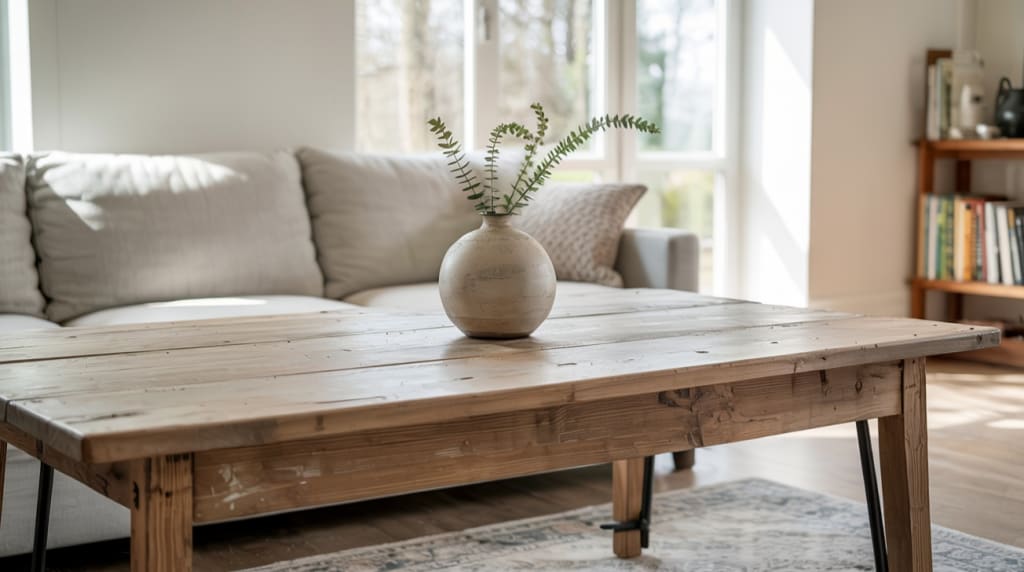
I eventually chose a seven-foot table made from reclaimed oak barn beams. The surface showed subtle variations in color—honey ambers alongside deeper chocolate tones where the wood had aged differently. Marcus had preserved a dramatic crack by filling it with black epoxy, creating a river-like feature running the length of the table. The legs were simple but substantial—blackened steel in a minimal design that let the wood remain the star. When delivered, the table completely transformed my living room. Its presence commanded attention without overwhelming the space. The planks' natural patterns drew the eye, creating an immediate conversation piece that somehow managed to feel both statement-making and comfortably familiar.
Building the room around the centerpiece
With my magnificent plank table now the heart of my living room, every design decision flowed from its presence. The table's warm oak tones dictated a color palette that would complement rather than compete. I chose wall colors in soft, muted sage green that made the honey-colored wood pop without overwhelming it. The flooring needed careful consideration - too similar would blend the table into obscurity, too contrasting might create visual tension. I settled on slightly darker walnut flooring with minimal grain patterns, creating a foundation that supported the table's statement without matching it exactly. This would fit my plank table from Nordisk Planke perfectly.
Lighting became crucial for showcasing the wood's natural beauty. A simple pendant light hung at perfect height above the table - not so low as to block sightlines across the room, but positioned to cast gentle light across the wood surface, highlighting its grain patterns and texture. For evening ambiance, small accent lights in the room corners created depth and warmth, making the table glow from different angles as darkness fell.
The seating arrangement demanded equal thought. The scale of chairs needed to balance the table's substantial presence - too delicate and they'd disappear, too bulky and the room would feel cramped. I discovered mid-century inspired chairs with clean lines and natural leather that aged beautifully alongside the wood. Their slightly angled backs created visual interest while remaining comfortable for long dinners with friends.
Negative space played a surprising role in the design process. By resisting the urge to fill every corner, I allowed the table proper breathing room. This deliberate spacing let the eye travel naturally around the room, always returning to the plank table as the focal point. The surrounding furniture pieces - a low-profile sofa, two armchairs, and a minimal media console - were positioned to create conversation areas that functioned independently yet remained connected to the table area. The room now flowed organically, with the plank table serving as both practical surface and sculptural element. Guests invariably ran their hands across its surface upon entering, drawn to its tactile quality and natural beauty.
Quality considerations for your plank table
Selecting the right plank table involves understanding key quality markers that separate exceptional pieces from merely adequate ones. My research during the selection process taught me valuable lessons about wood quality and craftsmanship that transformed my approach to furniture buying forever.
Wood selection forms the foundation of any great plank table. The craftsman who built mine explained that lumber cut from the heart of the tree typically offers greater stability and fewer potential issues with warping or cracking over time. He showed me how to recognize quarter-sawn lumber by its distinctive grain pattern—straight lines with occasional flecks that catch light beautifully. This cutting method produces boards less prone to cupping or twisting as seasons change and humidity fluctuates in your home.
The joinery methods used in your table construction directly impact its longevity. Quality tables employ techniques that allow for natural wood movement while maintaining structural integrity. During my search, I examined numerous tables and learned to look for:
- Breadboard ends with proper floating tenons that allow for seasonal expansion
- Mortise and tenon joints rather than simple butt joints secured only with screws
- Solid wood drawer construction with dovetail joints rather than stapled particleboard
- Hand-cut joinery that fits precisely without gaps or excess glue
- Subtle details like chamfered edges that prevent splintering over decades of use
Finish quality proved equally important. Many mass-market tables use heavy polyurethane coatings that sit atop the wood rather than penetrating it. These create a plastic-like barrier that, while initially protective, can chip or peel over time. My table featured hand-rubbed oil finishes that penetrated the wood fibers, enhancing grain patterns while providing protection that could be easily refreshed without stripping and refinishing the entire piece.
The base construction determines both stability and style. Cheaper tables often employ flimsy aprons and legs that wobble after minimal use. My table featured a substantial trestle design with thick stretchers and wedged tenons—techniques dating back centuries. The craftsman demonstrated how the base disassembled using traditional joinery methods rather than hardware that could loosen or fail. This approach meant the table could be passed down for generations, developing a rich patina that only improves with age.
Styling around your plank table
Creating harmony between my plank table and the surrounding living room elements required thoughtful styling choices. The table's natural character demanded accessories that complemented rather than competed with its organic beauty. I began with textile selections—a neutral, textured runner that showcased the wood grain while protecting the surface during casual meals. For formal occasions, I remove it entirely, letting the bare planks speak for themselves.
Table décor presented both challenges and opportunities. Too many items cluttered the beautiful surface, while too few left it feeling unfinished. I discovered that grouping objects in odd numbers—threes and fives—created visual balance without overwhelming the wood. A simple arrangement of three handmade ceramic vessels in varying heights became my go-to centerpiece, their earthy glazes picking up the honey and amber tones in the oak. For dinner parties, I swap these for low candle holders that provide ambiance without blocking conversation across the table.
Scale matters tremendously when styling around a substantial plank table. My early attempts at decorating included small, delicate items that visually disappeared against the robust wood surface. Learning from these missteps, I began selecting fewer but larger pieces with significant visual weight. A substantial hand-thrown bowl, a thick cutting board stood on edge, or a large vintage wood box—these items hold their own against the table's presence. The materials also matter greatly. Glass reflects light beautifully across the wood grain, while metals add contrast and visual interest.
The surrounding room elements needed equal consideration. Wall art above the table area features natural themes and materials—botanical prints in wood frames, a woven wall hanging with natural fibers, and a large-format photograph of a forest printed on textured paper. These pieces echo the table's organic quality without being too literal or themed. Books stacked on nearby surfaces feature spines in complementary colors—deep greens, warm browns, and soft creams—creating visual cohesion throughout the space. Plants add living elements that connect the indoor space with the natural origins of the wood itself. I selected varieties with interesting textures rather than showy flowers—a fiddle leaf fig with large, glossy leaves, a trailing pothos whose vines soften hard edges, and small pots of succulents grouped on window sills.
The heartbeat of a well-designed space
My plank table journey transformed not just my living room but my entire approach to home design. What began as a search for a single piece of furniture evolved into a philosophy about creating spaces with soul and substance. The table now sits at the center of countless family meals, game nights with friends, and quiet mornings with coffee and newspapers spread across its surface. Its presence has encouraged slower living—the kind where you notice grain patterns in wood and the way sunlight changes throughout the day.
The design process taught me that the most beautiful rooms grow organically around pieces with character and craftsmanship. My plank table anchors the space with its honest materials and thoughtful construction. The room breathes around it, with each element—from lighting to textiles to wall colors—playing a supporting role to this central character. Visitors often comment not on individual pieces but on how the room feels—warm, welcoming, and somehow both polished and relaxed.
Creating a living room around a statement plank table isn't about following trends or rules. It's about honoring materials, understanding proportion, and allowing natural beauty to shine. My space now tells a story that began in a forest, continued through a craftsman's workshop, and now unfolds daily in my home.
About the Creator
Michael Nielsen
Working with interior design and home decoration. Enjoy blogging and having a good time with friends and family. Got two cats and a mountain bike I don't quite use enough.
Keep reading
More stories from Michael Nielsen and writers in FYI and other communities.
Danish Design Furniture
Danish furniture has remained a favorite across the globe for decades, thanks to its unique blend of simplicity, practicality, and elegance. Each piece feels thoughtfully crafted, with clean lines and an understated beauty that suits almost any interior. It’s not just furniture – it’s an approach to design that values both function and aesthetics equally.
By Michael Nielsenabout a year ago in Lifehack


Comments