
Composite Strapping vs. Steel Strapping: Which is Better for Your Needs?
Composite vs. steel strapping—which is better? Compare strength, cost, and corrosion resistance to choose the right solution. Source from a top composite strapping manufacturer China!

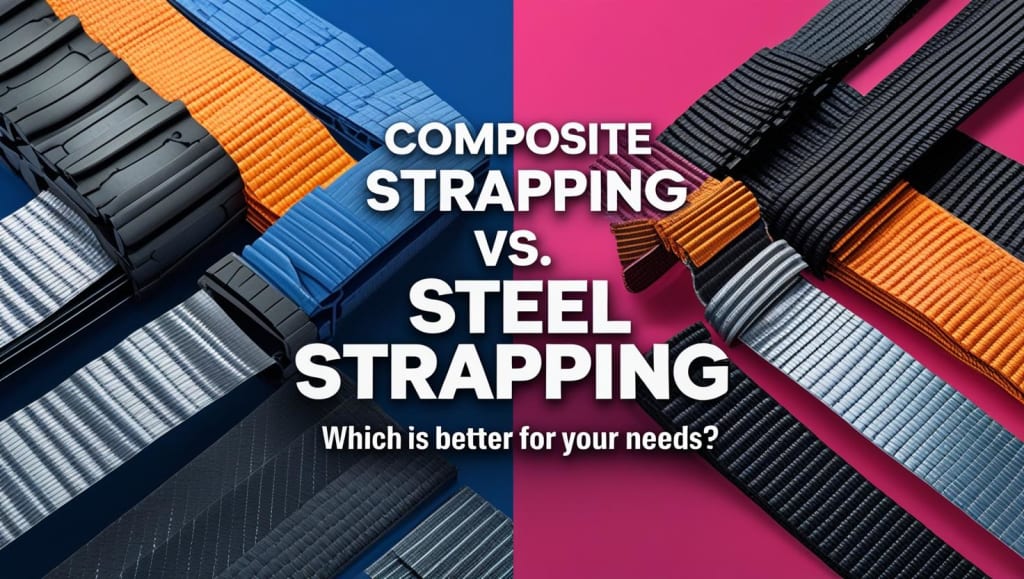
In the world of cargo securing and load bundling, selecting the right strapping material is crucial for ensuring safety, cost efficiency, and durability. The two most common options—composite strapping (made from polyester/polypropylene) and steel strapping—each have unique advantages depending on application requirements.
This comprehensive guide compares composite and steel strapping across strength, corrosion resistance, cost, and environmental impact to help you select the best option. We'll also explore how to find a reliable composite strapping manufacturer in China for high-quality bulk purchases.
1. What is Composite Strapping?
Composite strapping (also called plastic strapping) is made from high-tension polyester or polypropylene materials. It's lightweight, flexible, and resistant to moisture and chemicals.
Key Features:
✔ Lightweight – Easier to handle than steel.
✔ Corrosion-proof – Ideal for humid or chemical-heavy environments.
✔ No edge protection needed – Safer for delicate loads.
✔ Eco-friendly – Recyclable and generates less waste.
Common Uses:
Food & beverage packaging (non-reactive with products).
Electronics & fragile goods (prevents surface damage).
Export shipping (resistant to saltwater corrosion).
2. What is Steel Strapping?
Steel strapping is made from high-carbon or stainless steel strips, providing superior tensile strength for heavy-duty applications.
Key Features:
✔ Extreme durability – Highest break strength (up to 4,000 kg).
✔ Heat resistance – Withstands high temperatures.
✔ Minimal stretch – Maintains tension under heavy loads.
Common Uses:
Construction materials (steel coils, lumber).
Metalworking & automotive (securing heavy parts).
High-security shipments (tamper-resistant).
3. Composite vs. Steel Strapping: Key Differences
Strength Requirements
Composite strapping typically offers 200–1,200 kg tensile strength, making it suitable for light to medium loads. Steel strapping provides 1,500–4,000 kg strength, ideal for extreme weights.
Weight and Handling
Composite is significantly lighter and easier to handle without special tools. Steel requires tensioners and sealers, adding to equipment costs.
Corrosion Resistance
Composite naturally resists rust and chemical damage. Steel requires galvanization or stainless alloys to prevent corrosion, increasing expense.
Cost Considerations
Composite has lower upfront costs with no special tools needed. Steel has higher material costs plus requires investment in tensioning equipment.
Safety Factors
Composite is safer to handle with no sharp edges. Steel poses cut hazards and requires protective gear during application.
Environmental Impact
Both materials are recyclable, but composite production has a lower carbon footprint than steel manufacturing.
4. Which Should You Choose? Decision Factors
A. Strength Requirements
Steel strapping is unmatched for loads over 1,500 kg (e.g., steel pipes).
Composite strapping suffices for <1,200 kg (e.g., boxes, appliances).
Winner: Steel for heavy-duty; composite for medium loads.
B. Environmental Conditions
Composite resists saltwater, chemicals, and humidity—perfect for seafood exports or chemical plants.
Steel rusts unless coated (galvanized/stainless), adding cost.
Winner: Composite for wet/corrosive environments.
C. Cost Analysis
Composite: Cheaper material + no special tools needed.
Steel: Higher cost + requires tensioners, sealers, and edge protectors.
Winner: Composite for budget-friendly solutions.
D. Safety & Handling
Composite is safer (no sharp edges) and requires minimal training.
Steel demands PPE (gloves, goggles) due to recoil risks.
Winner: Composite for workplace safety.
E. Recyclability
Both are recyclable, but composite strapping has a lower carbon footprint in production.
Winner: Composite for sustainability.
5. Industry-Specific Recommendations
Food & Pharma: Composite (FDA-approved, non-contaminating).
Construction: Steel (for rebar, lumber).
E-commerce: Composite (lightweight, cost-effective).
Automotive: Steel (high-security engine parts).
6. Finding a Reliable Composite Strapping Manufacturer in China
China dominates the global strapping market, offering high-quality, competitively priced options. Here’s how to source wisely:
Supplier Selection Tips
✔ Verify Certifications: ISO 9001, SGS, or FDA compliance.
✔ Request Samples: Test tensile strength and UV resistance.
✔ Check MOQs: Look for manufacturers allowing small trial orders.
✔ Compare Pricing: Include shipping and customs duties in calculations.
Top Sourcing Platforms
Alibaba & Made-in-China – Filter for "Gold Suppliers."
Trade Shows – Canton Fair, PackExpo.
B2B Marketplaces – Global Sources, TradeIndia.
Pro Tip: Partner with a composite strapping manufacturer China specializing in export-ready packaging to streamline logistics.
7. Future Trends: Is Composite Strapping Replacing Steel?
With advancements in high-performance polyester, composite strapping now rivals steel for many uses. Key drivers:
✅ Lightweight logistics (reducing shipping costs).
✅ Sustainability mandates (less energy-intensive than steel).
✅ Worker safety regulations (minimizing injuries).
However, steel remains irreplaceable for ultra-heavy or high-tension applications.
Conclusion
Choose composite strapping for:
✔ Medium loads, moisture resistance, cost savings, and safety.
Choose steel strapping for:
✔ Extreme weights, high heat, and tamper-proof needs.
For businesses prioritizing cost-efficiency and corrosion resistance, partnering with a reputable composite strapping manufacturer China ensures quality bulk supply.
FAQs
Q: Can composite strapping be used outdoors?
A: Yes, UV-resistant polyester variants withstand sunlight degradation.
Q: How much weight can composite strapping hold?
A: Up to 1,200 kg (varies by width and material grade).
Q: Does steel strapping damage goods?
A: Yes, unless edge protectors are used—composite is gentler.
Q: Where can I get custom-printed strapping?
A: Many composite strapping manufacturers China offer logo branding.
About the Creator
John Lee
My Name is John Lee and I am a writer with a passion for exploring diverse topics. From thought-provoking essays to engaging stories, I try to bring curiosity and creativity to every piece.
A Failed Artist, A Disillusioned Poet, An Underpaid Game Show Host
I took my son and niece to Gori, a small town in Georgia where Joseph Stalin was born. They talked me into visiting the Stalin's Museum, the largest in the post-Soviet space. I had resisted going there because I just can't stand the monster and know enough about him, or so I thought.
By Lana V Lynx26 days ago in FYI
Who Could Be The Next Leader of Iran
As the cameras roll and analysts sharpen their talking points, the United States appears to be quietly assembling the pieces for a major military move in the Middle East—one that, if carried through, could aim directly at the heart of Iran’s political system. Whether this buildup ultimately leads to the removal of Ali Khamenei, Iran’s Supreme Leader, remains uncertain. Even senior officials in Washington admit as much. But the harder question, and the one that matters most, isn’t how such a move would happen. It’s what comes after.
By Lawrence Lease3 days ago in FYI



Comments
There are no comments for this story
Be the first to respond and start the conversation.