
black clergy and politicians
history series part 5

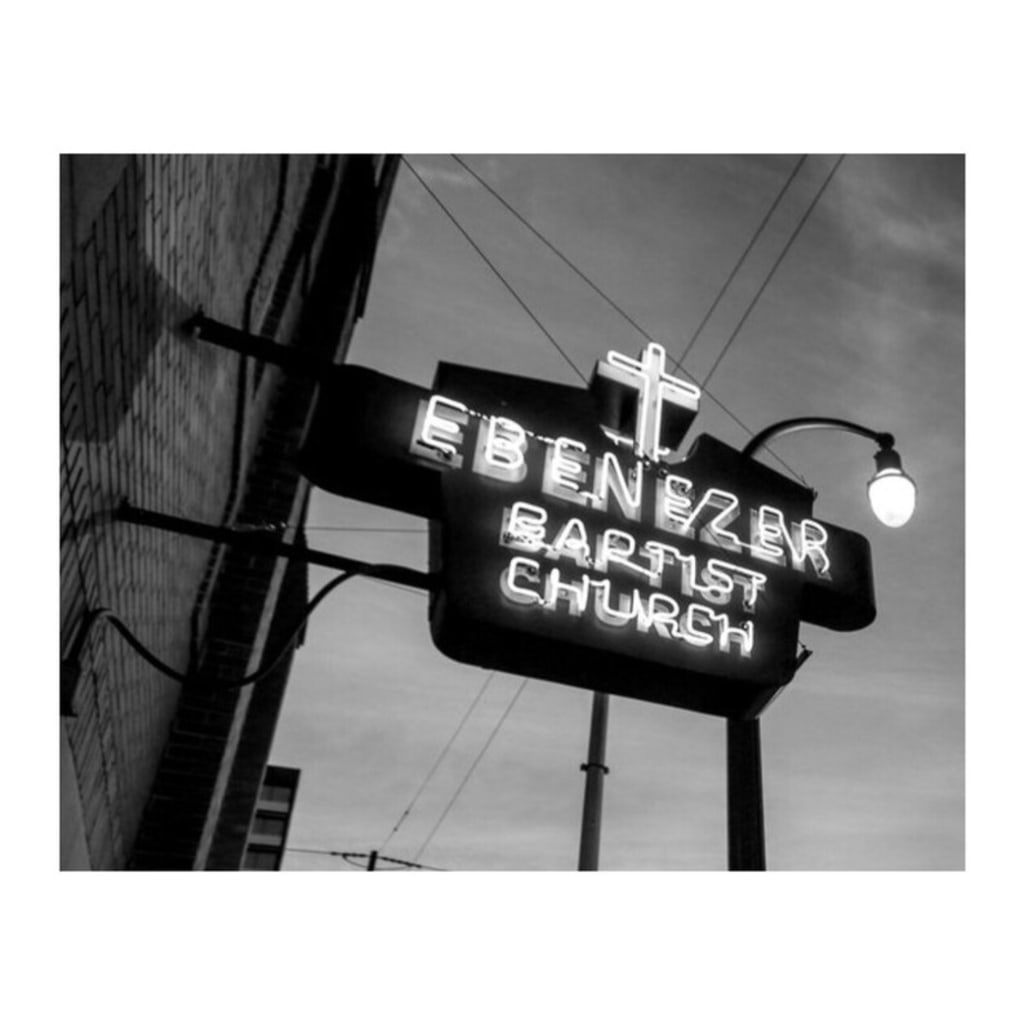
Whenever black history is taught in schools we only cover certain topics or even people such as Harriet Tubman, Martin Luther King Jr, and Rosa Parks because they are considered safe to teach about. Slavery is rarely taught and it usually goes straight to the civil rights movement of the 60’s. Black history is more than that because every aspect of American history has been touched and built up on by a black person. . Let me introduce to you several people.
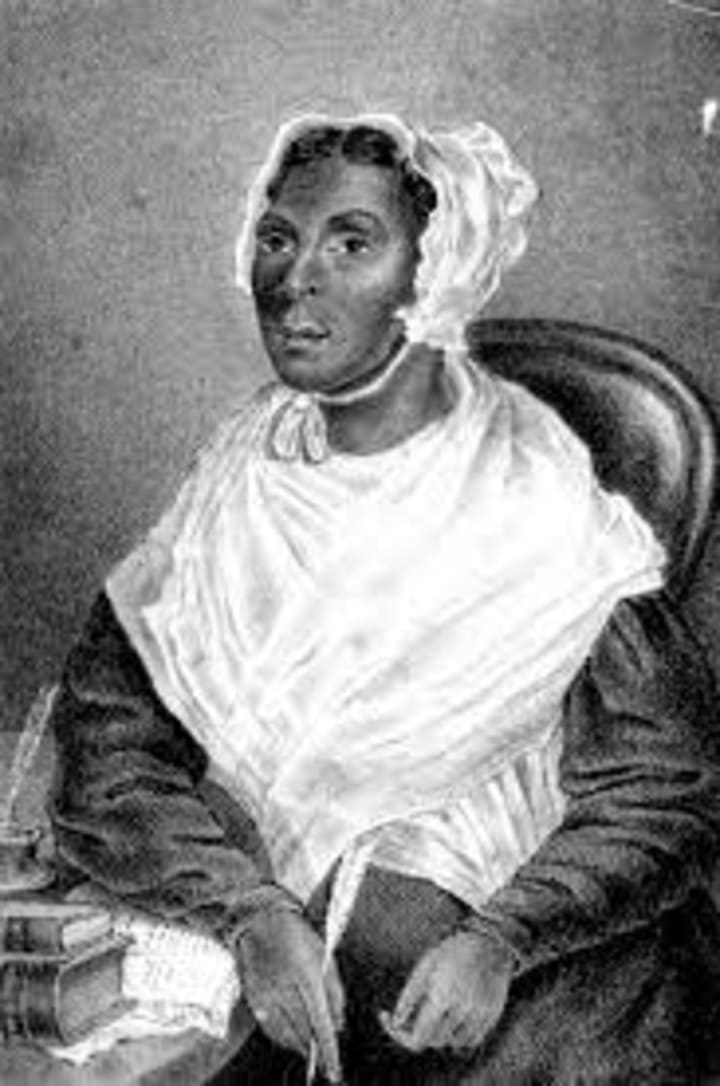
Jarena Lee was the first authorized female preacher in the African Methodist Episcopal (A.M.E.) Church. She was born to a poor but free black family on February 11, 1783, in Cape May, New Jersey. In 1790 at the age of seven, Lee was sent to work as a live-in servant for a white family named Sharp. Moving to Philadelphia, Penn. as a teenager, she continued to work as a domestic servant. One afternoon, Lee attended a worship service at Bethel Church where Bishop Richard Allen, founder of the A.M.E. Church, was scheduled to preach. After hearing the powerful sermon delivered by Allen, Lee became filled with the Holy Spirit and converted to Christianity. In 1807, Lee heard the voice of God commissioning her to preach the gospel. Deciding to confide in Bishop Allen and revealing to him her call to preach. Allen told Lee that he could not grant her permission to preach because he was required to uphold the A.M.E. Church’s ban against female ministers. In 1811, Lee married Pastor Joseph Lee, and the couple had two children but she was widowed after seven years of marriage. During the course of her marriage and after her husband’s death, her desire to proclaim the word of God grew even stronger. Causing Lee to renew her advocacy for women in ministry. In 1819, during a worship service at Bethel Church, a guest preacher began struggling and as he stared into the congregation at a loss for words, Lee sprang to her feet and began preaching, picking up where the minister had left off. After Lee’s sermon, she was afraid that Bishop Allen would punish her for preaching without permission. On the contrary, Allen was so impressed by Lee that he officially gave her authorization to preach the Gospel of Jesus Christ. Lee then began to travel to various cities for preaching engagements and was highly praised for her powerful sermons. In addition to her work in ministry, she was also heavily involved in the abolitionist movement and joined the American Antislavery Society in 1839. To share her experiences in ministry, Lee decided to pen her autobiography titled The Life and Religious Experience of Jarena Lee. She completed her autobiography in expanded form in 1849. The exact date and circumstances of Minister Lee’s death are contradictory because according to Mount Pisgah AME Church Cemetery where she is buried indicate that she died in 1855 but others list it as 1857.
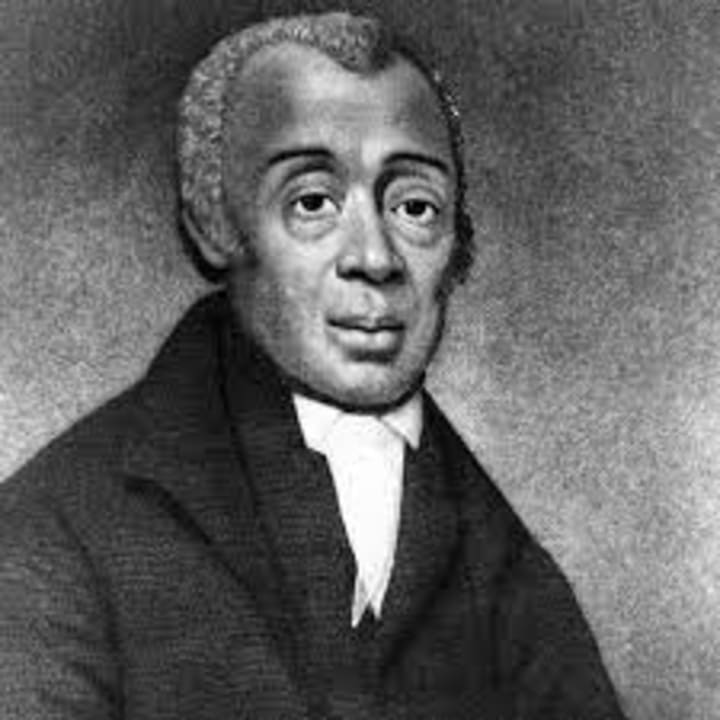
Born into slavery in Philadelphia, Penn, on February 14, 1760, Richard Allen went on to become an educator, writer, minister and founder of the African Methodist Episcopal Church. Benjamin Chew, a Quaker lawyer, who owned the Allen family sold them to Stokeley Sturgis, a Delaware planter. At age 17 Allen converted to Methodism by an itinerant preacher before influencing his master, Stokeley Sturgis, to become a Methodist as well. After his conversion, Sturgis offered his slaves the opportunity to buy their way out of slavery. In 1783, Allen managed to purchase his freedom for $2,000. In the meantime, Allen began to preach in Methodist churches and meetings in the Baltimore area. Through his Methodist connections Allen was invited to return to Philadelphia in 1786. Arriving in the city, he joined St. George’s Methodist Episcopal Church, becoming active in teaching and preaching. Racial tensions mounted when the number of African Americans attending St. George’s increased. Allen preached at 5:00 a.m. in special services on Sunday mornings to approximately 50 African American Methodists but when they attended the regular morning service, segregated seating was instituted. With this segregation Allen became convinced that a separate church was necessary for the black congregants. In 1787 Allen and a number of other African American Methodists walked out and formed a separate church that would become Bethel African Methodist Episcopal Church, the first Methodist church in the United States specifically for African Americans. On July 29, 1794, Bethel was dedicated by Bishop Francis Asbury with Richard Allen serving Bethel Church as its pastor,before becoming ordained a deacon by Asbury in 1799. Other African American Methodist churches were formed in New York, New Jersey, Delaware and Maryland. On April 9, 1816, Allen and other African American Methodist preachers hosted a meeting in Philadelphia to bring these churches together and to form a new denomination, the African Methodist Episcopal Church (AME). Allen was elected bishop, and with his consecration became the first African American bishop in the United States. By the time Allen died at his home on March 26, 1831, the AME church was well-established in the United States and supported missions in several countries overseas. He cared passionately about education and opened a day school for African American children. He abhorred slavery, worked actively for abolition, and maintained his home as a stop on the Underground Railroad. He was committed to self-determination for African Americans in the United States, and eventually opposed all colonization plans for African Americans in other countries.
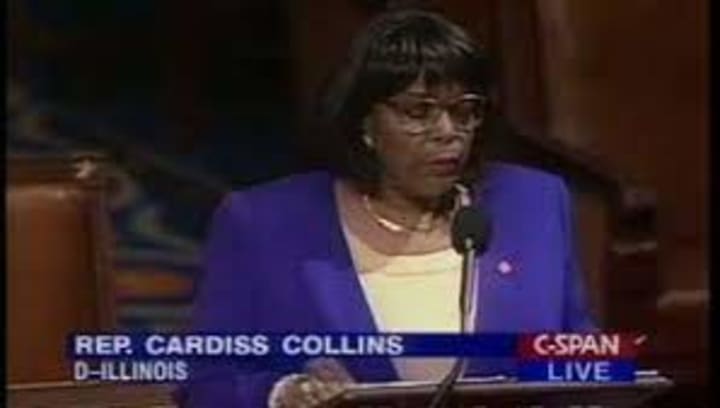
Former U.S. Congresswoman Cardiss Collins was born on September 24, 1931, in St. Louis, Missouri. When she was ten years old, she moved with her family to Detroit, Michigan, where she attended the Detroit High School of Commerce. After high school, Collins moved to Chicago, Illinois to find a job. While working as a stenographer with the Illinois Department of Labor while simultaneously attending Northwestern University in Evanston, she earned her B.S. degree in accounting. She was promoted to secretary, then accountant at the Illinois Department of Revenue before becoming the revenue auditor. In 1958, Collins married George W. Collins, and in 1959, their son, Kevin, was born. Collins served as committeewoman of the 24th Ward Regular Democratic Organization, gaining her first political experience. She also participated in her husband’s campaigns for alderman, committeeman and U.S. Representative. On December 8, 1972, George W. Collins died in a plane crash. Collins was elected to Congress in the June 5, 1973 special election to replace her husband. In 1978, she became the first African American and first woman to chair the Manpower and Housing subcommittee of the House Government Operations Committee and to be named Democratic whip-at-large in the House. One year later, she was elected president of the Congressional Black Caucus (CBC). The recipient of honorary degrees from Barber-Scotia College, Spelman College, and Winston-Salem State University, Collins was elected to the Black Women’s Hall of Fame in 1982. From 1983 to 1991, she served as chair of the Government Activities and Transportation (GAT) Subcommittee, where she helped pass laws that controlled the transport of toxic materials and helped provide more secure air travel. She also introduced the Non- Discrimination in Advertising Act, which denied federal tax write-offs to major advertising firms that ignored black-owned communications media, both print and broadcast. In 1990, she wrote a law expanding Medicare coverage for screening mammograms for millions of elderly and disabled women. In 1990, the Congressional Black Caucus presented Collins with the William L. Dawson Award for Legislative Development, and in 1991, she was honored with an American Black Achievement Award for government service. Later in 1991, she was named chairwoman of the Energy and Commerce Subcommittee on Commerce, Consumer Protection, and Competitiveness. While in Congress, she focused on establishing universal health insurance, providing for gender equity in college sports, and reforming federal child care facilities. Authoring the Child Safety Protection Act in 1993, which requires warning labels on dangerous toys and federal safety standards for bicycle helmets. The American Advertising Foundation established the Cardiss Collins Scholarship for Diversity in Advertising at the University of Illinois in 1996, which provides a full-tuition scholarship to a freshman University of Illinois student in advertising.
Collins retired and declined to run for re-election in 1996 and passed away on February 3, 2013 at the age of 81.
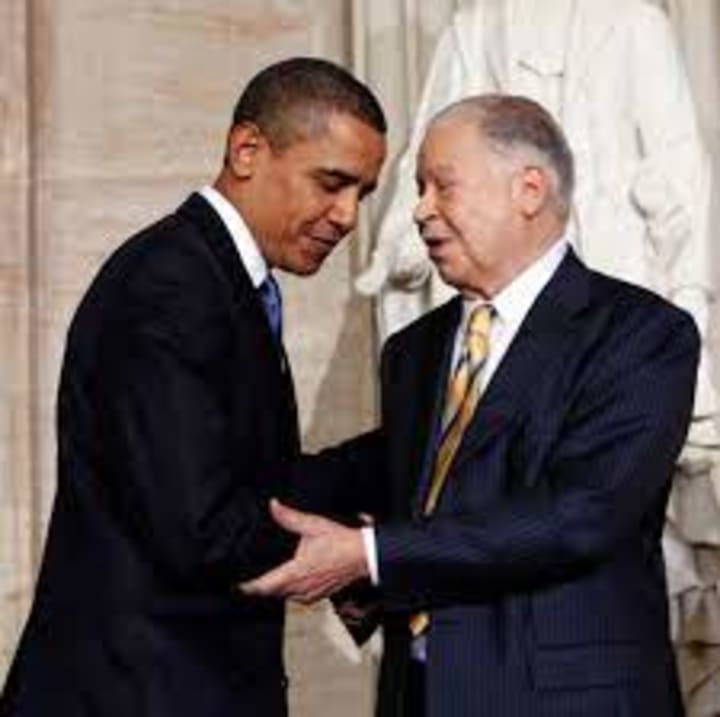
Edward Brooke III election to the U.S. Senate in 1966 ended an 86–year absence of African–American Senators. Brooke was the first popularly elected Senator and the first black politician from Massachusetts to serve in Congress. Throughout his political career, Brooke demonstrated resiliency and defined himself as a representative of his entire constituency.
Edward William Brooke III, was born in Washington, DC, on October 26, 1919. Named for his grandfather, father, and deceased sister Edwina, he lived with his father, Edward Brooke, Jr., a graduate of Howard University Law School and a longtime lawyer with the Veterans Administration; his mother, Helen Seldon; and his older sister, Helene. After graduating from Dunbar High School in Washington, DC, in 1936, Ed Brooke enrolled in Howard University. Originally intending to pursue a career in medicine, he decided to major in sociology, earning a bachelor of science degree in 1941.Shortly after the Japanese bombed Pearl Harbor on December 7, 1941, Brooke entered the U.S. Army as a second lieutenant. Before serving overseas, Brooke was stationed with the segregated 366th Infantry Regiment at Fort Devens in Ayer, Massachusetts which implemented a whites–only policy. “In every regard, we were treated as second–class soldiers, if not worse, and we were angry,” Brooke recalled. “I felt a personal frustration and bitterness I had not known before in my life.” While stateside, Brooke defended black enlisted men in military court despite a lack of legal training, where he was able to earn a reputation as a competent public defender and a “soldier’s lawyer.” Brooke spent 195 days with his unit in Italy where his fluent Italian and light skin enabled him to cross enemy lines to communicate with Italian partisans. By the war’s end, Brooke had earned the rank of captain, a Bronze Star, and a Distinguished Service Award. During his tour in Europe, he met Italian–born Remigia Ferrari–Scacco. After a two year relationship, they married on June 7, 1947, in Roxbury, Mass.and had two daughters: Edwina and Remi. His experience on the military base inspired him to earn an LL.B. in 1948 and an LL.M. in 1949 from Boston University. Declining offers to join established law firms, choosing instead to start his own practice in the predominantly African–American community of Roxbury. At the urging of friends from his former army unit, Brooke interrupted his law career to run for the Massachusetts house of representatives in 1950. Lacking party affiliation, Brooke took advantage of a state law allowing candidates to cross–file. Despite his nonexistent political experience, he received the endorsement of the Republican Party for the house seat representing Roxbury. Unsuccessful in the general election, Brooke entered the race two years later, winning the Republican nomination but losing to his Democratic opponent. Brooke resumed his law career after his failed attempts at election.During his hiatus from politics, he established himself as a successful lawyer and built community ties that would prove significant. In 1960, he re–entered the political fray, running for Massachusetts secretary of state. Although Brooke lost once again, he surprised many by capturing more than one million votes in an election in which John F. Kennedy of Massachusetts was the Democratic Party’s presidential nominee. During this period, Brooke attained valuable name recognition and a reputation as an honest and determined public servant. In recognition of his strong performance in the campaign, Republican Governor John Volpe of Massachusetts appointed Brooke chairman of the Boston Finance Commission. During his two–year tenure, Brooke transformed the commission into a respectable and effective organization, and his position helped make him one of the most popular political figures in the state. In 1962, Brooke achieved his goal to win an elected position. After earning the Republican nomination for Massachusetts attorney general, he easily defeated the Democratic challenger. By becoming the only member of his party to win statewide election in 1962 and the first African American to serve as a state attorney general, Brooke garnered national attention. Brooke continued his efforts to thwart corruption in the state government and also recommended a series of measures to protect consumers’ rights and fought to end housing discrimination. Civil rights leaders criticized Brooke’s refusal to support a 1964 boycott by African–American students to protest segregation in the Boston school system. “I am not a civil rights leader, and I don’t profess to be,” Brooke once declared, explaining the divergence between legal interpretation and his personal views on racial equality.His moderate response to the proposed protest won him invaluable backing from many voters in the predominantly white state.In 1966 Brooke authored The Challenge of Change: Crisis in Our Two–Party System, outlining many of his political principles, including his beliefs about civil rights. The “issue [civil rights] is pressing on the nation, and cries out for a solution,” Brooke wrote, arguing that in addition to legislation, African Americans needed access to a quality education to compete with whites. While he promoted change, Brooke steadily maintained that militancy undermined the civil rights movement. After two terms as attorney general (1962–1966), Brooke announced his candidacy in 1965 for the U.S. Senate seat left vacant by the retirement of Leverett Saltonstall. During the campaign against Democrat Endicott Peabody, Brooke vowed to work for “the establishment of peace, the preservation of freedom for all who desire it, and a better life for people at home and abroad.” Labeling himself a “creative Republican,” Brooke successfully courted voters from both parties by emphasizing his moderate viewpoints. On November 8, 1966, Brooke earned a seat in the 90th Congress (1967–1969), winning 62 percent of the vote. His victory met with considerable fanfare:Brooke was the first African American elected to the Senate since the Reconstruction Era. On the opening day of the 90th Congress, Senator Kennedy, the senior Senator of Massachusetts, escorted the newly elected Brooke down the aisle of the Senate Chamber by long–standing tradition.where he was greeted with a standing ovation. “I felt like a member of the club,” Brooke said.Unlike many of his African–American colleagues in the House, Brooke experienced little institutional racism in the Senate. Brooke later recalled using the Senate gym and the adjoining facilities without incident with John Stennis, John McClellan, and Strom Thurmond, greeted Brooke and invited him to join them in the pool. “There was no hesitation or ill will that I could see,” Brooke recollected of this positive reception by his Senate colleagues.“Yet these were men who consistently voted against legislation that would have provided equal opportunity to others of my race. I felt that if a senator truly believed in racial separatism I could live with that, but it was increasingly evident that some members of the Senate played on bigotry purely for political gain.” Initially assigned to the Aeronautical and Space Sciences, Banking and Currency, and Government Operations committees, Brooke also served on the Armed Services and the Joint Committee on Bicentennial Arrangements committees for one Congress.Brooke also sat on the Select Equal Education Opportunity Committee, the Joint Committee on Defense Production, and the Select Standards and Conduct Committee. President Lyndon B. Johnson appointed Brooke to the President’s Commission on Civil Disorders shortly after he was elected to the Senate. Otto Kerner led the group, also known as the Kerner Commission it was charged with outlining the causes of the urban riots of 1967, and proposed solutions for the epidemic of racial unrest in American cities. The commission reported that American society was sharply divided along racial lines.The 11–member commission, including Brooke, suggested the government fund a series of programs to increase educational, housing, and employment opportunities for minorities living in urban areas. Although President Johnson was dedicated to bettering the circumstances of minorities, his preoccupation with the Vietnam War and his decision not to seek re–election rendered the commission’s recommendations ineffective. Working with Walter Mondale, Brooke succeeded in attaching an anti–discrimination amendment to the groundbreaking Civil Rights Act of 1968. Title VIII of the legislation included provisions to combat racial discrimination in housing. “Fair housing does not promise an end to the ghetto,” Brooke cautioned. “It promises only to demonstrate that the ghetto is not an immutable institution in America." He cited his difficulties finding a home after he returned from service in World War II to illustrate the prejudice in the American housing market. Shortly after the assassination of Martin Luther King, Jr., Brooke urged his congressional colleagues to recognize the renowned civil rights leader by declaring January 15 (King’s birthday) a national holiday.Arguing that it “would be fitting to pay our respects to this noble figure by enduring public commemoration of his life and philosophy,” the Massachusetts Senator earned the support of many African Americans.Despite his support of the civil rights movement and his desire to promote equal rights for African Americans, Brooke often found himself at odds with other African–American leaders. Even though the marked increase of black Members in the House of Representatives led to the formation of the Congressional Black Caucus (CBC) in 1971 the Republican Brooke did not join the group. When the CBC announced it would boycott President Richard M. Nixon’s 1971 State of the Union address to protest his refusal to meet with the caucus, the Senator was not asked to participate because the black Representatives expected Brooke to place party interests ahead of race. Although Brooke supported the Republican Party, his stances were often contrary to the official party line. He typically adopted a liberal agenda with regard to social issues. During his two terms in the Senate, Brooke backed affirmative action, minority business development, and public housing legislation. He also favored extending minimum wage standards to unprotected jobs held by unskilled workers, providing tax incentives to companies with management training programs, and increasing operating subsidies for commuter rail services and mass transit systems. At times Brooke even broke party ranks to work with Democrats in the Senate and the House. For example, Brooke and Thomas (Tip) O’Neill recommended a swift increase in Social Security benefits in 1972.During the 92nd to the 95th Congresses (1971–1979), Brooke was on the Appropriations, Special Aging, and Banking, Housing, and Urban Affairs committees. In 1975, Brooke vehemently defended the need to extend the 1965 Voting Rights Act. Brooke’s eloquent and impassioned plea to his colleagues helped extend the landmark measure seven more years. Initially a supporter of President Nixon, Brooke grew increasingly critical of the Republican executive and denounced the White House for neglecting the black community and failing to enforce school integration. He also made waves with the Republican Party and Nixon when he opposed three of the President’s Supreme Court nominees. In May 1973 he introduced a resolution authorizing the attorney general to appoint a special prosecutor to serve in all criminal investigations arising from the Watergate scandal and six months later Brooke became the first Senator to publicly call for President Nixon’s resignation. “Brooke was also one of the few Republicans to disagree publicly with President Gerald R. Ford’s pardon of Nixon. Brooke’s solid support base in Massachusetts began to wane as a result of his acrimonious and public divorce in 1978 and later remarriage toAnne Fleming in 1979 also in addition to allegations of financial misconduct. Brooke and his second wife would later have a son, Edward W. Brooke IV. In the Republican primary, Brooke faced a challenge from Avi Nelson. Although he managed to rebuff Nelson’s bid, Brooke entered the general election campaign in a weakened position. In November 1978, Democrat Paul Tsongas, a Massachusetts Representative from a House district including the historic mill towns of Lowell and Lawrence, defeated Brooke 55 to 45 percent. After leaving office, the former Senator resumed practicing law in Washington, DC. In 1984 he became chairman of the Boston Bank of Commerce, and one year later he was named to the board of directors of Grumman. Diagnosed with breast cancer in 2002, Brooke returned to the public spotlight to increase awareness of breast cancer in men. Asked to comment about his public advocacy, Brooke responded, “You never know in life what you’re going to be called upon to do.”In 2004 President George W. Bush awarded Brooke the Presidential Medal of Freedom, the nation’s highest civilian honor. In 2007, Brooke published his autobiography, Bridging the Divide: My Life.He died at his home in Coral Gables, Florida, on January 3, 2015.
About the Creator
Kia T Cooper-Erbst
Writer, poet, author. submissive. Mom of three wonderful human beings. These are the first things that come to mind when I think of myself besides being the obvious.... which is daughter, wife,etc.
Keep reading
More stories from Kia T Cooper-Erbst and writers in FYI and other communities.
Black writers
Whenever black history is taught in schools we only cover certain topics or even people such as Harriet Tubman, Martin Luther King Jr, and Rosa Parks because they are considered safe to teach about. Slavery is rarely taught and it usually goes straight to the civil rights movement of the 60’s. Black history is more than that because every aspect of American history has been touched and built up on by a black person. Come along with me on this wild ride and let me introduce to you several people.
By Kia T Cooper-Erbst4 years ago in FYI


Comments
There are no comments for this story
Be the first to respond and start the conversation.