
8 Signs You Might Need Dental Implants
An In-Depth Exploration of the Gold Standard in Tooth Replacement
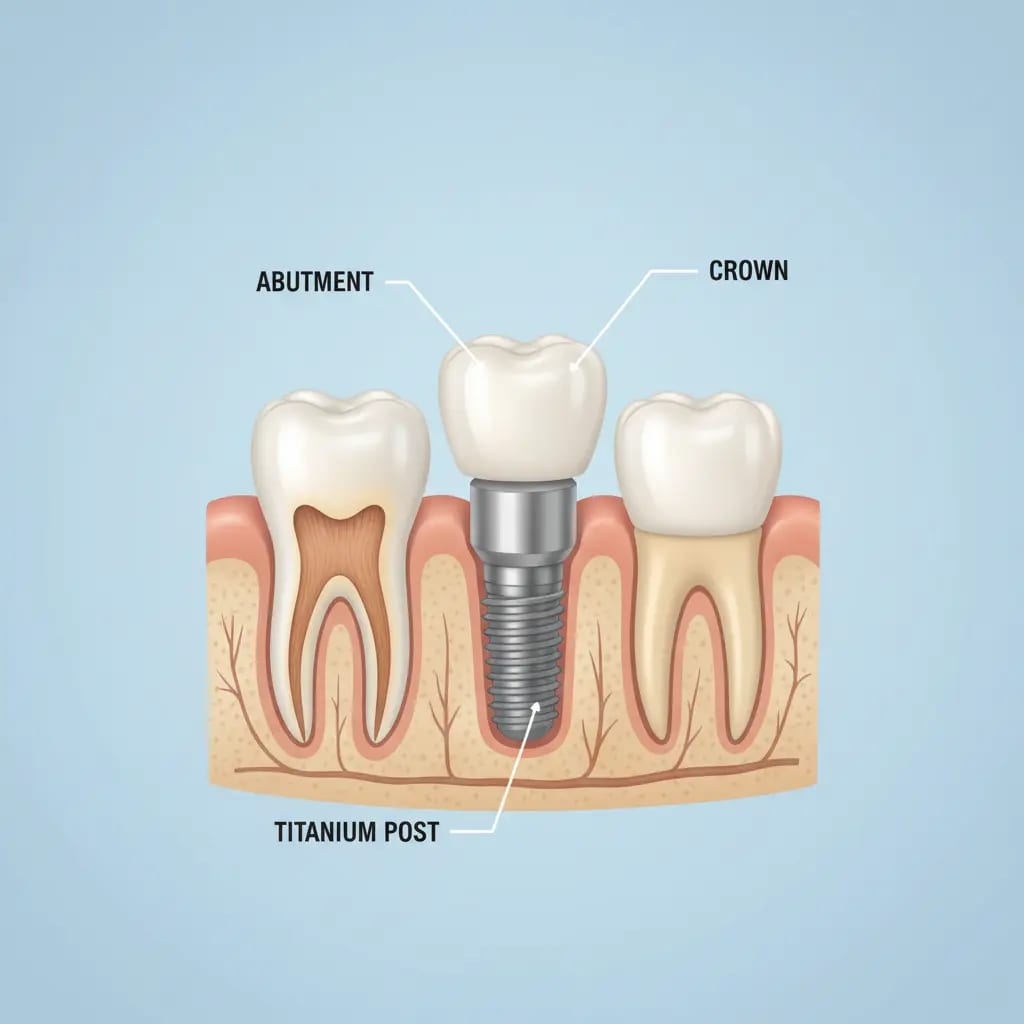
Introduction: Beyond Just Filling a Gap
For decades, the primary solutions for missing teeth were bridges and dentures. While functional, they often came with compromises in comfort, stability, and long-term oral health. Today, dental implants have revolutionized restorative dentistry, offering a solution that not only replaces a tooth but mimics its natural structure and function from root to crown. Widely regarded as the gold standard, a dental implant is a small, biocompatible titanium post surgically placed into the jawbone, where it fuses with the bone in a process called osseointegration. This creates a stable, artificial root onto which a replacement tooth (crown) is attached.
But how do you know if this advanced solution is right for you? The need for a dental implant isn't always as obvious as a visible gap in your smile. It often involves a collection of subtle and significant signs related to function, health, and quality of life. This article provides a comprehensive, in-depth analysis of eight key indicators that suggest you may be an ideal candidate for dental implants, helping you understand the underlying problems and how implants offer a superior, permanent solution.
Disclaimer: This article is for informational purposes only and does not constitute medical advice. The decision to get dental implants should be made after a thorough consultation and examination by a qualified dentist or oral surgeon.
Sign 1: You Have One or More Missing Teeth
This is the most direct and common reason for considering a dental implant. However, the problem extends far beyond the cosmetic issue of a gap. A missing tooth sets off a cascade of negative events within your mouth's delicate ecosystem.
The Domino Effect of a Single Gap
When a tooth is lost, the adjacent teeth lose their support and begin to drift into the empty space. This shifting can ruin your bite alignment (occlusion), creating awkward contacts that can lead to premature wear, chipping, and even jaw pain or TMJ disorders. Furthermore, the tooth in the opposing jaw, now lacking a partner to bite against, can begin to "super-erupt" or grow out of its socket, exposing its sensitive root and becoming unstable over time.
The Implant Solution: A Permanent Placeholder
A dental implant addresses this problem at its core. By placing an implant in the gap, you provide a permanent, stable replacement that functions exactly like a natural tooth root. It holds the space, preventing adjacent teeth from shifting and the opposing tooth from erupting. Unlike a traditional dental bridge, which requires grinding down healthy adjacent teeth to serve as anchors, an implant is a standalone solution that preserves the integrity of your surrounding natural teeth. It stops the destructive domino effect before it can cause widespread damage to your bite and oral health.
Sign 2: Your Dentures Are Loose, Uncomfortable, or Inconvenient
For many, dentures are a source of constant frustration. They can slip when talking or eating, cause embarrassing clicking sounds, and require messy adhesives to stay in place. This instability is not just an inconvenience; it's a sign of a deeper problem.
The Challenge of Traditional Dentures
Traditional dentures rest on top of the gums, held in place by suction and muscle control. Over time, the jawbone underneath the denture, lacking the stimulation of tooth roots, begins to shrink (a process called resorption). As the bone recedes, the denture's fit loosens, leading to sore spots, chafing, and a constant need for relining or replacement. Furthermore, dentures provide only about 20-25% of the chewing power of natural teeth, forcing users to avoid hard, crunchy, or chewy foods, which can lead to nutritional deficiencies.
The Implant Solution: Anchoring Your Smile
Dental implants offer a revolutionary upgrade for denture wearers. Instead of a full set of individual implants, a few strategically placed implants (often 2 to 6 per arch) can be used to anchor a custom denture. This is known as an "implant-retained" or "implant-supported" denture. The denture securely snaps onto the implants, eliminating all movement and the need for adhesives. This solution provides:
Unshakeable Stability: Eat, speak, and laugh with total confidence.
Restored Chewing Power: Enjoy your favorite foods again, as chewing efficiency is dramatically increased.
Bone Preservation: The implants stimulate the jawbone, halting the resorption process and preserving your facial structure.
Enhanced Comfort: With no slipping or rubbing, sore spots are eliminated.
This hybrid solution combines the affordability of a denture with the stability and health benefits of implants.
Sign 3: You Have a Severely Cracked or Infected Tooth Beyond Repair
Sometimes, a tooth sustains damage so severe that traditional restorative methods like fillings, crowns, or even root canals are not viable long-term options. This is often the case with deep vertical root fractures, extensive decay below the gumline, or a failed root canal that cannot be retreated.
When a Tooth is Deemed "Non-Restorable"
A dentist will declare a tooth non-restorable when its structural integrity is too compromised to support a restoration reliably. Attempting to save such a tooth can lead to a cycle of failed treatments, chronic infection, and continued pain, ultimately costing more time and money. In these situations, the most predictable and healthiest long-term strategy is a planned extraction followed by a replacement.
The Implant Solution: A Fresh, Strong Start
Choosing to extract a failing tooth and replace it with a dental implant is a proactive approach to oral health. It removes the source of chronic infection and inflammation, preventing it from damaging the surrounding bone and adjacent teeth. An implant provides a new, disease-free foundation that is not susceptible to decay. In many cases, a process called "immediate implant placement" can be performed, where the implant is placed into the socket at the same time the tooth is extracted. This can reduce the overall treatment time and help preserve the maximum amount of bone and gum tissue, leading to a superior aesthetic outcome.
Sign 4: You're Experiencing Jawbone Loss
Your jawbone requires constant stimulation from your tooth roots to maintain its density and volume. When a tooth is lost, that stimulation disappears, and the body begins to resorb the bone in that area, believing it's no longer needed. This is a silent but serious sign that you need intervention.
The Science of Bone Resorption
This process, governed by a principle known as Wolff's Law, states that bone remodels itself in response to the loads placed upon it. Chewing forces transmitted through the tooth root signal the jawbone to stay strong. Without that signal, the jawbone can lose up to 25% of its width in the first year after tooth loss, and the process continues over time. This not only weakens the jaw but also creates cosmetic and functional problems, as discussed in the next sign.
The Implant Solution: The Only Bone-Stimulating Option
Dental implants are the only tooth replacement solution that actively halts and prevents bone resorption. Because the titanium implant fuses directly with the jawbone, it functions as an artificial tooth root. Every time you chew, it transmits those vital forces into the bone, signaling it to remain strong and dense. No other option—neither a bridge nor a denture—can do this. A bridge sits on top of the gums, and a denture actually accelerates bone loss due to the pressure it places on the gum ridge. If you have already experienced significant bone loss, a bone grafting procedure can often be performed to rebuild the jaw, making it possible to place an implant and restore the health of your jaw for good.
Sign 5: You Notice a "Sunken" or Prematurely Aged Facial Appearance
The teeth and jawbone form the underlying scaffolding for the lower third of your face. When multiple teeth are lost and the subsequent bone resorption occurs, this support structure collapses, leading to noticeable changes in your facial appearance.
The Aesthetics of Facial Collapse
This phenomenon, known as "facial collapse," results in a sunken-in look. The lips lose their support and appear thinner, the distance between the nose and chin decreases, and deep wrinkles and "marionette lines" form around the mouth. This can make a person appear significantly older than they are. It's a direct physical consequence of the bone loss described in the previous sign.
The Implant Solution: Rebuilding Your Facial Foundation
By replacing missing tooth roots and halting bone loss, dental implants restore the foundational support for your facial features. For those with implant-supported dentures or full-arch restorations, the prosthesis is designed not only to replace teeth but also to restore the lost vertical dimension of the face. This pushes the lips and cheeks back out to their natural position, smoothing wrinkles and reversing the "sunken" appearance. The result is a more youthful, natural profile and a rejuvenation that goes far beyond just the smile itself.
Sign 6: You Have a Failing Dental Bridge
A traditional dental bridge has long been a standard method for replacing one or two missing teeth. It consists of a prosthetic tooth (a pontic) fused between two crowns, which are then cemented onto the healthy teeth on either side of the gap (abutment teeth).
The Inherent Weaknesses of a Bridge
While effective, bridges have several potential downsides. First, they require the aggressive grinding down of often perfectly healthy abutment teeth, making them permanently more susceptible to decay and nerve problems. Second, cleaning under the pontic is difficult, making the area a plaque trap that can lead to decay on the abutment teeth or gum disease. If one of the abutment teeth fails due to decay or fracture, the entire bridge is compromised. A three-tooth problem (the bridge) is created to solve a one-tooth problem (the gap).
The Implant Solution: A Stronger, More Hygienic Alternative
When a bridge fails, replacing it with another bridge is often not an option, especially if an abutment tooth is lost. This is an ideal scenario to consider an implant-based solution. Instead of a new, longer bridge, implants can be placed in the gaps, and each can support its own individual crown. This approach offers several advantages:
It's Independent: Implants don't rely on adjacent teeth for support, protecting them from stress and alteration.
It's More Hygienic: You can floss between an implant and a natural tooth just like you normally would, leading to better gum health.
It's a More Permanent Fix: By addressing each missing tooth individually, you create a more robust, long-lasting, and maintainable restoration.
Sign 7: You Struggle to Chew Food or Speak Clearly
The primary functions of our teeth are mastication (chewing) and phonetics (speech). Missing teeth or unstable prosthetics can severely compromise both, impacting your nutrition, digestion, and social confidence.
The Functional Deficit
When you have gaps in your smile, you naturally avoid chewing in that area, which can lead to an imbalanced bite and overuse of other teeth. With ill-fitting dentures, chewing tough or fibrous foods like steak, raw vegetables, or nuts becomes nearly impossible. This often leads to a soft-food diet, which can be less nutritious. Speech can also be affected, as the teeth and tongue work together to form specific sounds. Gaps or slipping dentures can cause slurring, lisping, or whistling.
The Implant Solution: Restoring Full Natural Function
Because dental implants are anchored firmly in the jawbone, they restore chewing power to nearly 100% of that of natural teeth. This allows you to eat a complete, varied, and nutritious diet without restriction or discomfort. The stability and permanence of the implant-supported crown also provide a predictable surface for the tongue to press against, restoring crisp, clear speech. You no longer have to think or worry about your teeth when eating or speaking; they simply function as they should.
Sign 8: You Want a Permanent, Hassle-Free Solution for Your Smile
Ultimately, the decision to choose dental implants can be a lifestyle choice. You may be tired of the daily rituals associated with removable dentures, the dietary restrictions, or the worry that a bridge might fail. You are looking for a "fit and forget" solution that integrates seamlessly into your life.
The Burden of Temporary Fixes
Dentures require daily removal, soaking, and cleaning. Bridges demand special flossing techniques. Both have a limited lifespan, typically needing replacement every 5 to 15 years. This ongoing maintenance and eventual replacement add up in terms of cost, time, and mental energy.
The Implant Solution: An Investment in Long-Term Quality of Life
Dental implants are designed to be a permanent part of your mouth. With proper care—the same brushing and flossing you give your natural teeth—they can last a lifetime. There are no special adhesives, no nightly soaking, and no restrictions on your diet. They don't get cavities. They look, feel, and function like natural teeth, allowing you to forget you ever lost a tooth in the first place. While the initial investment for implants is higher than for other options, their longevity, durability, and the profound improvement in quality of life make them the most cost-effective and valuable solution in the long run.
Conclusion: A Transformative Step Towards Renewed Health and Confidence
The signs that you might need dental implants are multifaceted, touching upon aesthetics, function, and fundamental oral health. From preventing the destructive chain reaction of a single missing tooth to halting jawbone deterioration and restoring a youthful facial profile, implants offer comprehensive solutions that other replacement options cannot match. They represent a shift from merely "filling a space" to truly regenerating a functional, healthy, and permanent part of your body.
If you recognize yourself in one or more of these eight signs, it may be time to explore your options. A consultation with a dental professional experienced in implantology will provide a definitive diagnosis and a personalized treatment plan. By choosing dental implants, you are not just investing in a tooth; you are investing in your long-term health, confidence, and overall well-being.
Scientific References
1. Brånemark, P. I., Adell, R., Breine, U., Hansson, B. O., Lindström, J., & Ohlsson, A. (1969). Intra-osseous anchorage of dental prostheses. I. Experimental studies. Scandinavian Journal of Plastic and Reconstructive Surgery, 3(2), 81-100. View on PubMed
2. American Academy of Implant Dentistry (AAID). (n.d.). What Are Dental Implants? Retrieved from aaid-implant.org
3. Schropp, L., Wenzel, A., Kostopoulos, L., & Karring, T. (2003). Bone healing and soft tissue contour changes following single-tooth extraction: a clinical and radiographic 12-month prospective study. The International Journal of Periodontics & Restorative Dentistry, 23(4), 313–323. View on PubMed
4. Pjetursson, B. E., Thoma, D., Jung, R., Zwahlen, M., & Zembic, A. (2012). A systematic review of the survival and complication rates of implant-supported single crowns (SCs) after an observation period of at least 5 years. Clinical Oral Implants Research, 23(Suppl 6), 22-38. View on Wiley Online Library
5. Feine, J. S., & Carlsson, G. E. (2003). Implant Overdentures: The Standard of Care for Edentulous Patients. Quintessence Publishing. This book summarizes the McGill consensus statement which advocates for two-implant overdentures as the first choice of treatment for the edentulous mandible.
About the Creator
Keep reading
More stories from writers in FYI and other communities.
Can Your Eyes Actually Change Color? 7 Surprising Factors
Most of us assume that our eye color is a permanent gift from our parents, a genetic "what you see is what you get" situation. But have you ever noticed someone’s eyes looking piercingly bright on a sunny day, or almost turning black when they’re in a fit of rage?
By Areeba Umair5 days ago in FYI
How, Too
Many people wonder how, too. You are not alone, and I am an expert. I will teach you how, too! First, you need to remit a small application fee and fill out an application describing the nature of your financial situation and how often payments will be made, as this will have great bearing on how well I teach you how, too.
By Harper Lewis5 days ago in Fiction



Comments
There are no comments for this story
Be the first to respond and start the conversation.