
Can Your Eyes Actually Change Color? 7 Surprising Factors
From your mood to what you eat, discover the science behind shifting eye hues.

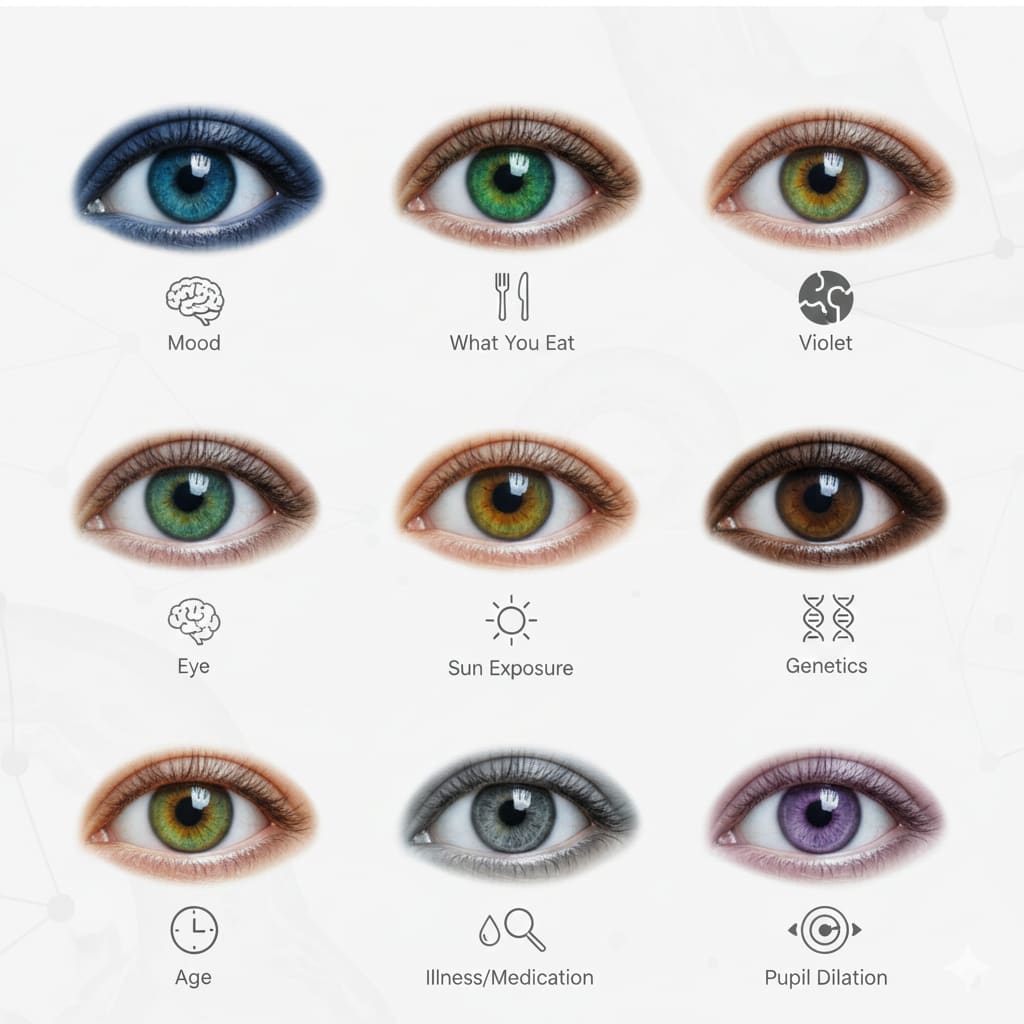
Most of us assume that our eye color is a permanent gift from our parents, a genetic "what you see is what you get" situation. But have you ever noticed someone’s eyes looking piercingly bright on a sunny day, or almost turning black when they’re in a fit of rage?
It turns out, your eye color is a bit more dynamic than you might think. While you can't usually swap brown for blue overnight without a little help, there are several fascinating reasons why your irises might change shades.
1. The "Sky" in Your Eyes: Melanin and Aging
If you’ve ever seen a baby born with striking grayish-blue eyes, don't place your bets on that color just yet. Many infants start with light eyes because they have very low melanin content in their irises.
This blue look is actually an optical illusion called the Tyndall effect. It’s the same physics (Rayleigh scattering) that makes the sky look blue! As a baby grows (up to age 12 in some cases), melanocytes produce more melanin. Depending on how much develops, those blue eyes might transition into green, hazel, or deep brown. However, if a baby is born with brown eyes, they usually stay that way because the high melanin levels are already established.
2. The Trauma Effect: Injury and Heterochromia
Sometimes, a change in eye color is a sign of a story, or a scare. Physical trauma to the eye or head can "shake up" the melanocytes in the iris. This can lead to heterochromia, a condition where your eyes end up being two different colors.
While some people are born with this naturally, if it happens after an injury, it’s a medical red flag. It can be a symptom of conditions like Horner syndrome or pigmentary glaucoma. If your eyes start changing color after a bump to the head, it’s time to see a doctor immediately.
3. The Mirror of the Soul: Your Mood
It sounds like something out of a romance novel, but your emotions really do change your eyes. When you experience intense happiness, sadness, or anger, your body releases hormones that cause your pupils to dilate or constrict.
When your pupil size changes, the pigments in the iris either compress or spread apart. This is why "angry eyes" often look darker and more intense, while eyes in bright light (which makes pupils small) can appear lighter and clearer.
4. You Are What You Eat: Diet and Detox
There is a fascinating theory in alternative medicine called iridology, which suggests a link between your iris and your internal organs. While mainstream science is still catching up, some experts, like Dr. Robert Morse, swear by the "detox" effect.
The idea is that a high concentration of yellow hues in the eye can signify toxins in the body. Some people have reported that switching to a raw vegan diet cleared the "muddiness" in their eyes. Proponents recommend:
- Spinach: To keep eyes bright and youthful.
- Honey: To add warm, golden hues.
- Seafood: For a more intense, deep color.
5. The Fashion Illusion: Makeup and Clothing
If you aren't ready to change your diet, you can change your shirt! This is the quickest non-medical way to shift your look. It’s all about color theory and bringing out specific pigments.
- Brown Eyes: Try gold, pink, or bright green shadows to make them look honey-toned.
- Blue/Green Eyes: Emerald or turquoise clothing can make your natural color pop like a neon sign.
- Hazel Eyes: Want them to look greener? Wear burnt orange or burgundy.
6. High-Tech Shifts: Laser Lightening
For those who want a permanent change without the "miracles" of makeup, science has entered the chat. There are now laser procedures designed to destroy the melanin cells in the iris.
This procedure can essentially "turn" brown eyes into blue or gray by removing the top layer of pigment. It only takes about 20 seconds, and results show up in a few weeks. However, because it’s a relatively new and invasive surgery, many doctors warn of potential risks like blindness or glaucoma.
7. The Instant Classic: Contact Lenses
Of course, we can’t forget the easiest method: colored contacts. Whether you want a natural "enhancement" or a "cat-eye" look for a party, the options are endless.
A word of caution, though: Your eyes are precious. Never buy "decorative" lenses from a flea market or a novelty shop. Without a proper prescription and FDA approval, you risk corneal ulcers or even permanent vision loss. Always go through an optometrist to make sure your new look doesn't cost you your sight.
About the Creator
Areeba Umair
Writing stories that blend fiction and history, exploring the past with a touch of imagination.
Keep reading
More stories from Areeba Umair and writers in FYI and other communities.
3 Impossible Planets That Defy the Laws of Astronomy
For as long as humans have looked up at the stars, we’ve tried to make sense of our place in the universe. We’ve found thousands of exoplanets orbiting distant suns, and we thought we had a pretty good handle on how they formed.
By Areeba Umair2 months ago in FYI
Key Hardware Components That Keep Aircraft Structures Secure
Modern aircraft are built with exceptional precision, combining advanced engineering with thousands of interconnected components. While engines, avionics systems, and aerodynamic structures often receive the most attention, the smaller structural hardware used throughout an aircraft plays an equally critical role. These components provide the connections and reinforcement necessary to keep the aircraft stable, secure, and capable of withstanding the demanding conditions of flight.
By Beckett Dowhan8 days ago in FYI
A System That Isn’t Working Challenge Winners
Systems promise order. They organize behavior, distribute opportunity, and suggest that if everyone follows the rules, things will work. The entries in A System That Isn’t Working look closely at what happens when that promise begins to slip.
By Vocal Curation Team2 days ago in Resources


Comments
There are no comments for this story
Be the first to respond and start the conversation.