
Why the Moon Smells Like Gunpowder: The Strange Mystery of Lunar Dust
Space

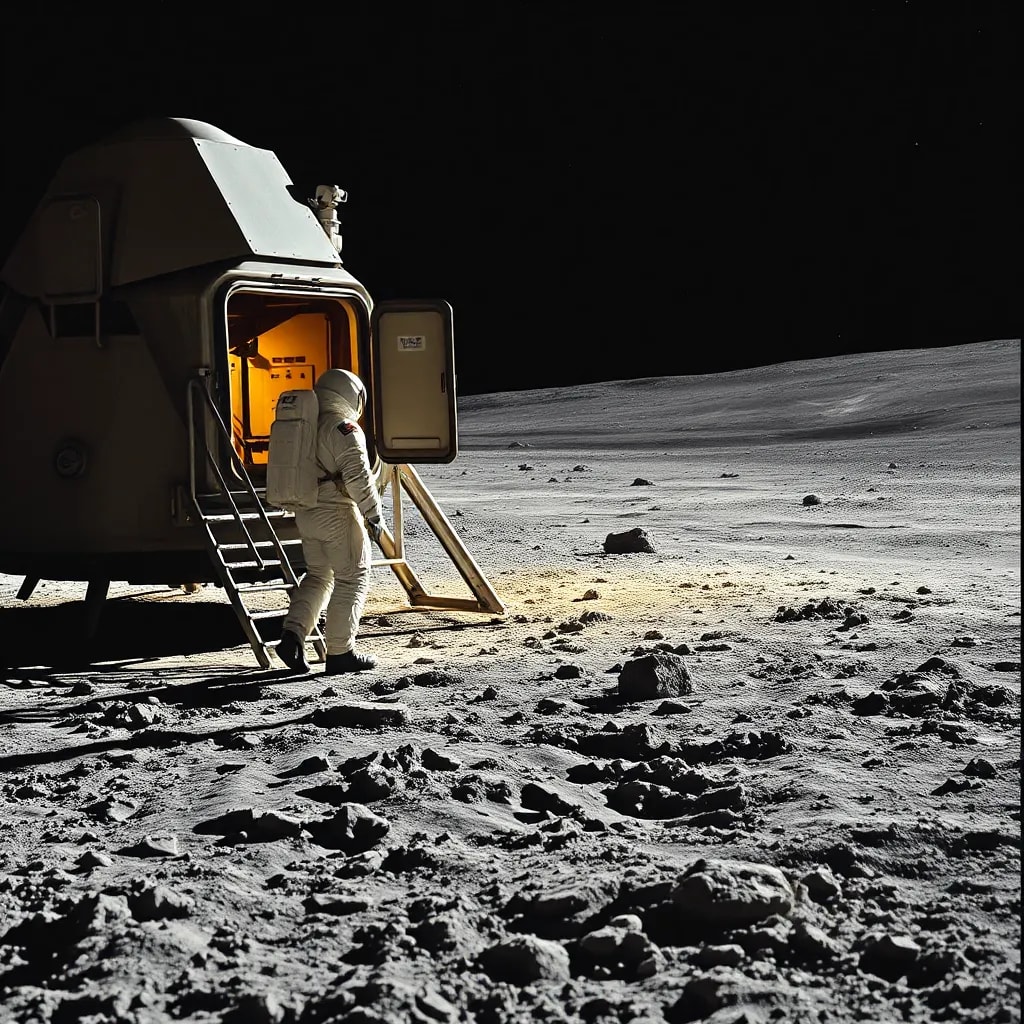
When the Apollo astronauts first set foot on the Moon, they were prepared for almost everything — the eerie silence, the harsh beauty, the low gravity. But no one expected the Moon to have a smell. And yet, the moment they returned to the safety of their lunar landers, an unmistakable scent filled the cabin. What did it smell like? Burnt gunpowder.
This unexpected “lunar aroma” became one of the most surprising — and still mysterious — discoveries of the Apollo missions.
The Smell That Followed Them Home
After their moonwalks, the astronauts brought lunar soil (called regolith) back into the cabin on their boots, gloves, and equipment. Once the cabin was sealed and oxygen began to circulate again, they noticed a sharp, metallic scent in the air. Some described it as like spent gunpowder, others compared it to the smell of fireworks, ashes, or even welding fumes.
Buzz Aldrin from Apollo 11 and Charlie Duke from Apollo 16 both emphasized how intense and distinct the smell was. But here’s the kicker: once lunar samples were returned to Earth and opened in laboratories, they had no scent at all. The mysterious smell vanished.
What was going on?
Theories Behind the “Gunpowder” Smell
Despite being in a vacuum, the Moon’s surface is far from chemically inert. Several scientific theories attempt to explain the strange lunar odor:
1. Oxidation Shock
The Moon has no atmosphere, and therefore no oxygen. Lunar dust is exposed to constant bombardment from solar radiation and micrometeorites. This makes the particles extremely reactive. When astronauts brought the dust into their oxygen-rich cabin, it may have triggered a fast oxidation process. In other words, the dust finally "met" oxygen — and released a smell as a result.
This reaction could be similar to the brief chemical chaos that happens when gunpowder ignites — sharp, metallic, slightly sulfurous.
2. Pyrolytic Chemistry
Some researchers believe the Moon’s surface contains compounds altered by high-energy cosmic rays, causing them to behave like burnt material when exposed to air. Even without burning, dry and “activated” lunar dust might produce reactions similar to those of smoldering carbon or metal particles. It’s not actual combustion — but the nose might interpret it that way.
3. Military Memories
Interestingly, several Apollo astronauts had military backgrounds. They likened the smell to that of a gun range after shooting practice — a blend of hot metal, smoke, and dusty sand. This comparison suggests that the smell wasn’t just a chemical reaction, but something deeply sensory and familiar from their Earth-based experiences.
Why Lunar Dust Loses Its Smell on Earth
So why did the samples lose their smell once they arrived on Earth? It comes down to environmental conditions.
On Earth, humidity, pressure, and the presence of other gases quickly neutralize reactive particles. The lunar samples were also stored in sterile, inert containers to prevent contamination. By the time scientists opened them, any short-lived reactions had already ended.
The "smell of the Moon" may be a fleeting phenomenon — something that can only happen in the unique moment when Moon dust first meets oxygen.
More Than Just a Curiosity
This isn’t just a quirky detail from space history. The Moon’s smell offers real scientific clues.
It tells us:
- That lunar soil is chemically energized and extremely dry.
- That the Moon’s surface is constantly reshaped by cosmic radiation and micrometeorites.
- That even without an atmosphere, there’s active chemistry waiting to happen.
The smell also serves as a reminder: our senses are part of scientific exploration. A sharp scent might be a clue to hidden chemical reactions or surface properties we can’t detect with machines alone.
Will We Smell It Again?
Someday, humans will return to the Moon — and this time, they may stay for good. When we build lunar habitats, grow food, and manufacture materials on the Moon, understanding lunar dust will become critical. It’s not just about what it smells like. It’s about how it reacts, clings to surfaces, and potentially affects health and equipment.
Perhaps one day, astronauts will catalog the Moon’s “aroma profiles” the way sommeliers describe wine. Until then, the scent of burnt gunpowder remains one of the Moon’s most peculiar secrets — a fleeting trace of another world brought back on the boots of explorers.
Conclusion: The Scent of Another World
The Moon doesn’t have a smell in the way Earth does. But when its dust touches air, something remarkable happens. A moment of chemistry — of energy meeting oxygen — that creates an unforgettable scent. Burnt. Metallic. Alien.
It’s a reminder that even in the vast silence of space, there are still ways for the Moon to surprise us.
About the Creator
Keep reading
More stories from Holianyk Ihor and writers in Futurism and other communities.
The “Dark Side” of the Moon Isn’t Always Dark: A Closer Look at a Cosmic Misunderstanding
When we hear the phrase “the dark side of the Moon,” it conjures up images of a cold, mysterious world hidden from Earth — a place forever cloaked in shadows, untouched by sunlight. But as intriguing as that sounds, the reality is far less mystical — and far more fascinating.
By Holianyk Ihor7 months ago in Futurism
About Binding Prometheus
I want to start actively advocating on behalf of my own work, and the most valuable part of my canon is, without a doubt, Binding Prometheus, the play I have been working on since 2019 and only finished in 2023 as part of my MA. The play itself is an amalgamation of a million different inspirations. On one end, it evokes the Ancient Greek myth-play, deriving its own title from the earliest extant work of Western drama we have, Aeschylus’s Prometheus Bound. On the other end, it borrows significantly from the sci-fi bulwarks from over the years, namely Mary Shelley’s Frankenstein and Karel Capek’s Rossum’s Universal Robots. The play could be an episode of Black Mirror, I fear. I don’t know. I’ve only ever seen one episode of Black Mirror.
By Steven Christopher McKnight19 days ago in Futurism



Comments
There are no comments for this story
Be the first to respond and start the conversation.