
How premium cheese, flavored milk, and yogurt innovations are driving category expansion in the Middle East dairy market.
How rising awareness of protein-rich diets and wellness lifestyles is reshaping purchasing behavior in the Middle East dairy market.

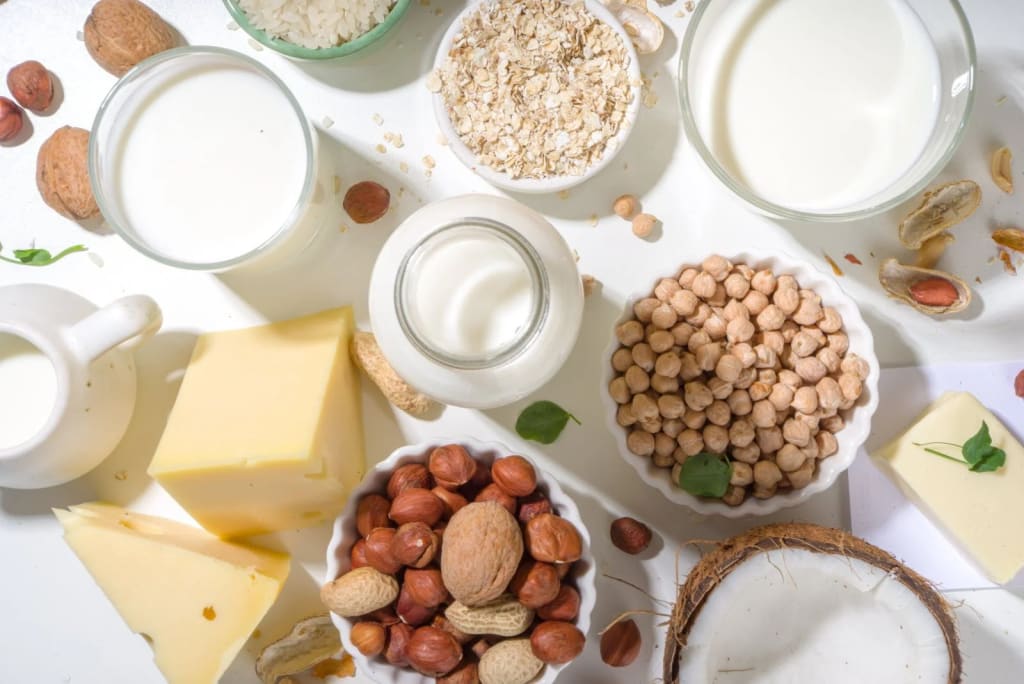
According to IMARC Group's latest research publication, Middle East dairy market size reached USD 45,591.4 Million in 2025. Looking forward, IMARC Group expects the market to reach USD 63,461.8 Million by 2034, exhibiting a growth rate (CAGR) of 3.74% during 2026-2034.
How AI is Reshaping the Future of Middle East Dairy Market
- AI-driven precision farming is optimizing feed quality and livestock health monitoring, improving milk yield and quality in the Middle East dairy sector.
- Integration of AI in dairy processing plants enhances operational efficiency and quality control, reducing production costs and waste.
- Government-backed smart farming initiatives are leveraging AI technologies to support camel breeding farms in Saudi Arabia and UAE, boosting specialized milk production.
- AI-powered supply chain analytics are improving demand forecasting and inventory management, reducing shortages and ensuring steady product availability.
- AI-based consumer insights are enabling manufacturers to customize lactose-free and functional dairy products according to localized health trends.
Middle East Dairy Market Trends & Drivers:
Health-oriented lifestyle changes among consumers in the Middle East, especially in urban areas of Saudi Arabia, the United Arab Emirates and other GCC countries, are expected to support the growth of the Middle East milk and dairy products market. Growing health awareness of functional and fortified dairy products such as probiotics for digestive health and immunity, lactose-free products and low-fat products is stimulating growth. Customary fermented products such as laban have retained their importance, but have been modified with health-promoting properties to support a public health campaign in promoting a balanced home diet based on calcium and protein-rich dairy products, and to encourage health-oriented dairy consumption by the young generation.
Furthermore, the fast-paced lifestyles led by increased urbanization also promote consumer demand for single-serve (individually packaged) yogurts, flavored milk drinks, and ready to eat cheese snacks, as well as family formats. Also, changing lifestyles are increasing consumption on the go, especially among working professionals and dual income households in busy metropolitan cities. Modern retail infrastructure and effective cold-chain logistics have allowed for wider distribution of healthy products in high temperature formats. Convenience is an increasingly pronounced driver for market growth, and industry will continue to meet the challenge of producing tasty, nutritious products adaptable and suitable for changing daily routines.
Government support of the supply of domestic production in addition to domestic production investments increase the domestic market for potatoes. Self-sufficiency policies and development of farm technologies while large companies become increasingly vertically integrated have improved domestic supply chains and decreased imports. Support programs to develop technical regulations for food quality and halal compliance as well as economic diversification in key markets provides a stable environment to support the sector in meeting increased domestic demand and diversification to higher value and niche products.
Access Reliable 2026 Market Research & Forecasts
Middle East Dairy Market Industry Segmentation:
The report has segmented the market into the following categories:
Product Type Insights:
- Liquid Milk
- Flavored Milk
- Cream
- Butter
- Cheese
- Yoghurt
- Ice Cream
- Anhydrous Milk Fat (AMF)
- Skimmed Milk Powder (SMP)
- Whole Milk Powder (WMP)
- Whey Protein
- Lactose Powder
- Curd
- Paneer
Country Insights:
- Saudi Arabia
- Turkey
- Israel
- United Arab Emirates
- Iran
- Iraq
- Qatar
- Kuwait
- Oman
- Jordan
- Bahrain
- Others
Key Players:
- Al Rawabi Dairy Company L.L.C.
- Almarai Company
- Arla Foods Amba
- Danone SA
- Lactalis International
- National Food Products Company
- Saudia Dairy and Foodstuff Company (SADAFCO)
- The National Agricultural Development Company (NADEC)
Competitive Landscape:
The competitive landscape of the industry has also been examined along with the profiles of the key players.
Recent News and Developments in Middle East Dairy Market
- January 2025: Almarai unveils a USD 4.8 billion five-year strategic investment plan, focusing on technological innovation, digital transformation, and sustainability to enhance productivity and expand beyond traditional dairy segments.
- April 2025: Saudi Arabia launches a major dairy industrial cluster in Al-Kharj Industrial City, covering 2 million square meters to boost domestic production, attract investments, and strengthen food security through integrated manufacturing.
- February 2025: Sharjah's Ektifa introduces Meliha organic laban, an organic fermented milk beverage in modern packaging, targeting health-conscious consumers with nutritional and digestive benefits.
- June 2025: Al Ain Farms Group partners with Finnish firm Foodiq to implement a new processing platform for clean-label, additive-reduced dairy and hybrid products, advancing innovation in ingredient technology and value-added offerings.
Note: If you require specific details, data, or insights that are not currently included in the scope of this report, we are happy to accommodate your request. As part of our customization service, we will gather and provide the additional information you need, tailored to your specific requirements. Please let us know your exact needs, and we will ensure the report is updated accordingly to meet your expectations.
About the Creator
Fatimah
Market research writer at IMARC Group, turning data into engaging stories. Passionate about trends, insights & real-world impact. Join me on Vocal!
About Binding Prometheus
I want to start actively advocating on behalf of my own work, and the most valuable part of my canon is, without a doubt, Binding Prometheus, the play I have been working on since 2019 and only finished in 2023 as part of my MA. The play itself is an amalgamation of a million different inspirations. On one end, it evokes the Ancient Greek myth-play, deriving its own title from the earliest extant work of Western drama we have, Aeschylus’s Prometheus Bound. On the other end, it borrows significantly from the sci-fi bulwarks from over the years, namely Mary Shelley’s Frankenstein and Karel Capek’s Rossum’s Universal Robots. The play could be an episode of Black Mirror, I fear. I don’t know. I’ve only ever seen one episode of Black Mirror.
By Steven Christopher McKnight19 days ago in Futurism


Comments
There are no comments for this story
Be the first to respond and start the conversation.