
The “Dark Side” of the Moon Isn’t Always Dark: A Closer Look at a Cosmic Misunderstanding
Space

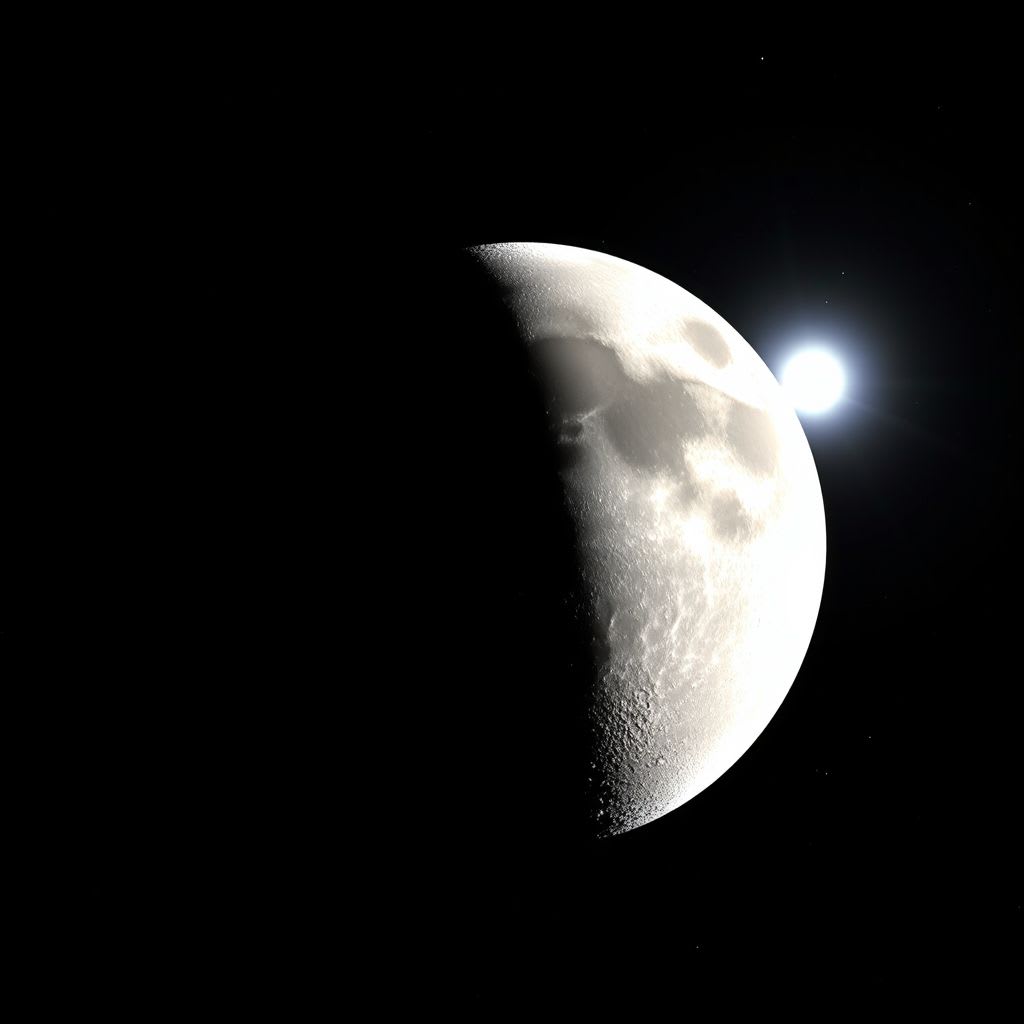
When we hear the phrase “the dark side of the Moon,” it conjures up images of a cold, mysterious world hidden from Earth — a place forever cloaked in shadows, untouched by sunlight. But as intriguing as that sounds, the reality is far less mystical — and far more fascinating.
So what exactly is the “dark side” of the Moon? And why is it not really dark at all?
One Face Always Toward Earth
The Moon is our planet’s only natural satellite, and it has a unique relationship with Earth: it’s tidally locked. That means it rotates on its axis at the same rate it orbits Earth — about once every 27.3 days. The result? One hemisphere of the Moon always faces us, and the other remains hidden.
This hidden half is what people often call “the dark side of the Moon.” But here’s the twist: it’s not always dark. In fact, it gets just as much sunlight as the side we see. The only difference is, we never see it from Earth — at least not without the help of spacecraft.
We got our first look at the Moon’s far side in 1959, thanks to the Soviet spacecraft Luna 3, which sent back the first blurry photos of this unseen terrain.
“Dark” Is a Misleading Term
When scientists hear the term “dark side of the Moon,” they wince a little. The label is misleading. It makes it sound like one half of the Moon lives in eternal shadow, like Earth’s Arctic in winter. But the Moon doesn’t work that way.
As it orbits Earth, the Moon also moves through phases of light and dark — just like Earth experiences day and night. Over the course of a lunar month (roughly 29.5 Earth days), all parts of the Moon receive sunlight and go through a day/night cycle. When we see a full Moon from Earth, the far side is in nighttime. During a new Moon, the far side is fully lit up by the Sun.
So in reality, the so-called dark side is only dark half of the time — the same as the side facing us.
What Is the “Shadowed Side” of the Moon?
If we want to be precise, the “dark side” should actually be called the night side — the portion that isn’t being lit by the Sun at a given moment. And that side changes constantly. Just like Earth, the Moon experiences a day and night cycle, only much slower. One lunar day (sunrise to sunset) lasts about 15 Earth days.
At any given time, half the Moon is in sunlight, and half is in shadow. That shadow moves across the lunar surface as the Moon orbits Earth and spins on its axis.
What Makes the Far Side Special?
The far side of the Moon isn’t just mysterious because we can’t see it — it’s physically different. Unlike the near side, which is dotted with dark plains of solidified lava called maria, the far side has far fewer of these smooth regions. Instead, it’s peppered with craters and rugged terrain.
Why the difference? One reason might be the thickness of the Moon’s crust. Scientists believe the crust is thicker on the far side, which made it harder for ancient volcanic eruptions to reach the surface and create smooth lava plains.
Another reason: Earth provides a bit of shielding from space debris. So the near side may have experienced fewer impacts over time, while the far side took the brunt of cosmic collisions.
Why Do We Call It “Dark” Then?
The term “dark side of the Moon” caught on not because of astronomy, but because of how it feels — mysterious, unknown, even ominous. It became deeply rooted in pop culture, thanks in part to Pink Floyd’s iconic 1973 album, The Dark Side of the Moon. The name was evocative and poetic, even if not scientifically accurate.
A Hidden Treasure for Science?
The far side of the Moon may not be dark, but it is quiet — at least in a radio sense. Because it always faces away from Earth, it’s shielded from our planet’s radio chatter. This makes it an ideal location for future radio observatories. Scientists dream of setting up telescopes there to study the cosmos without interference from Earth.
It could also become the site of lunar bases, hidden from Earth’s direct view — perfect for both science and sci-fi imagination.
Conclusion: Shedding Light on the Lunar Mystery
The “dark side of the Moon” isn’t a place of eternal night. It’s a region that simply doesn’t face Earth — but it basks in sunlight just as often as the side we see. It holds secrets not because it’s hidden in darkness, but because we’ve only just begun to explore it.
Next time you look up at the Moon and admire its glowing face, remember: there’s a whole other side turning slowly through its own day and night — waiting, perhaps, for our next great step in space exploration.
About the Creator
Keep reading
More stories from Holianyk Ihor and writers in Futurism and other communities.
Planets That Spin Faster Than Dawn: Where Night Lasts Just a Blink
Imagine a world where the sunrise is gone before you even have time to say “good morning.” A planet where day and night whirl past in a matter of minutes—or even seconds. These are not scenes from a sci-fi movie, but real cosmic possibilities in our universe. Welcome to the extraordinary worlds where rotation happens so fast, the sun barely peeks over the horizon before vanishing again. Let’s take a journey to planets where a full day is shorter than an hour.
By Holianyk Ihor7 months ago in Futurism
About Binding Prometheus
I want to start actively advocating on behalf of my own work, and the most valuable part of my canon is, without a doubt, Binding Prometheus, the play I have been working on since 2019 and only finished in 2023 as part of my MA. The play itself is an amalgamation of a million different inspirations. On one end, it evokes the Ancient Greek myth-play, deriving its own title from the earliest extant work of Western drama we have, Aeschylus’s Prometheus Bound. On the other end, it borrows significantly from the sci-fi bulwarks from over the years, namely Mary Shelley’s Frankenstein and Karel Capek’s Rossum’s Universal Robots. The play could be an episode of Black Mirror, I fear. I don’t know. I’ve only ever seen one episode of Black Mirror.
By Steven Christopher McKnight19 days ago in Futurism
Contrary to popular perception, far-side observations show that Earth's moon is not "dead."
For a long time, the moon appeared to be a world that had completed its major transformations before becoming silent. Although there are still scars on its surface from heavy impacts and past lava floods, many experts have viewed such features as remnants of a far older era.
By Francis Dami7 days ago in Futurism


Comments
There are no comments for this story
Be the first to respond and start the conversation.