
Why Everything We See Is Actually the Past: A Journey Through Space and Time
Space

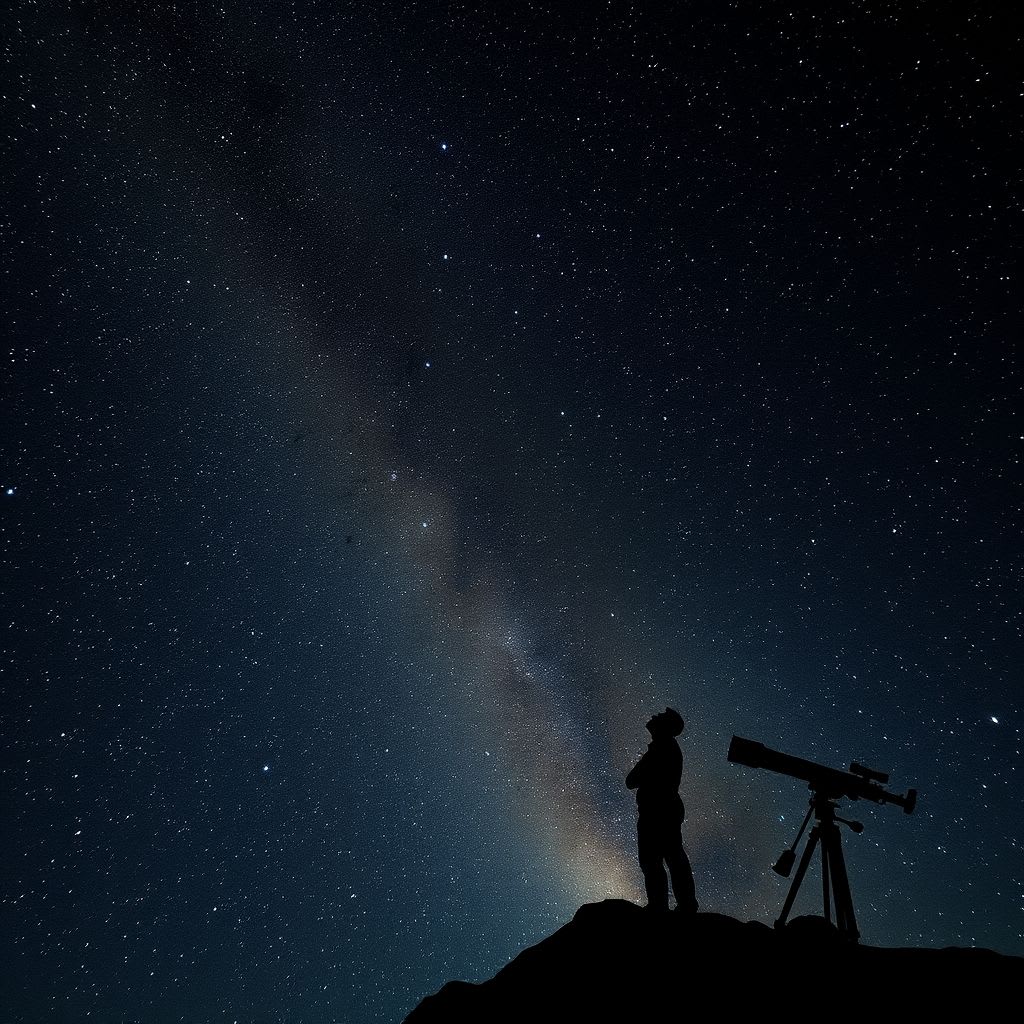
Every time you open your eyes, you become a time traveler or at least an archaeologist of light. What we see isn’t the present. It’s the past, captured and delivered to us by one of the universe’s most reliable messengers: light. This idea may sound poetic, even philosophical, but it’s grounded in solid physics. Our entire visual experience is a reflection of what was, not what is. And understanding why begins with the nature of light and the limits of its speed.
Light: The Universe’s Time Courier
Light travels incredibly fast nearly 300,000 kilometers per second (about 186,000 miles per second). But here’s the catch: it’s fast, not instantaneous. That means light takes time to move from one place to another, and by the time it gets to your eyes, what you’re seeing has already happened.
Take the Moon, for example. It’s around 384,000 kilometers (about 239,000 miles) away from Earth. The light bouncing off the Moon and into your eyes took about 1.3 seconds to travel that distance. So when you look at the Moon, you’re seeing it as it was over a second ago not as it is right now.
The same principle applies to the Sun, but on a larger scale. Sunlight takes about eight minutes to reach Earth. So if the Sun were to suddenly vanish (don’t worry, it won’t), we wouldn’t know for eight whole minutes. The sky would still be bright, the shadows would still stretch, and life would go on completely unaware of the catastrophe that had already occurred.
Distant Galaxies: Messages from the Ancient Universe
Now stretch your imagination further to galaxies millions or even billions of light years away. If a galaxy is two billion light years from Earth, then the light from it has been traveling for two billion years. When we see it through a telescope, we’re seeing it as it was before humans ever existed, before Earth was even recognizable.
In this way, astronomers are time travelers. The deeper they look into the cosmos, the further back in time they see. Some of the galaxies we observe today may no longer exist they might have collided, burned out, or transformed. But their light is only just reaching us now, delivering an ancient postcard from the early universe.
Everyday Time Travel
This isn’t just true for stars and galaxies. Even in our everyday lives, we’re always seeing the past even if just by a fraction of a second. When you look at someone across the room, the light reflecting off their face takes a tiny bit of time to reach you. Sure, it's only nanoseconds, but it’s still technically the past.
Even your own reflection in a mirror is slightly delayed. The light travels from your face to the mirror and back again, which means you're seeing yourself as you were moments ago minuscule moments, but moments nonetheless.
The Illusion of "Now"
This leads to a mind bending realization: the present, as we think of it, is an illusion. We never truly experience the now. Our brains are constantly processing delayed information. Even nerve signals from our eyes take time to reach the brain, meaning there’s a small, imperceptible delay between when something happens and when we become aware of it.
Lightning and Thunder: Earthly Evidence
Want a more tangible example? Think about a thunderstorm. When lightning strikes, you see the flash almost instantly. But the thunder arrives a few seconds later that’s because sound travels much slower than light. This delay lets you estimate how far away the storm is. The same concept applies in space, but on a massive scale. Light may arrive quickly, but other signals like X-rays, gamma rays, or radio waves can take longer, and scientists use those delays to learn more about cosmic events.
Why It Matters
Understanding that we’re always looking into the past isn’t just a cool scientific fact it has profound implications. It helps us understand how the universe works, how light behaves, and how time and space are fundamentally connected. Light becomes not just a tool of vision, but a storyteller, whispering tales of cosmic history across the vacuum of space.
So next time you look up at the stars, consider this: some of them may have died out long ago. Their light is only now reaching us, painting a sky full of ghostly memories. In a way, the night sky is a museum of the universe’s past and we are its fortunate visitors, catching a glimpse of what once was.
We don’t see things as they are. We see them as they were. And in that beautiful delay, we find the poetry of physics and the wonder of being alive in a universe that is constantly whispering its ancient secrets, one photon at a time.
About the Creator
Keep reading
More stories from Holianyk Ihor and writers in Futurism and other communities.
How Solar Cycles Affect Our Harvests: The Cosmic Link Between Sunlight and Survival
At first glance, the connection between the Sun and agriculture seems obvious: plants need sunlight to grow. But the relationship between our star and our crops runs much deeper — and stranger — than just photosynthesis. Solar energy doesn't merely warm the Earth; it shapes the climate, influences weather patterns, and, over time, has played a significant role in determining the success or failure of entire harvest seasons.
By Holianyk Ihor7 months ago in Futurism
About Binding Prometheus
I want to start actively advocating on behalf of my own work, and the most valuable part of my canon is, without a doubt, Binding Prometheus, the play I have been working on since 2019 and only finished in 2023 as part of my MA. The play itself is an amalgamation of a million different inspirations. On one end, it evokes the Ancient Greek myth-play, deriving its own title from the earliest extant work of Western drama we have, Aeschylus’s Prometheus Bound. On the other end, it borrows significantly from the sci-fi bulwarks from over the years, namely Mary Shelley’s Frankenstein and Karel Capek’s Rossum’s Universal Robots. The play could be an episode of Black Mirror, I fear. I don’t know. I’ve only ever seen one episode of Black Mirror.
By Steven Christopher McKnight15 days ago in Futurism
Singapore Electronic Paper Display Market Driven by Innovation and Investments
The Singapore electronic paper display market has reached USD 47.6 Million in 2024 and is set to experience remarkable expansion over the next decade. According to a new market research report by IMARC Group, the market is projected to reach USD 436.3 Million by 2033, reflecting a compound annual growth rate (CAGR) of 24.8% during 2025-2033.
By Abhishek Dixit3 days ago in Futurism



Comments
There are no comments for this story
Be the first to respond and start the conversation.