
How Solar Cycles Affect Our Harvests: The Cosmic Link Between Sunlight and Survival
Space

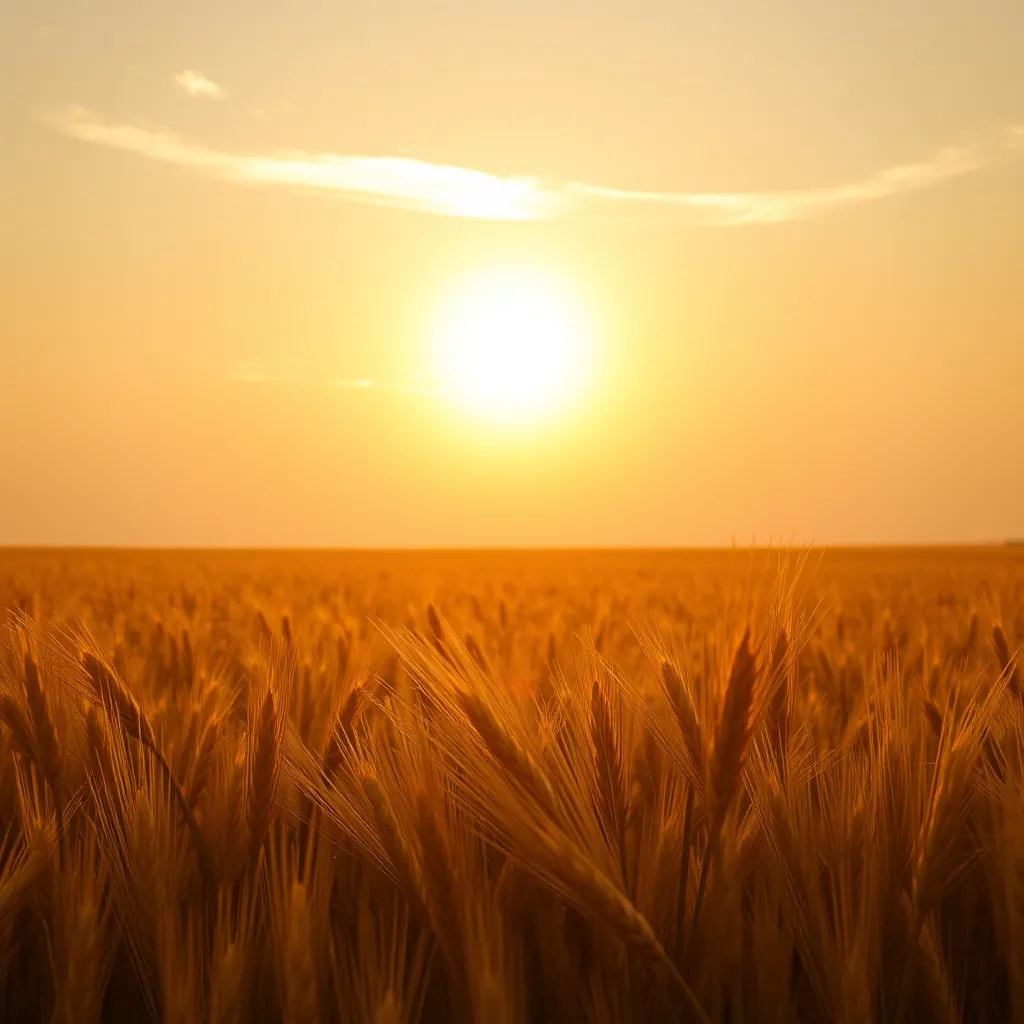
At first glance, the connection between the Sun and agriculture seems obvious: plants need sunlight to grow. But the relationship between our star and our crops runs much deeper — and stranger — than just photosynthesis. Solar energy doesn't merely warm the Earth; it shapes the climate, influences weather patterns, and, over time, has played a significant role in determining the success or failure of entire harvest seasons.
Let’s explore how solar cycles — those powerful rhythms of the Sun — subtly but significantly affect the food we grow and eat.
What Are Solar Cycles?
The Sun goes through roughly 11-year cycles of activity. These cycles are defined by changes in the number of sunspots (dark, cooler regions on the solar surface), solar flares, and the intensity of the solar wind — a stream of charged particles flowing through space.
During a solar maximum, the Sun is highly active, producing more sunspots and solar flares. In contrast, during a solar minimum, activity drops dramatically. These fluctuations don't just affect satellites and astronauts — they ripple through Earth’s magnetic field, atmosphere, oceans, and, ultimately, its farms.
History Speaks: When the Sun Went Silent
One of the most dramatic examples of solar influence on agriculture is the Little Ice Age, a period from the 14th to the 19th century when global temperatures dropped, particularly in the Northern Hemisphere. Within this cold spell, the Maunder Minimum (1645–1715) marked an extended time of minimal solar activity.
The result? Cold, wet summers. Short growing seasons. Widespread crop failures. Famines. In parts of Europe, vineyards froze, harvests dwindled, and food insecurity rose sharply. This wasn’t just a climate anomaly — it was a solar one.
Even in the 20th century, scientists observed a pattern: during years of low solar activity, regions such as North America and Central Asia experienced cooler, wetter summers — unfavorable conditions for crops like wheat and corn.
Are Solar Cycles Still Relevant?
Absolutely. While modern agriculture has advanced significantly — with fertilizers, irrigation, and genetically modified crops — it is still vulnerable to unpredictable weather. And the Sun still shapes that weather.
During solar minimums, cooler springs and soggy summers are more likely. This can delay planting, slow plant development, and increase the risk of fungal diseases. Conversely, solar maximums often bring drier, hotter conditions — which can cause drought stress and reduce yields.
In fact, researchers have found correlations between solar cycles and ENSO events (El Niño and La Niña), which heavily influence rainfall and temperature patterns around the world. These climate patterns directly impact rice yields in Southeast Asia, coffee production in Brazil, and maize harvests in Africa.
Can We Forecast Harvests Using the Sun?
Solar cycles aren't crystal balls — but they are valuable tools. Today’s agricultural models incorporate solar data to assess potential weather extremes. Governments and farming organizations in countries like Canada, China, and Russia are already factoring solar behavior into their long-term climate strategies.
For example, if a strong solar minimum is expected, farmers might adjust by:
- Planting crops that are more tolerant to cold or damp.
- Modifying planting schedules to avoid risk periods.
- Reinforcing storage systems in case of surplus moisture.
This isn't astrology — it's astro-agronomy, using celestial rhythms to make smarter decisions on Earth.
The Disruptive Power of Solar Storms
It’s not just long-term cycles that matter. Sudden solar flares and coronal mass ejections can unleash geomagnetic storms powerful enough to disrupt GPS, communication systems, and even electricity grids. That’s a big deal in today’s tech-driven agriculture.
From self-driving tractors to drone crop monitors and satellite-guided irrigation, precision farming depends heavily on technology. A major solar storm could interrupt these systems at critical times, delaying planting or harvesting — or even destroying data altogether.
Some solar events are also thought to slightly impact cloud formation and precipitation, although this is still an area of ongoing study.
Conclusion: The Sun — Our Original Farmer
We often see the Sun as a background player in agriculture, a source of light and warmth. But it’s more than that — it’s a central force in Earth’s climate machinery. Understanding solar cycles not only helps us trace the past (and its famines and flourishes) but prepares us for future challenges in food production.
From ancient farmers tracking the Sun’s rise and fall across the seasons to modern scientists using satellite data and AI-powered models, one truth remains unchanged: we farm at the mercy of the cosmos.
So the next time you break bread or bite into fresh fruit, consider this — your meal may have been helped along not just by soil and water, but by the quiet rhythm of our star 150 million kilometers away.
About the Creator
Keep reading
More stories from Holianyk Ihor and writers in Futurism and other communities.
Why the Moon Smells Like Gunpowder: The Strange Mystery of Lunar Dust
When the Apollo astronauts first set foot on the Moon, they were prepared for almost everything — the eerie silence, the harsh beauty, the low gravity. But no one expected the Moon to have a smell. And yet, the moment they returned to the safety of their lunar landers, an unmistakable scent filled the cabin. What did it smell like? Burnt gunpowder.
By Holianyk Ihor7 months ago in Futurism
About Binding Prometheus
I want to start actively advocating on behalf of my own work, and the most valuable part of my canon is, without a doubt, Binding Prometheus, the play I have been working on since 2019 and only finished in 2023 as part of my MA. The play itself is an amalgamation of a million different inspirations. On one end, it evokes the Ancient Greek myth-play, deriving its own title from the earliest extant work of Western drama we have, Aeschylus’s Prometheus Bound. On the other end, it borrows significantly from the sci-fi bulwarks from over the years, namely Mary Shelley’s Frankenstein and Karel Capek’s Rossum’s Universal Robots. The play could be an episode of Black Mirror, I fear. I don’t know. I’ve only ever seen one episode of Black Mirror.
By Steven Christopher McKnight13 days ago in Futurism
United States Asparagus Market Size & Forecast 2026–2034
The United States asparagus market is poised for stable and sustained growth over the coming decade as consumers increasingly embrace nutritious, fresh, and minimally processed foods. According to Renub Research, the U.S. asparagus market is expected to grow from US$ 9.04 billion in 2025 to US$ 13.22 billion by 2034, registering a compound annual growth rate (CAGR) of 4.32% from 2026–2034. This expansion reflects the growing importance of vegetables in everyday diets, rising demand for organic and clean-label foods, and the continued popularity of asparagus in both home kitchens and foodservice establishments.
By jaiklin Fanandish5 days ago in Futurism


Comments
There are no comments for this story
Be the first to respond and start the conversation.