
Singapore Electronic Paper Display Market Driven by Innovation and Investments
Singapore’s e-paper display market is surging, driven by green tech and innovation. Retailers using e-shelf labels and transport hubs adopting low-power signage show how energy-efficient displays cut costs and emissions.

The Singapore electronic paper display market has reached USD 47.6 Million in 2024 and is set to experience remarkable expansion over the next decade. According to a new market research report by IMARC Group, the market is projected to reach USD 436.3 Million by 2033, reflecting a compound annual growth rate (CAGR) of 24.8% during 2025-2033.
This impressive growth trajectory is being fueled by several converging factors: rapid technological breakthroughs in display technology, Singapore's strong commitment to sustainability and green innovation, and expanding commercial applications across retail, education, transportation, and consumer electronics sectors. As businesses and consumers alike prioritize energy efficiency and environmental responsibility, electronic paper displays are emerging as a compelling alternative to traditional LCD and OLED screens.
What's Making Electronic Paper Displays a Game-Changer?
Electronic paper displays, often called EPDs or e-paper, are fundamentally different from the screens we're used to seeing on smartphones and computers. Rather than emitting light, these displays reflect ambient light much like actual paper, which makes them incredibly easy on the eyes and remarkably energy-efficient.
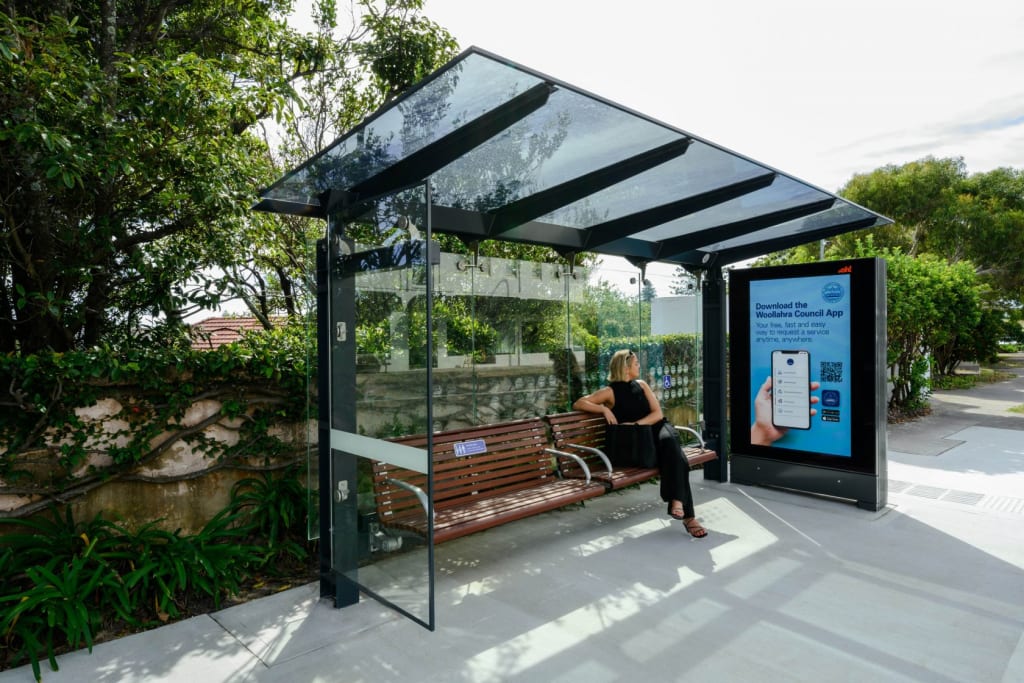
Here's what makes them special: once an image appears on an EPD, it stays there without consuming any power. That's right—zero power needed to maintain the display. Power is only required when changing what's shown on screen. This characteristic alone makes EPDs perfect for applications like e-readers, price tags in stores, information boards at bus stops, and anywhere else where information doesn't need to change constantly.
In practical terms, this technology translates to devices that can run for weeks or even months on a single battery charge. For businesses managing thousands of digital price tags across multiple store locations, or transportation authorities updating schedules on hundreds of bus stop displays, the operational savings are substantial. One retailer doesn't need to worry about changing batteries every few days—these displays just keep working.
Singapore's Perfect Storm for EPD Growth
Singapore presents a unique ecosystem where multiple market forces are aligning to accelerate EPD adoption. The city-state's position as a regional technology hub, combined with its strong environmental policies and tech-savvy population, creates ideal conditions for this market to flourish.
The government's push toward smart nation initiatives and sustainable urban development plays a significant role here. Singapore has been actively promoting green building standards and energy-efficient technologies across both public and private sectors. This policy environment naturally favors EPD technology, which aligns perfectly with national sustainability goals.
The retail sector is seeing particularly strong adoption. Walk through any modern shopping district in Singapore, and you'll increasingly spot electronic shelf labels replacing traditional paper price tags. These aren't just digital versions of paper tags—they represent a fundamental shift in how retailers manage pricing, inventory, and customer information. A grocery chain can update prices across all its stores simultaneously, respond to demand in real-time, and reduce the labor costs associated with manual price changes. During promotional periods, prices can be adjusted instantly rather than requiring staff to physically replace thousands of tags.
Educational institutions are also embracing the technology. E-readers and digital note-taking devices using EPD screens are becoming more common in classrooms and libraries. Students appreciate the paper-like reading experience that reduces eye strain during long study sessions, while institutions value the devices' long battery life and durability.
The Technology Gets Better Every Year
Recent innovations are expanding what's possible with electronic paper displays. In July 2021, researchers at Chalmers University of Technology made headlines with a breakthrough reflective screen that reproduces the full color spectrum of an LED display while using just one-tenth of the energy a standard tablet consumes. This ultra-thin, flexible material maintains EPD's core advantages while dramatically improving color reproduction and flexibility.
The industry has also made significant progress on color displays. Earlier EPD technology was limited to black and white or simple color palettes, which restricted applications. Modern color EPDs now offer vibrant, multi-color displays suitable for advertising, signage, and more sophisticated applications. Some newer displays even incorporate touch functionality, opening up interactive possibilities that weren't feasible with earlier generations.
The global momentum behind EPD technology is substantial. By early 2023, approximately 17,000 EPDs had been published globally, showing exponential growth in recent years. This rapid expansion reflects both technological maturation and growing market confidence in the technology's commercial viability.
Companies like E Ink, the worldwide commercial leader in ePaper technology, continue to push boundaries. In April 2024, E Ink announced a collaboration with AUO to develop large-sized color ePaper displays. E Ink is providing complete color ePaper modules, while AUO contributes integrated software and hardware technologies along with TFT backplane elements. This partnership aims to bring color EPD technology to larger format applications like digital signage and public displays.
Market Segments Showing Strong Momentum
Product Categories:
The market encompasses several distinct product segments, each serving specific needs:
- E-Readers remain the most familiar EPD application, offering a reading experience that closely mimics physical books while providing the convenience of carrying an entire library in one device.
- Electronic Shelf Displays (ESD) are transforming retail operations, enabling dynamic pricing, reducing operational costs, and improving inventory management accuracy.
- Auxiliary Displays are finding applications in everything from smartwatches to secondary screens on devices, where low power consumption is critical.
- Other applications continue to emerge as the technology matures, including wearable devices, medical equipment, industrial applications, and transportation systems.
Technology Approaches:
The market includes several different EPD technologies, each with distinct characteristics:
- Electrophoretic Displays (EPD) represent the dominant technology, using charged particles that move in response to electric fields to create visible images.
- Electrochromic Displays change color when electrical voltage is applied, offering different color options and switching speeds.
- Cholesteric Liquid Crystal Displays (ChLCD) reflect specific wavelengths of light, creating bright, colorful displays.
- Electro-wetting Displays and Electro-fluidic Displays represent newer approaches with unique advantages for specific applications.
Display Formats:
The market is split between Flat EPDs, which serve traditional screen applications, and Curved/Flexible EPDs, which enable innovative form factors for wearables, curved signage, and other specialized applications where traditional rigid displays won't work.
End-User Sectors:
- Consumer Electronics continues to drive significant volume, particularly through e-readers, smartwatches, and mobile device accessories.
- Institutional applications in education, libraries, and government facilities are growing as these organizations recognize the long-term cost savings and environmental benefits.
- Retail represents one of the fastest-growing segments, with electronic shelf labels and in-store digital signage becoming increasingly common.
- Other sectors including healthcare, transportation, and industrial applications are discovering new use cases as the technology becomes more versatile and cost-effective.
Why Sustainability Matters More Than Ever
Energy efficiency isn't just a nice-to-have feature anymore—it's becoming a business imperative. EPDs consume significantly less power than LCD and OLED panels, which matters both environmentally and economically. When you're managing thousands of displays across multiple locations, the difference between displays that need constant power and those that only consume energy when updating adds up quickly.
Consider a large retail chain with 10,000 electronic shelf labels across its stores. If these were traditional LCD displays, they'd require constant power and frequent battery replacements. With EPD technology, the same displays might operate for months or even years on a single battery, dramatically reducing both energy consumption and maintenance costs. This operational efficiency directly translates to lower carbon footprints and reduced operational expenses.
Singapore's emphasis on green building standards and sustainable business practices creates a receptive environment for these benefits. Companies adopting EPD technology can demonstrate measurable progress toward sustainability goals while simultaneously improving their bottom line—a combination that's becoming increasingly important to both investors and consumers.
Regional Market Dynamics Within Singapore
While Singapore is a compact nation, different regions show varying adoption patterns:
North-East and Central regions, home to major commercial districts, shopping centers, and business hubs, lead in retail and commercial EPD applications. These areas see high concentrations of electronic shelf labels and digital signage.
West and East regions, with their mix of residential, industrial, and commercial zones, show balanced adoption across consumer electronics and institutional applications.
North region, incorporating both residential areas and light industry, presents growing opportunities particularly in consumer electronics and residential applications.
The Competitive Landscape Evolution
The market is seeing interesting dynamics as established display manufacturers and specialized EPD companies compete and collaborate. LG Display announced in January 2023 that it would focus more intensively on automotive displays and solutions, recognizing automotive as a crucial future growth driver. While this announcement focused on broader display technology, it reflects how major players are investing heavily in next-generation display solutions, some of which incorporate EPD elements for specific vehicle applications.
The E Ink and AUO collaboration announced in April 2024 exemplifies how industry leaders are working together to overcome technical challenges and bring new capabilities to market. Rather than competing solely on proprietary technology, companies increasingly recognize that partnerships can accelerate innovation and market development.
Note: If you require any specific information that is not covered currently within the scope of the report, we will provide the same as a part of the customization.
About the Creator
Abhishek Dixit
I am content writer and blogger by profession
Keep reading
More stories from Abhishek Dixit and writers in Futurism and other communities.
Indonesia Diabetes Drugs Market Expands with Rising Demand and Favorable Regulations
Indonesia diabetes drugs market reached USD 1.2 Billion in 2025 and is projected to climb to USD 1.7 Billion by 2034. This growth comes as Indonesia grapples with a diabetes epidemic that now affects over 20 million adults, making it one of the countries with the highest diabetes burden in the Western Pacific region.
By Abhishek Dixit6 days ago in Futurism
About Binding Prometheus
I want to start actively advocating on behalf of my own work, and the most valuable part of my canon is, without a doubt, Binding Prometheus, the play I have been working on since 2019 and only finished in 2023 as part of my MA. The play itself is an amalgamation of a million different inspirations. On one end, it evokes the Ancient Greek myth-play, deriving its own title from the earliest extant work of Western drama we have, Aeschylus’s Prometheus Bound. On the other end, it borrows significantly from the sci-fi bulwarks from over the years, namely Mary Shelley’s Frankenstein and Karel Capek’s Rossum’s Universal Robots. The play could be an episode of Black Mirror, I fear. I don’t know. I’ve only ever seen one episode of Black Mirror.
By Steven Christopher McKnight18 days ago in Futurism
The 2026 Report: 15 Software Development Trends Reshaping the UK Tech Scene
The UK technology ecosystem is entering a defining phase. As we move into 2026, software development is no longer driven solely by speed-to-market or feature delivery. Instead, it is being reshaped by regulatory maturity, AI acceleration, sustainability mandates, security-first engineering, and rising expectations from enterprise buyers.
By NextGen Narratives5 days ago in Futurism




Comments
There are no comments for this story
Be the first to respond and start the conversation.