
Why Does Night Exist? And What If It Didn’t?
Space

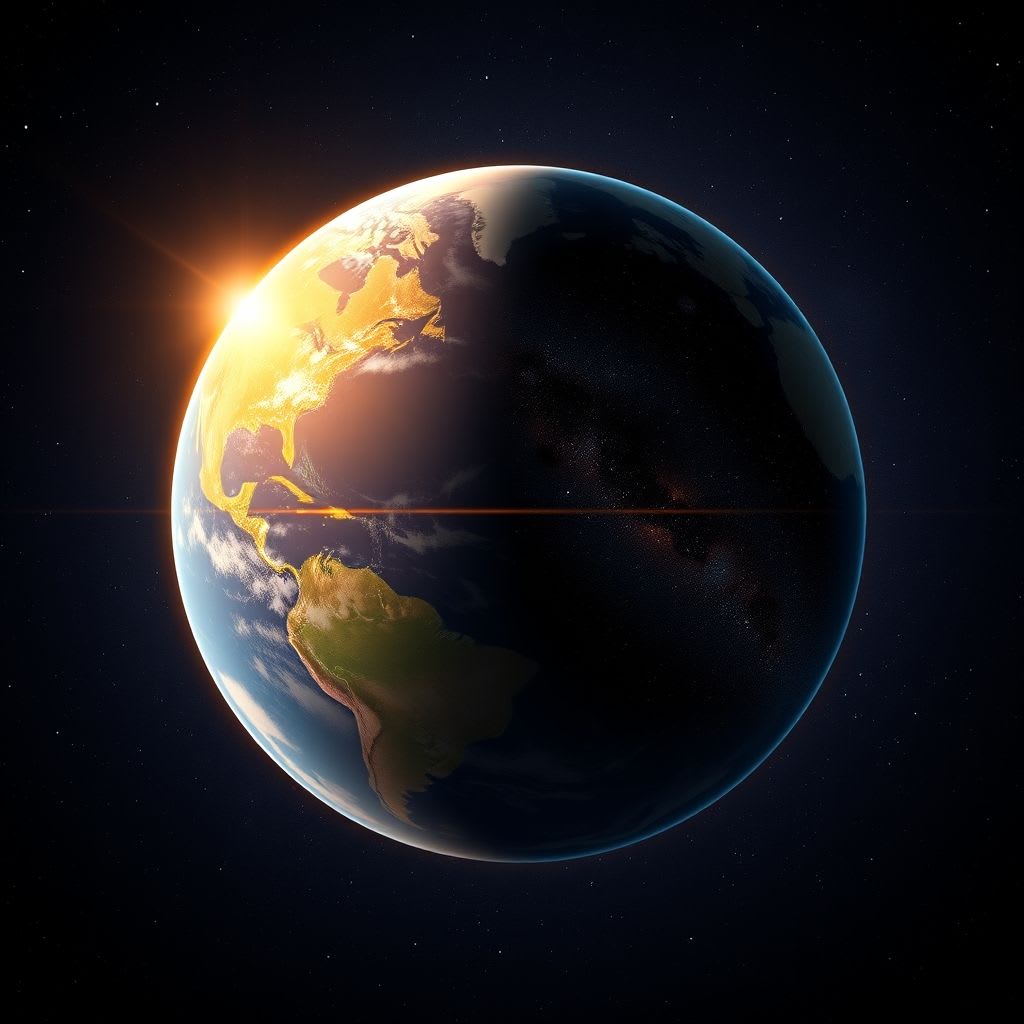
Every day ends the same way the next one begins with the arrival of night. The sun sets, the sky darkens, and we barely question it. Night just happens, right? But have you ever stopped to wonder: why does night even exist? And more intriguingly what would happen if there were no night at all?
Let’s explore this seemingly simple question and discover how the existence of night shapes everything from your sleep schedule to the survival of life on Earth.
The Earth's Spin: The Reason for Night and Day
To understand why night exists, we need to look at how our planet moves. Earth spins on its axis, completing one full rotation every 24 hours. As it turns, different parts of the globe face the Sun and then rotate away from it. This spinning motion gives us daytime when we face the Sun, and nighttime when we turn away.
We don’t feel the movement because everything around us spins at the same speed. But this silent rotation governs much more than just light and darkness it affects our sleep, the behavior of animals, and even human culture and history.
What If Earth Stopped Spinning?
Now imagine a wild scenario: what if Earth suddenly stopped rotating?
One side of the planet would be locked in perpetual daylight, constantly exposed to the blazing heat of the Sun. The other side would be stuck in eternal darkness, never seeing light again.
Sounds like science fiction, right? But the consequences would be very real and catastrophic.
The sunlit side would overheat dramatically. Without the cool relief of night, temperatures could soar to several hundred degrees Celsius. The atmosphere would become unstable, with monstrous storms and violent pressure systems forming.
Meanwhile, the dark side would freeze. With no sunlight to warm it, temperatures could drop below -100°C. Oceans might turn to ice, and almost all life would vanish.
Earth’s magnetic field, which protects us from harmful solar radiation, is generated by the movement of its molten core something that’s influenced by rotation. No rotation could mean a weaker magnetic field, exposing us to cosmic dangers.
In short: no spin, no night no stable planet.
And What If Earth Spun Too Fast?
Let’s take the opposite approach: what if Earth rotated much faster?
Suddenly, days and nights would flash by in a blur. Imagine a sunrise or sunset every hour! That might sound poetic, but it would throw the planet into chaos:
- Human and animal biological rhythms would be completely out of sync. Our internal clocks rely on predictable light-dark cycles. Fast rotation would disrupt sleep, feeding, and mating patterns.
- Weather systems would become erratic. Faster spinning would shift ocean currents and jet streams, changing climate zones and weather patterns worldwide.
- Gravity itself would feel different. On the equator, centrifugal force would increase, slightly reducing gravity. You might literally feel lighter!
Why Night Is Essential for Life
Night isn’t just the absence of sunlight. It’s a vital part of Earth’s daily rhythm, playing a critical role in maintaining balance.
1. Rest and Recovery
Night gives us sleep. Our bodies use this time to heal, process memories, and recharge. Without darkness, many species including humans would suffer severe physical and mental health issues.
2. Cooling the Planet
Night allows Earth to release the heat it absorbs during the day. Without this cooling period, temperatures would climb uncontrollably, especially in equatorial regions.
3. Supporting Nocturnal Ecosystems
Many animals are built for the night. Owls, bats, moths, and countless others rely on darkness for hunting, safety, and reproduction. No night would mean the collapse of entire ecosystems.
4. Inspiring Wonder
Night gives us the stars, the Moon, meteor showers, and the awe of the universe. Civilizations have looked to the night sky for guidance, inspiration, and navigation. Without night, we might never have reached for the stars or understood our place among them.
No Night = No Rhythm
Nature thrives on balance. Without the steady pattern of day and night, life on Earth would lose its rhythm. Plants wouldn’t know when to bloom or rest. Animals would become confused. Humans would lose their connection to natural cycles.
In essence, a world without night would be a world out of tune.
Final Thoughts: Night Is a Gift
Night is far more than just darkness. It’s half of our daily experience a period of peace, mystery, and balance. Without it, we’d lose sleep, nature would collapse, and our imagination might dim.
So next time you step outside under a starlit sky, remember: night isn’t the absence of something it’s the presence of something vital. A cosmic pause. A planetary breath. A gift from the universe that allows us to rest, reflect, and dream again with the coming dawn.
About the Creator
Keep reading
More stories from Holianyk Ihor and writers in Futurism and other communities.
The Journey of Light: How a Photon Travels from the Heart of the Sun to Your Window
Every morning, when sunlight streams through your window, it feels instant and effortless. The room brightens, shadows retreat, and a new day begins. But behind that familiar beam of light lies one of the most extraordinary journeys in the universe a journey that takes tens of thousands, sometimes even millions of years to complete.
By Holianyk Ihor6 months ago in Futurism
About Binding Prometheus
I want to start actively advocating on behalf of my own work, and the most valuable part of my canon is, without a doubt, Binding Prometheus, the play I have been working on since 2019 and only finished in 2023 as part of my MA. The play itself is an amalgamation of a million different inspirations. On one end, it evokes the Ancient Greek myth-play, deriving its own title from the earliest extant work of Western drama we have, Aeschylus’s Prometheus Bound. On the other end, it borrows significantly from the sci-fi bulwarks from over the years, namely Mary Shelley’s Frankenstein and Karel Capek’s Rossum’s Universal Robots. The play could be an episode of Black Mirror, I fear. I don’t know. I’ve only ever seen one episode of Black Mirror.
By Steven Christopher McKnight14 days ago in Futurism
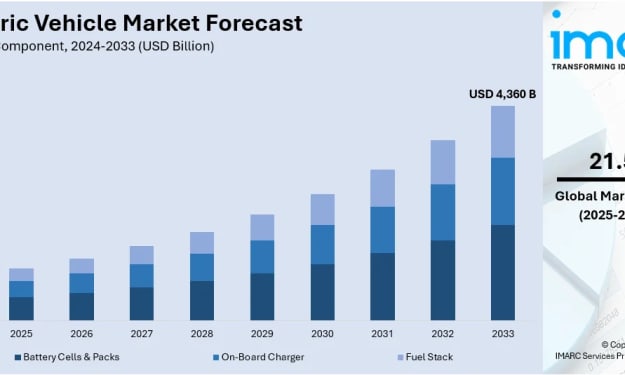
Electric Vehicle Market Size to Hit USD 4,360 Billion by 2033 Driven by Battery Innovation & Cost Declines
Rising environmental concerns, supportive government policies, falling battery costs, and expanding charging infrastructure are accelerating electric vehicle adoption, supported by technological innovation, fuel cost savings, and increasing consumer acceptance worldwide. According to IMARC Group's latest research publication, global electric vehicle market size reached USD 755 Billion in 2024. Looking forward, IMARC Group expects the market to reach USD 4,360 Billion by 2033, exhibiting a growth rate (CAGR) of 21.5% during 2025-2033.
By Abhay Rajputabout 22 hours ago in Futurism



Comments
There are no comments for this story
Be the first to respond and start the conversation.