
Where Does Space End? Mysteries at the Edge of the Universe
Space

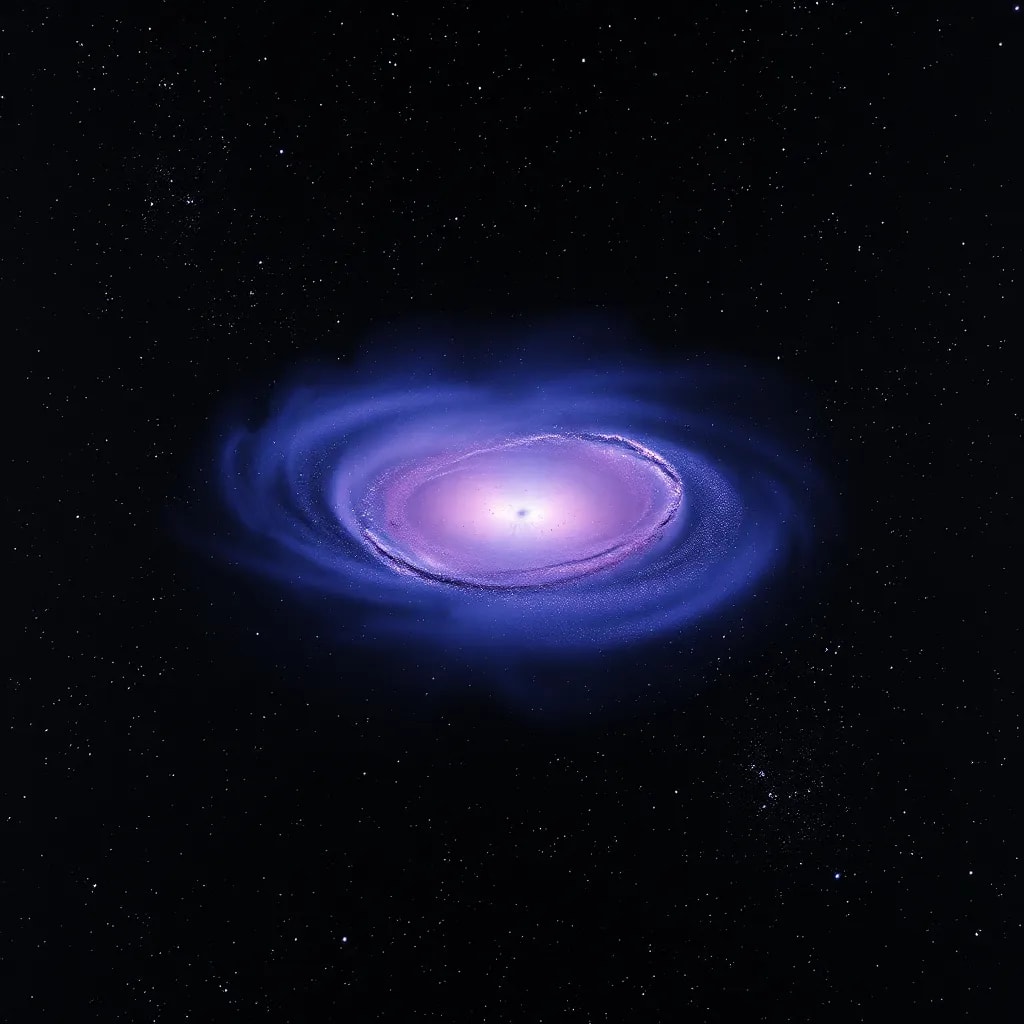
When we gaze into the night sky, it feels like it stretches on forever. Countless stars, distant galaxies, and invisible black holes draw our eyes farther and farther into the abyss. But one question, both thrilling and philosophical, lingers in the back of many minds: where does space end? Does the universe have a boundary? And if so, what lies beyond it?
Understanding the Concept of Space
Before diving into cosmic edges, let’s define what we mean by “space.” In cosmology, space isn't just an empty void it’s the three-dimensional fabric of the universe that holds everything: from subatomic particles to superclusters of galaxies. Space is not passive. It bends, stretches, compresses, and evolves. It’s a dynamic participant in the story of the cosmos.
The Expanding Universe... But Expanding Into What?
One of the most fascinating discoveries in modern physics is that the universe is expanding and has been ever since the Big Bang, 13.8 billion years ago. Galaxies aren’t flying through preexisting space; rather, space itself is growing, causing galaxies to drift farther apart.
But this leads to a puzzling thought: what is the universe expanding into? The surprising answer is nothing. There’s no “outside” of space that it’s growing into. The fabric of space stretches internally, and distances between objects increase. It’s not expanding into a container the container is part of the expansion.
To visualize this, imagine inflating a balloon with tiny dots drawn on its surface. As the balloon inflates, the dots move away from each other, not because they're moving on the surface, but because the surface itself is growing. Importantly, the balloon’s surface is two-dimensional yet it expands without needing a third-dimensional “outside.” Similarly, our universe may be a three-dimensional entity that expands within itself.
Is There an Edge to Space?
So does space have an edge we could one day reach? This is where cosmologists differ. Some believe the universe is infinite, extending without end. Others propose that the universe is finite but unbounded it has a shape and size, but no edge.
This might seem strange, but in geometry, it’s possible. Consider the surface of a globe: if you walk in one direction long enough, you'll eventually circle back to your starting point, without ever encountering a wall or falling off an edge. This suggests the universe could be shaped like a hypersphere the three-dimensional equivalent of a sphere’s surface. If that’s the case, a spaceship flying straight could theoretically return to its origin… given enough time (and fuel).
What’s Beyond the Observable Universe?
Here’s where things get even more mysterious. Due to the speed of light and the universe's age, we can only observe a limited region of space roughly 93 billion light-years in diameter. This is known as the observable universe.
But that boundary isn’t a wall. It’s simply the limit of what we can see the furthest light that has reached us so far. Beyond that lies… more universe. Possibly an infinite expanse filled with galaxies we’ll never see, or perhaps strange regions with different laws of physics. We just don’t know.
Alternative Theories and Wild Ideas
Some scientists and philosophers entertain more radical possibilities:
- Multiverse Hypothesis: Our universe might be just one “bubble” in a cosmic foam of countless other universes, each with its own rules and structure.
- Simulation Theory: If the universe is a sophisticated simulation, perhaps its boundaries are determined by computational limits akin to a video game world ending where data runs out.
- Variable Cosmic Geometry: It's possible that space beyond what we can see doesn’t behave the same way. There could be different dimensions, warped space-time, or zones with completely alien physics.
These ideas are speculative, but they remind us how much we have yet to understand.
So, Where Does Space End?
The most honest answer we have today is: we don't know.
Space might be infinite. Or it could be finite but curved in such a way that it loops back on itself. It may have boundaries, but ones that we can't access or comprehend. Or perhaps and this is the most mind-bending idea space is not something that exists “somewhere,” but a condition of how we perceive reality itself. In that case, asking where space ends may be like asking where color ends the question might not make sense outside our perception.
Final Thoughts
The question "Where does space end?" is more than a scientific inquiry it's a window into the limits of human understanding. It forces us to rethink what we know about infinity, boundaries, and existence itself.
As we continue to explore the universe, send telescopes further into the depths, and push the boundaries of physics, we may get closer to an answer. But for now, when we look up at the night sky, we don’t just see stars we glimpse the vast, mysterious frontier of human curiosity. And that, perhaps, has no edge at all.
About the Creator
Keep reading
More stories from Holianyk Ihor and writers in Futurism and other communities.
The Theory of Cosmic Mind: Could the Universe Be Conscious?
At the intersection of science and philosophy lies one of the most provocative and enigmatic ideas of our time the theory of the Cosmic Mind. It suggests that the universe is not merely a mechanical system governed by physical laws, but something far more complex perhaps even conscious, purposeful, or self-aware. While it may sound like science fiction, this theory draws from deep philosophical roots and modern interpretations of consciousness and reality.
By Holianyk Ihor6 months ago in Futurism
About Binding Prometheus
I want to start actively advocating on behalf of my own work, and the most valuable part of my canon is, without a doubt, Binding Prometheus, the play I have been working on since 2019 and only finished in 2023 as part of my MA. The play itself is an amalgamation of a million different inspirations. On one end, it evokes the Ancient Greek myth-play, deriving its own title from the earliest extant work of Western drama we have, Aeschylus’s Prometheus Bound. On the other end, it borrows significantly from the sci-fi bulwarks from over the years, namely Mary Shelley’s Frankenstein and Karel Capek’s Rossum’s Universal Robots. The play could be an episode of Black Mirror, I fear. I don’t know. I’ve only ever seen one episode of Black Mirror.
By Steven Christopher McKnight17 days ago in Futurism
UAE Board Games Market: Board Game Cafés, Imported Titles & Rising Popularity
According to IMARC Group's latest research publication, The UAE board games market size was valued at USD 101.66 Million in 2025 and is projected to reach USD 227.1 Million by 2034, growing at a compound annual growth rate of 9.34% from 2026-2034.
By Abhay Rajput3 days ago in Futurism



Comments (1)
Nice