
What Does a Person Feel Looking at Earth from Deep Space?
Space

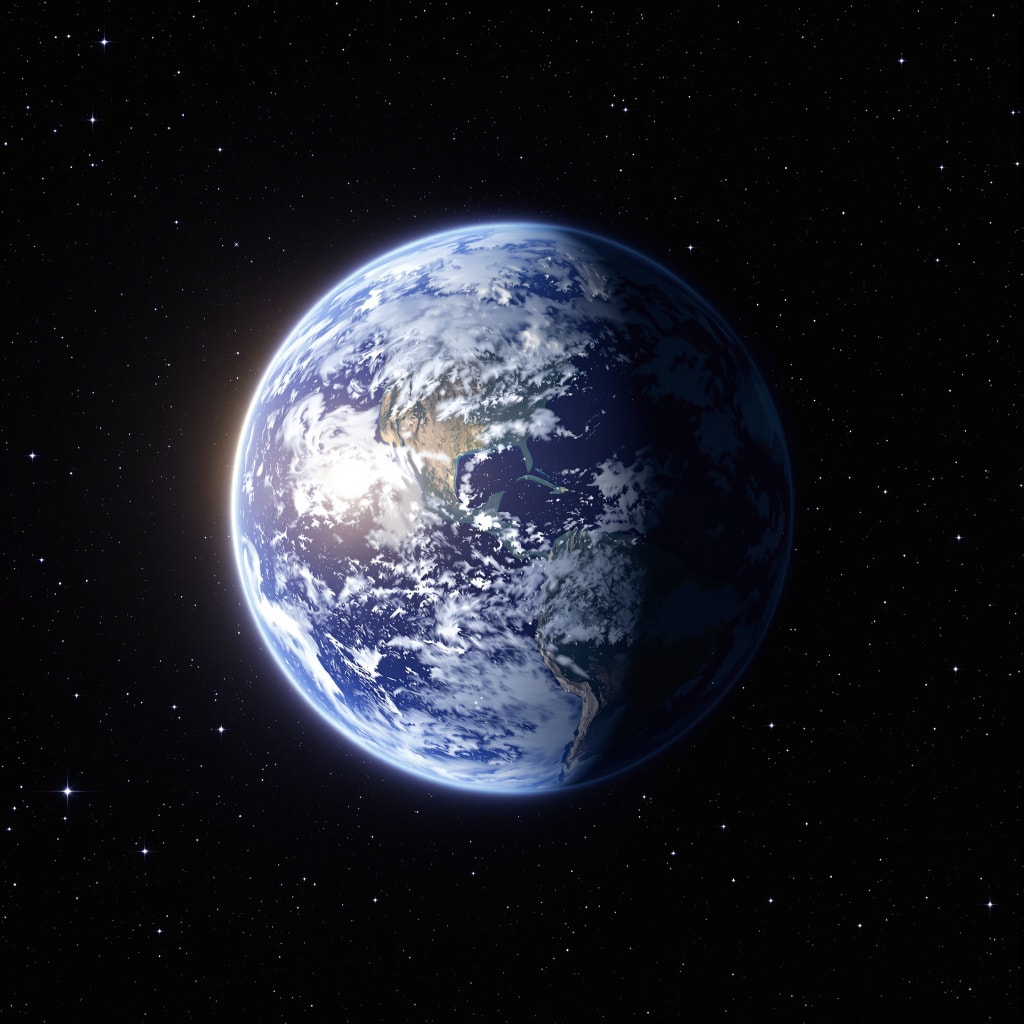
When astronauts first ventured beyond our atmosphere, they came back changed—not just physically, but emotionally and philosophically. They spoke of an overwhelming sense of awe and perspective that shook the foundations of how they viewed our world. But what happens when you go even farther? Not just into orbit or to the Moon, but to the far reaches of the Solar System or beyond—where Earth becomes no more than a faint glimmer, a pale blue dot lost in the void?
The Overview Effect: A Borderless World
Those who’ve spent time aboard the International Space Station or walked on the Moon often describe something called the overview effect. It's a profound shift in consciousness that happens when you see Earth as a whole—without borders, without conflict, without the distractions of daily life. From up there, our planet looks fragile, unified, and alive. It inspires a deep sense of connection with all of humanity.
But when you move farther out—millions, even billions of kilometers away—the planet begins to change. It no longer resembles the vibrant home teeming with life. Instead, it becomes a tiny spark of color against the infinite backdrop of black. And this shift introduces something new: a sense of cosmic detachment that’s both humbling and deeply existential.
The Pale Blue Dot: A Challenge and a Reminder
In 1990, the Voyager 1 spacecraft, already billions of kilometers from Earth, turned its camera back toward home. The photo it took became legendary. In it, Earth is barely visible—a single blue pixel suspended in a sunbeam. Carl Sagan famously called it the “Pale Blue Dot,” and reminded us that every human who has ever lived existed on that minuscule speck.
To look at Earth from such a distance is to experience a complex emotional cocktail. There’s awe at the scale of the universe. There’s a twinge of loneliness. And there’s reverence—because everything you’ve ever loved, everything that ever mattered to anyone, exists on that shimmering mote of light.
Existential Realization
In deep space, you feel profoundly alone. There is no atmospheric noise, no familiar pull of gravity, no smells of grass or rain or ocean. It’s silent. It’s still. You become not just a traveler, but an observer of life from the outside. There’s a strange clarity that emerges, almost like a meditative awareness: I exist... but my world is far, far away.
And with that clarity comes questions. Who am I? Why here? Why this planet, and not another? These are no longer distant philosophical thoughts. Out here, they become personal and urgent.
The Beauty and Fragility of Earth
From the depths of space, Earth appears almost too delicate to be real. Photographs can't capture the thinness of our atmosphere—just a fragile veil protecting us from the vacuum of space. That veil, that whisper of protection, is all that separates us from extinction.
This perspective creates a deep sense of responsibility. Not just as individuals, but as caretakers of this rare and vibrant world. It urges us to think beyond nations, ideologies, or short-term gains—and instead to think as stewards of something irreplaceable.
Loneliness, and the Spark of Hope
In the silence between stars, the absence of voices becomes profound. The glow of Earth, however faint, becomes a symbol of warmth, of life, of connection. It reminds us just how precious it is to hear another person, to feel sunlight, to walk on soil.
And yet, with that realization comes a spark of hope. If life can exist here, in one small corner of a vast and cold universe, then perhaps it’s not alone. Perhaps there are other Earths, waiting to be discovered. Perhaps we’re only at the beginning of a far grander story.
Final Thought: A Glimpse into Eternity
Looking at Earth from deep space isn’t just about distance—it’s about perspective. It’s about seeing our home for what it truly is: a miracle suspended in darkness, both infinitely small and infinitely meaningful.
It’s possible that such a vision could change us—not through science or technology alone, but through emotion. Through the quiet revelation that everything we know is part of a single, vulnerable planet floating in a sea of stars.
And maybe, just maybe, that’s the real message from deep space: not how far we can go, but how deeply we must care for the only home we've ever known.
About the Creator
Keep reading
More stories from Holianyk Ihor and writers in Futurism and other communities.
Science Fiction vs. Reality: Which Space Dreams Have Already Come True?
There was a time when reading about space travel, interplanetary missions, and intelligent aliens felt like pure fantasy — thrilling, but impossible. Rockets and moon landings were for the pages of pulp magazines, not front-page headlines. But science has a way of catching up with imagination. In fact, many ideas that once lived only in the realm of science fiction are now part of our everyday reality. It’s as if writers of the past weren’t just dreaming — they were quietly sketching blueprints for the future.
By Holianyk Ihor7 months ago in Futurism
About Binding Prometheus
I want to start actively advocating on behalf of my own work, and the most valuable part of my canon is, without a doubt, Binding Prometheus, the play I have been working on since 2019 and only finished in 2023 as part of my MA. The play itself is an amalgamation of a million different inspirations. On one end, it evokes the Ancient Greek myth-play, deriving its own title from the earliest extant work of Western drama we have, Aeschylus’s Prometheus Bound. On the other end, it borrows significantly from the sci-fi bulwarks from over the years, namely Mary Shelley’s Frankenstein and Karel Capek’s Rossum’s Universal Robots. The play could be an episode of Black Mirror, I fear. I don’t know. I’ve only ever seen one episode of Black Mirror.
By Steven Christopher McKnight11 days ago in Futurism
United States Digital Payment Market Size & Forecast 2025–2033
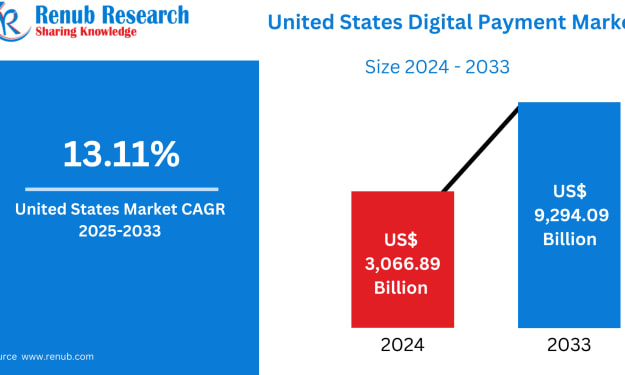
United States Digital Payment Market Overview The United States Digital Payment Market is entering a phase of remarkable acceleration as consumers, businesses, and institutions increasingly move away from cash-based transactions. According to Renub Research, the market is projected to expand dramatically from US$ 3,066.89 billion in 2024 to US$ 9,294.09 billion by 2033, registering a robust Compound Annual Growth Rate (CAGR) of 13.11% between 2025 and 2033.
By jaiklin Fanandish4 days ago in Futurism
The steps to losing a child
Step One: Lose a child. Not what anyone wants to happen and nothing you can do to change it, but you can go through steps to becoming happy again. You can go through steps to loving again. You can go through steps to become a new you because after losing a child you will never be the same person you once were.
By Tabitha Hinkley3 days ago in Fiction


Comments
There are no comments for this story
Be the first to respond and start the conversation.