
United States Digital Payment Market Size & Forecast 2025–2033
How Cashless Innovation Is Redefining the Future of American Transactions


United States Digital Payment Market Overview
The United States Digital Payment Market is entering a phase of remarkable acceleration as consumers, businesses, and institutions increasingly move away from cash-based transactions. According to Renub Research, the market is projected to expand dramatically from US$ 3,066.89 billion in 2024 to US$ 9,294.09 billion by 2033, registering a robust Compound Annual Growth Rate (CAGR) of 13.11% between 2025 and 2033.
This exponential growth reflects a broader structural shift in how Americans transact, save, and manage money. The rise of smartphones, fintech innovation, digital wallets, real-time payments, and changing consumer behavior has made electronic payments not only convenient but essential. From everyday grocery purchases to healthcare bills and subscription services, digital payments are now deeply embedded in the U.S. economic ecosystem.
What Is Digital Payment and Why Is It So Popular in the U.S.?
Digital payment refers to the electronic transfer of money without the physical exchange of cash or checks. It encompasses a wide range of platforms, including debit and credit cards, online banking, mobile wallets, peer-to-peer applications, and contactless payment systems. Popular examples include Apple Pay, Google Pay, PayPal, Venmo, and Zelle, all of which allow instant, secure, and seamless transactions.
In the United States, digital payment adoption has surged due to high smartphone penetration, near-universal internet access, and a strong preference for speed and convenience. The COVID-19 pandemic acted as a catalyst, normalizing contactless payments and accelerating e-commerce usage. Today, digital transactions are no longer an alternative—they are the default method of payment for millions of Americans.
Key Growth Drivers in the United States Digital Payment Market
High Smartphone and Internet Penetration
Nearly 91% of Americans own a smartphone, creating a powerful foundation for digital payment adoption. With mobile devices acting as personal wallets, banking centers, and shopping tools, consumers increasingly rely on apps for everyday transactions. The nationwide rollout of 5G technology further enhances transaction speed, reliability, and real-time payment processing.
Mobile-centric solutions such as QR code payments, biometric authentication, and tap-to-pay features have significantly improved the user experience. As smartphones continue to dominate consumer lifestyles, digital payments will remain a central growth driver across the U.S.
Rapid Expansion of E-Commerce and Online Services
The explosive growth of e-commerce has become one of the strongest engines of digital payment adoption. Online retail platforms, food delivery services, ride-hailing apps, and subscription-based services all depend on fast, secure, and frictionless digital payments.
One-click checkout, stored credentials, and digital wallets have dramatically reduced cart abandonment rates. Seasonal shopping events such as Black Friday and Cyber Monday generate billions of dollars in digital transactions annually. As online consumption becomes more deeply ingrained in American life, the digital payment market continues to expand in parallel.
Government and Regulatory Support for Cashless Transactions
Federal initiatives and regulatory frameworks play a crucial role in strengthening digital payment infrastructure. Programs such as the Federal Reserve’s FedNow service enable instant payments nationwide, enhancing trust and efficiency in digital transfers.
In addition, government emphasis on cybersecurity standards, financial inclusion, and digital infrastructure investment has boosted consumer and merchant confidence. In 2024, 86.9% of point-of-sale transactions in the United States were cashless, highlighting the scale of this transformation. Such regulatory backing ensures sustained long-term growth for the digital payments market.
Challenges Facing the United States Digital Payment Market
Cybersecurity Threats and Fraud Risks
Despite its rapid growth, the digital payment ecosystem faces persistent cybersecurity challenges. Phishing scams, identity theft, data breaches, and payment fraud remain key concerns, particularly as transaction volumes increase. High-profile security incidents can erode public trust and slow adoption among cautious users.
To counter these threats, payment providers invest heavily in encryption, tokenization, artificial intelligence-based fraud detection, and biometric verification. However, cyber risks continue to evolve, making security innovation a constant necessity rather than a one-time solution.
Digital Divide and Unequal Access
While digital payments are widespread, adoption is not uniform across all demographics. Rural communities and low-income households may lack access to reliable internet, smartphones, or banking services, limiting their participation in the digital economy.
Efforts to promote prepaid digital wallets, low-cost payment solutions, and financial inclusion programs are helping bridge this gap. Still, addressing inequality in digital access remains essential for ensuring inclusive growth of the U.S. digital payment market.
United States Digital Commerce Payment Market
The digital commerce payment segment continues to flourish as online shopping becomes a dominant consumer habit. Retailers increasingly offer multiple payment options, including mobile wallets, card payments, and buy-now-pay-later (BNPL) services to enhance convenience.
Secure gateways, frictionless checkout experiences, and loyalty integration encourage repeat purchases. Subscription platforms, entertainment services, and on-demand applications further contribute to consistent transaction volumes, making digital commerce payments a cornerstone of the U.S. digital economy.
United States Digital Wallet Payment Market
Digital wallets are among the fastest-growing segments in the U.S. payment landscape. Solutions such as Apple Pay, Google Pay, PayPal, and Samsung Pay allow consumers to store cards, earn rewards, and authenticate payments using biometrics.
Younger generations, particularly millennials and Gen Z, are driving adoption as they favor smartphones over physical wallets. With increasing merchant acceptance and enhanced security features, digital wallets are steadily replacing traditional payment methods in everyday transactions.
United States Digital Healthcare Payment Market
The healthcare sector is rapidly embracing digital payments as telemedicine, online billing, and patient portals become mainstream. Patients increasingly prefer electronic payments for medical consultations, insurance premiums, and prescription services.
Healthcare providers benefit from reduced administrative costs, faster billing cycles, and improved patient satisfaction. The post-pandemic expansion of digital healthcare ensures that online payment systems will remain integral to patient-centric care models.
United States Digital Telecom & IT Payment Market
Telecom and IT services heavily rely on digital payments due to subscription-based billing models. Mobile recharges, broadband services, cloud subscriptions, and software licensing all depend on automated digital transactions.
Features such as autopay, real-time billing, and mobile wallet integration have improved customer retention. As digital infrastructure expands, the telecom and IT sector continues to be a significant contributor to overall digital payment volumes in the U.S.
State-Level Insights
California Digital Payment Market
California leads the nation in digital payment adoption, driven by its technology-centric economy and innovation hubs like Silicon Valley. High smartphone usage, strong e-commerce penetration, and the presence of major fintech companies make the state a trendsetter for cashless transactions nationwide.
New York Digital Payment Market
New York’s dense population, global financial influence, and extensive retail ecosystem fuel rapid adoption of digital payments. Contactless systems dominate public transport, retail, and hospitality, reinforcing the city’s position as a digital finance powerhouse.
New Jersey Digital Payment Market
New Jersey shows steady growth due to suburban e-commerce demand and proximity to major financial centers. Mobile wallets, online banking, and digital utility payments are increasingly common, supporting the state’s gradual transition toward a cashless economy.
Market Segmentation
By Type
Digital Commerce
Digital Remittances
Mobile POS Payments
By Offering
Cards
ACH Transfer
Digital Wallet
Other Payment Modes
By End User
BFSI
Retail & E-Commerce
Transportation & Logistics
Healthcare
Telecom & IT
Media & Entertainment
Others
Top States Covered
California, Texas, New York, Florida, Illinois, Pennsylvania, Ohio, Georgia, New Jersey, Washington, North Carolina, Massachusetts, Virginia, Michigan, Maryland, Colorado, Tennessee, Indiana, Arizona, Minnesota, Wisconsin, Missouri, Connecticut, South Carolina, Oregon, Louisiana, Alabama, Kentucky, and Rest of United States.
Key Players Analysis
The competitive landscape includes comprehensive analysis across five viewpoints—overview, key personnel, recent developments, SWOT analysis, and revenue insights. Major players shaping the U.S. digital payment market include:
ACI Worldwide Inc.
Aliant Payment Systems Inc.
Amazon.com Inc.
American Express Company
Apple Inc.
Fiserv Inc.
Mastercard Incorporated
Novetti Group Limited
Paypal Holdings Inc.
Visa Inc.
Final Thoughts
The United States Digital Payment Market is undergoing a fundamental transformation, reshaping how money moves across the economy. With strong technological foundations, supportive regulations, and evolving consumer preferences, digital payments are set to dominate financial transactions through 2033 and beyond.
Despite challenges related to cybersecurity and inclusion, continuous innovation and policy support are ensuring sustained momentum. As forecasted by Renub Research, the market’s rapid expansion underscores its role as a critical pillar of the modern U.S. financial system—driving efficiency, convenience, and economic growth in a truly cashless future.
About the Creator
jaiklin Fanandish
Jaiklin Fanandish, a passionate storyteller with 10 years of experience, crafts engaging narratives that blend creativity, emotion, and imagination to inspire and connect with readers worldwide.
Keep reading
More stories from jaiklin Fanandish and writers in Futurism and other communities.
Mexico Telecom Market Size & Forecast 2025–2033
Mexico Telecom Market Overview The Mexico Telecom Market is entering a decisive phase of transformation, driven by rapid digitization, rising mobile internet usage, and continuous infrastructure upgrades. According to Renub Research, the market is projected to expand from US$ 17.83 Billion in 2024 to US$ 35.88 Billion by 2033, registering a strong CAGR of 8.08% during 2025–2033.
By jaiklin Fanandish21 days ago in Futurism
About Binding Prometheus
I want to start actively advocating on behalf of my own work, and the most valuable part of my canon is, without a doubt, Binding Prometheus, the play I have been working on since 2019 and only finished in 2023 as part of my MA. The play itself is an amalgamation of a million different inspirations. On one end, it evokes the Ancient Greek myth-play, deriving its own title from the earliest extant work of Western drama we have, Aeschylus’s Prometheus Bound. On the other end, it borrows significantly from the sci-fi bulwarks from over the years, namely Mary Shelley’s Frankenstein and Karel Capek’s Rossum’s Universal Robots. The play could be an episode of Black Mirror, I fear. I don’t know. I’ve only ever seen one episode of Black Mirror.
By Steven Christopher McKnight20 days ago in Futurism
United States Kitchen Appliance Market Size and Forecast 2025–2033
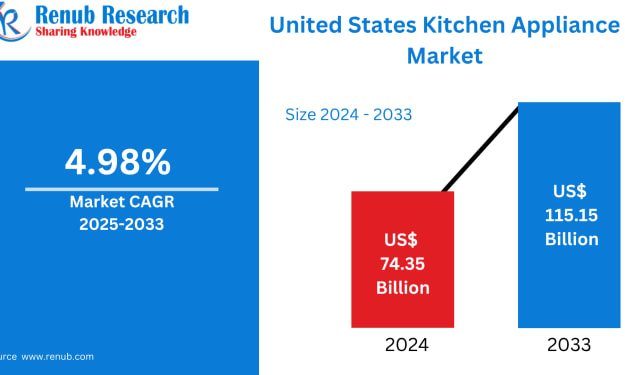
The United States kitchen appliance market is entering a defining decade shaped by innovation, sustainability, and evolving consumer lifestyles. According to Renub Research, the market is projected to reach US$ 115.15 billion by 2033, rising from US$ 74.35 billion in 2024, at a compound annual growth rate (CAGR) of 4.98% during 2025–2033.
By Marthan Sir5 days ago in Futurism



Comments
There are no comments for this story
Be the first to respond and start the conversation.