
UAE Battery Recycling Market Analysis: Industry Overview, Key Players & Future Outlook
How EV Adoption and Sustainability Policies Are Accelerating Growth in the UAE Battery Recycling Market

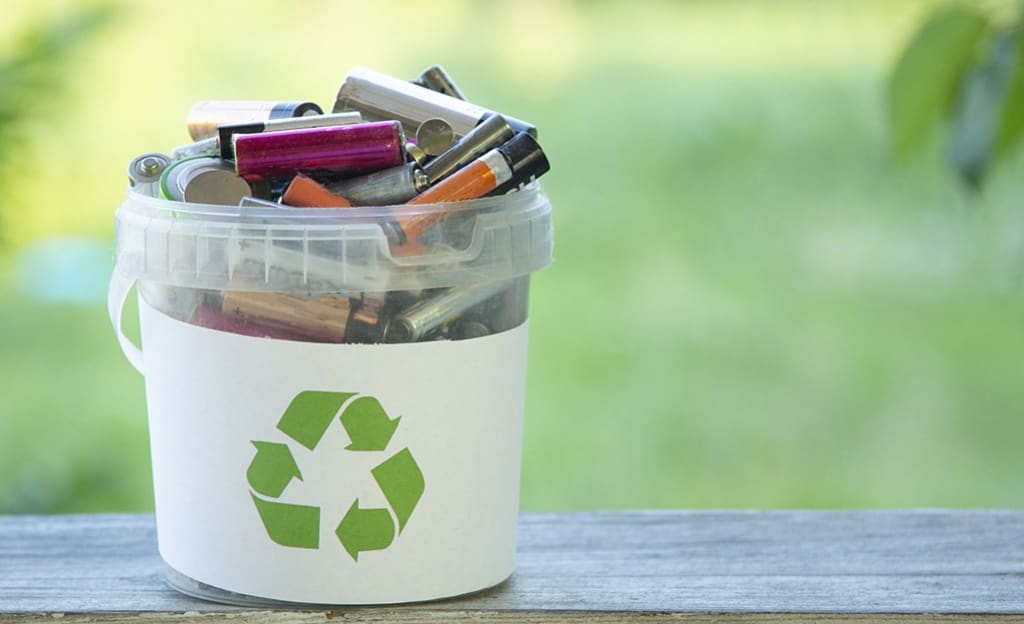
According to IMARC Group's latest research publication, UAE battery recycling market size reached USD 81.1 Million in 2024. The market is projected to reach USD 193.9 Million by 2033, exhibiting a growth rate (CAGR) of 10.18% during 2025-2033.
How AI is Reshaping the Future of UAE Battery Recycling Market
- Automated Battery Sorting and Classification: AI-powered systems achieve over 98% accuracy in identifying battery types, chemistries, and condition across portable batteries under 5kg, eliminating manual sorting safety hazards while ensuring regulatory compliance and optimizing material recovery workflows.
- Robotic Disassembly and Processing: Machine learning enables adaptive robots to recognize components, fasteners, and adhesives in complex EV battery packs, automating non-destructive disassembly that previously required labor-intensive manual work and reducing processing costs substantially.
- Predictive Quality Control and Optimization: Real-time analytical systems monitor black mass composition, processing conditions, and recovery rates throughout recycling workflows, automatically adjusting parameters to maximize lithium, cobalt, nickel, and graphite extraction efficiency.
- Digital Traceability and Battery Passport Integration: AI platforms deliver end-to-end tracking from collection through material re-entry into supply chains, supporting producers with regulatory compliance, buyback schemes, and circular market participation aligned with emerging global standards.
- Second-Life Battery Assessment and Repurposing: Advanced diagnostics powered by AI reduce traditional battery evaluation cycles from months to weeks, identifying viable cells for energy storage applications before final material extraction, maximizing resource utilization.
Download the Sample Report to Review Key Data and Forecasts
How UAE Vision 2030 is Revolutionizing Battery Recycling Industry
The UAE's strategic vision is fundamentally transforming battery recycling infrastructure through bold national electrification targets and circular economy frameworks. The government's Global EV Market initiative aims for 50% of vehicles to be electric by 2050, with over 42,000 EVs targeted on roads within the current decade. Dubai's Green Mobility Strategy has set ambitious infrastructure deployment, with plans for 70,000 charging points across the UAE, while Abu Dhabi already operates 250+ charging stations supporting rapid EV adoption. The UAE Energy Strategy, updated recently, commits AED 1.5 billion to waste management initiatives, funding specialized recycling infrastructure and programs. With 81,000 electric and hybrid vehicles already on UAE roads, the National Electric Vehicles Policy mandates 30% of public sector vehicles be electric or hybrid, driving immediate demand for end-of-life battery management. The Ministry of Energy and Infrastructure provides substantial subsidies for recycling facilities, easing capital expenditure barriers while supporting the UAE's Net Zero by 2050 Strategic Initiative and comprehensive Circular Economy Policy frameworks.
UAE Battery Recycling Market Trends & Drivers:
The surge in electric vehicle adoption is creating unprecedented demand for battery lifecycle management solutions across the UAE. With EV market growth accelerating at 30% annually between recent periods, and 70% of UAE residents considering switching to electric vehicles, the volume of end-of-life batteries is set to multiply rapidly. The conversion of 50% of Dubai's taxi fleet to hybrid vehicles and planned introduction of 4,000 autonomous electric vehicles demonstrate commercial sector commitment. Battery demand projections show global lithium-ion requirements reaching 4.7 TWh, up from 700 GWh in earlier periods, with UAE positioned as a regional hub for this growth. The UAE's target of having more than 42,000 EVs represents significant battery waste generation requiring professional recycling infrastructure. Meanwhile, stringent environmental regulations mandate proper disposal and recycling of batteries containing toxic materials like lead, cadmium, and mercury. Companies face legal and ethical obligations to comply, driving investment in recycling infrastructure to avoid penalties while supporting circular economy principles.
Growing public awareness of battery disposal hazards is accelerating market expansion throughout the emirates. With 68% of UAE residents expressing concern about waste management, educational campaigns and media coverage have successfully highlighted environmental contamination and health threats from improper battery incineration or landfilling. This consciousness empowers consumers and businesses to adopt responsible disposal practices. Sharjah's BEEAH waste management complex already achieves a 76% waste diversion rate, the highest in the Middle East, demonstrating public engagement with sustainability initiatives. The UAE's Environmental Performance Index ranking of 39th globally reflects national commitment to addressing environmental challenges through initiatives like UAE Vision 2021, which emphasizes sustainability and green growth. Corporate fleet managers increasingly prioritize eco-friendly practices, integrating electric vehicles and implementing sustainable operational protocols. The shift toward preventive environmental action rather than reactive cleanup resonates with both individual consumers and corporate decision-makers, creating market pull for professional recycling services.
Advanced recycling technologies and government-backed infrastructure development are enabling scalable battery recovery operations. The establishment of the UAE's first large-scale EV battery recycling facility in Sharjah, processing 1,500 tonnes annually with plans to double capacity within three years, demonstrates industrial readiness. The facility employs full-circle approaches, initially repurposing used EV batteries for second-life energy storage applications before safely dismantling components to recover lithium, cobalt, nickel, and graphite for supply chain reintegration. Hydrometallurgical and pyrometallurgical processing technologies enable recovery rates exceeding 95% for critical materials, with hydrometallurgy-based remanufacturing potentially reducing energy consumption and greenhouse gas emissions by over 10% compared to virgin material manufacturing. The UAE's strategic geographic location positions it as an exporter of recovered battery materials to growing African and Gulf markets. International partnerships, like LOHUM's expansion bringing India's largest sustainable critical minerals producer to the UAE, transfer proven recycling expertise while creating domestic capabilities. Government golden licenses accelerate project deployment, ensuring recycling infrastructure keeps pace with EV market growth.
UAE Battery Recycling Market Industry Segmentation:
The report has segmented the market into the following categories:
Type Insights:
- Lead-acid Batteries
- Nickel-based Batteries
- Lithium-based Batteries
- Others
Source Insights:
- Industrial
- Automotive
- Consumer Products
- Electronic Appliances
- Others
End Use Insights:
- Reuse
- Repackaging
- Extraction
- Others
Material Insights:
- Manganese
- Lithium
- Nickel
- Cobalt
- Lead
- Aluminium
- Others
Regional Insights:
- Dubai
- Abu Dhabi
- Sharjah
- Others
Competitive Landscape:
The competitive landscape of the industry has also been examined along with the profiles of the key players.
Recent News and Developments in UAE Battery Recycling Market
- January 2023: BEEAH Recycling, UAE Ministry of Energy & Infrastructure, and American University of Sharjah signed landmark agreement to establish the nation's first recycling facility for end-of-life electric vehicle batteries at BEEAH's integrated waste management complex in Sharjah.
- December 2023: LOHUM Cleantech announced partnership with Ministry of Energy & Infrastructure and BEEAH to build UAE's first EV battery recycling plant, setting up 80,000 sq ft facility to annually recycle 3,000 tons of lithium-ion batteries and repurpose 15MWh battery capacity into sustainable energy storage systems.
- January 2025: Ministry of Energy and Infrastructure, BEEAH, and LOHUM announced joint venture formation at World Future Energy Summit to develop UAE's first large-scale EV battery recycling and second-life facility in Al Saja'a, Sharjah, processing 1,500 tonnes annually with capacity doubling planned within three years.
- March 2024: UAE government allocated AED 1.5 billion for waste management initiatives under National Waste Management Strategy, with dedicated funding streams supporting battery recycling infrastructure development and circular economy programs.
- September 2024: BEEAH waste management complex in Sharjah achieved 76% waste diversion rate, highest in Middle East, with new EV battery recycling capacity set to further increase landfill diversion as electric vehicle adoption accelerates across emirates.
Note: If you require specific details, data, or insights that are not currently included in the scope of this report, we are happy to accommodate your request. As part of our customization service, we will gather and provide the additional information you need, tailored to your specific requirements. Please let us know your exact needs, and we will ensure the report is updated accordingly to meet your expectations.
About the Creator
Abhay Rajput
I am working in market research company that provides market and business research intelligence across the globe.
Keep reading
More stories from Abhay Rajput and writers in Futurism and other communities.
GCC Infrastructure Market Analysis: Industry Overview, Key Players & Future Outlook
According to IMARC Group's latest research publication, GCC Infrastructure market size reached USD 234.8 Billion in 2024. The market is projected to reach USD 386.7 Billion by 2033, exhibiting a growth rate (CAGR) of 5.3% during 2025-2033.
By Abhay Rajputabout 17 hours ago in Futurism
Global Human Microbiome Manufacturing Services Market Poised to Triple by 2031, Reaching $270 Million as Live Biotherapeutics Revolution Accelerates
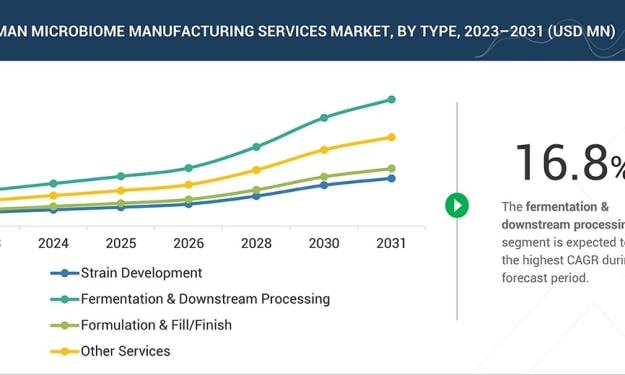
The global human microbiome manufacturing services market is entering a transformative growth phase, advancing from $110 million in 2025 to a projected $270 million by 2031, representing a compelling CAGR of 16.7%. This expansion reflects a fundamental shift in how pharmaceutical and biotechnology companies approach live biotherapeutic product (LBP) development, as specialized manufacturing capabilities become essential for bringing next-generation microbial therapeutics from clinical trials to commercial reality.
By Juan Martinez5 days ago in Futurism
Logistics Market Outlook: Supply Chain Transformation and Growth Opportunities
Rising global trade, rapid e-commerce expansion, and increasing demand for faster deliveries are driving growth in the logistics market. According to IMARC Group's latest research publication, The global logistics market size was valued at USD 5.65 Trillion in 2025. Looking forward, the industry is projected to reach USD 8.07 Trillion by 2034, exhibiting a CAGR of 4.02% during 2026-2034.
By James Whitmana day ago in Futurism



Comments
There are no comments for this story
Be the first to respond and start the conversation.