
Logistics Market Outlook: Supply Chain Transformation and Growth Opportunities
The logistics market is undergoing significant transformation, driven by supply chain digitalization, e-commerce growth, and increasing demand for efficient transportation and warehousing solutions.

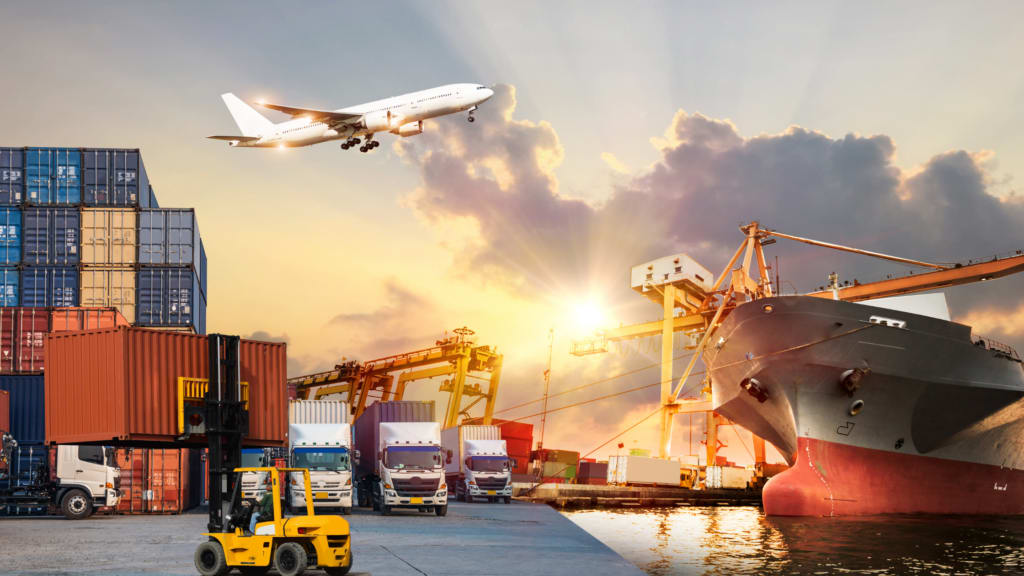
Rising global trade, rapid e-commerce expansion, and increasing demand for faster deliveries are driving growth in the logistics market. According to IMARC Group's latest research publication, The global logistics market size was valued at USD 5.65 Trillion in 2025. Looking forward, the industry is projected to reach USD 8.07 Trillion by 2034, exhibiting a CAGR of 4.02% during 2026-2034.
How AI is Reshaping the Future of Logistics Market
- Predictive Maintenance and Fleet Optimization: AI algorithms analyze sensor data and historical patterns to predict equipment failures before they occur, helping fleets avoid costly breakdowns. This technology improves asset utilization and reduces empty miles by up to 15%, maximizing operational efficiency and margins.
- Intelligent Route Planning and Real-Time Optimization: Machine learning systems process live traffic, weather, and delivery data to dynamically adjust routing. AI-powered copilots guide drivers with real-time decision support on compliance and fuel efficiency, reducing delivery times and cutting operational costs significantly.
- Warehouse Automation and Robotics Orchestration: AI coordinates picking, packing, and palletizing robots while optimizing inventory slotting for faster throughput. Companies implementing AI-driven warehouse solutions report improving inventory levels by 35% and reducing labor strain through intelligent task allocation.
Logistics Industry Overview:
The logistics sector is experiencing fundamental transformation driven by infrastructure modernization and technological advancement. The U.S. Department of Transportation allocated USD 22 billion for aviation technology updates and USD 982 million for roadway safety projects. The Bipartisan Infrastructure Investment and Jobs Act represents comprehensive federal investment in national infrastructure. Georgia's State Route 400 project secured a USD 4.6 billion, 55-year contract to design, build, and operate 16 miles of express lanes, demonstrating massive public-private collaboration reshaping transportation networks.
Logistics Market Trends & Drivers
E-commerce expansion is fundamentally reshaping warehouse and delivery networks across the logistics landscape. U.S. retail e-commerce sales reached USD 275.8 billion in Q1 alone, driving unprecedented demand for hyperlocal warehouses in urban and Tier-2 cities. Quick-commerce platforms like Blinkit, Zepto, and BigBasket are establishing micro-fulfillment centers to meet instant delivery expectations. Companies are investing heavily in last-mile delivery infrastructure, with over 90% of logistics operators now deploying some form of AI or advanced automation. This shift requires smaller, more agile vehicles and technology-driven route optimization to ensure timely delivery, intensifying competition among logistics firms to innovate and meet rising consumer expectations.
Warehouse automation adoption is accelerating as labor shortages and efficiency demands intensify across the sector. Over 52% of warehouse managers anticipate increased automation spending, with 87% planning to boost AI budgets over the next two to three years. More than half of logistics leaders report growing their warehouse workforce after implementing AI tools, while over 75% cite improved employee productivity and job satisfaction. The U.S. trucking industry faces a shortage exceeding 80,000 drivers, directly impacting delivery reliability and cost efficiency. Rather than replacing workers, automation shifts roles toward supervision, troubleshooting, and robotics coordination, with typical payback periods ranging from 12-24 months for automation investments across picking, packing, and palletizing operations.
Infrastructure investments and trade policy changes are creating new opportunities and challenges throughout global logistics networks. The global port infrastructure market expanded from USD 166.32 billion to USD 174.97 billion, driven by anticipated 3.3% growth in merchandise trade volume. India and the United Kingdom concluded a comprehensive Free Trade Agreement eliminating tariffs on approximately 99% of Indian exports, enhancing market access for textiles, engineering goods, and IT services. However, geopolitical disruptions like the Red Sea crisis caused container transport to drop 90% between December 2023 and February 2024, forcing companies to invest in diversified sourcing and nearshoring strategies. Nine of the world's busiest container ports are located in Asia Pacific, moving over 40% of total global surface freight volume, positioning the region as the dominant force in global logistics infrastructure.
Leading Companies Operating in the Global Logistics Industry:
- J.B. Hunt Transport Services
- C.H. Robinson Worldwide, Inc.
- Ceva Holdings LLC
- FedEx Corp.
- United Parcel Service, Inc.
- Expeditors International of Washington Inc.
- XPO Logistics Inc.
- Kenco Group
- Deutsche Post DHL Group
- Americold Logistics, LLC
- DSV Air & Sea Inc.
Logistics Market Report Segmentation:
By Model Type:
- 2 PL
- 3 PL
- 4 PL
The 3PL (Third-Party Logistics) segment leads the market with 56.3% share, driven by demand for cost-effective and flexible logistics solutions that allow businesses to focus on core operations.
By Transportation Mode:
- Roadways
- Seaways
- Railways
- Airways
Roadways dominate with 59.2% market share due to flexibility, low cost, extensive network, and critical last-mile delivery capabilities.
By End Use:
- Manufacturing
- Consumer Goods
- Retail
- Food and Beverages
- IT Hardware
- Healthcare
- Chemicals
- Construction
- Automotive
- Telecom
- Oil and Gas
- Others
Manufacturing accounts for 16.8% of market share, driven by requirements for effective supply chains and just-in-time inventory management.
Regional Insights:
- North America (United States, Canada)
- Asia Pacific (China, Japan, India, South Korea, Australia, Indonesia, Others)
- Europe (Germany, France, United Kingdom, Italy, Spain, Russia, Others)
- Latin America (Brazil, Mexico, Others)
- Middle East and Africa
Asia Pacific dominates the logistics market with 48.7% share, driven by rapid industrialization, e-commerce growth, strong manufacturing bases, and strategic infrastructure investments.
Recent News and Developments in Logistics Market
- March 2025: APL Logistics inaugurated its first-of-its-kind Marunda Flow Center in North Jakarta's KBN Marunda Industrial Zone, strengthening Indonesia's logistics infrastructure. Spanning 32,000 square meters, the facility features advanced automation, high-speed scanning, and a 20,000 CBM capacity, supporting seamless cargo movement. With LEED Silver certification, solar power integration, and future plans for barge services, the center reinforces Indonesia's sustainable trade growth.
- March 2025: DB Schenker announced that its FUSO eCanter electric trucks successfully operated in Finland for one year, enduring temperatures as low as -30°C. Primarily used for local and regional deliveries, these high-speed electric vehicles proved reliable even in the extreme conditions of Lapland. This initiative highlights DB Schenker's leadership in sustainable logistics and decarbonized transport.
- May 2025: DHL Group announced a global partnership with Shopify to integrate DHL's shipping services directly into the Shopify Shipping platform. This move enables millions of Shopify merchants worldwide to access DHL's global logistics network with streamlined cross-border shipping and simplified customs processes. Currently live in the U.S. and Germany, the service will expand globally throughout the coming years.
- March 2025: UPS, a global logistics company, announced an agreement with Dubai South to establish a new facility within its Logistics District. This strategic initiative aims to bolster UPS's expansion efforts in the Middle East and Africa region. The facility is expected to enhance trade connectivity by leveraging Dubai South's multimodal transport infrastructure.
- March 2025: DPD UK declared that foreign delivery services would now be available at all UK Post Office locations. Through this program, consumers may send packages overseas using DPD from 3,600 participating Post Office locations, increasing ease and opening up international shipping options. The collaboration facilitates international logistics by using a reliable national network to serve both individual and small business clients.
Note: If you require specific details, data, or insights that are not currently included in the scope of this report, we are happy to accommodate your request. As part of our customization service, we will gather and provide the additional information you need, tailored to your specific requirements. Please let us know your exact needs, and we will ensure the report is updated accordingly to meet your expectations.
About the Creator
James Whitman
With years of experience in analyzing global industries, I specialize in delivering actionable market insights that help businesses stay ahead in an ever-changing landscape.
Keep reading
More stories from James Whitman and writers in Futurism and other communities.
Wall Covering Market Outlook: Design Trends, Materials, and Growth Opportunities
Rising construction and renovation activity, growing urbanization, and demand for aesthetic interior solutions are driving growth in the wall covering market. According to IMARC Group's latest research publication, The global wall covering market size was valued at USD 39.29 Billion in 2024. Looking forward, IMARC Group estimates the market to reach USD 54.96 Billion by 2033, exhibiting a CAGR of 3.61% from 2025-2033.
By James Whitmanabout 4 hours ago in Futurism
About Binding Prometheus
I want to start actively advocating on behalf of my own work, and the most valuable part of my canon is, without a doubt, Binding Prometheus, the play I have been working on since 2019 and only finished in 2023 as part of my MA. The play itself is an amalgamation of a million different inspirations. On one end, it evokes the Ancient Greek myth-play, deriving its own title from the earliest extant work of Western drama we have, Aeschylus’s Prometheus Bound. On the other end, it borrows significantly from the sci-fi bulwarks from over the years, namely Mary Shelley’s Frankenstein and Karel Capek’s Rossum’s Universal Robots. The play could be an episode of Black Mirror, I fear. I don’t know. I’ve only ever seen one episode of Black Mirror.
By Steven Christopher McKnightabout a month ago in Futurism
AI Agents Statistics: Adoption Rate and Trends
Definition and core concept AI agents are software systems that use artificial intelligence to perceive context, make decisions, and take actions toward defined goals with varying levels of autonomy. They extend beyond simple chatbots by chaining reasoning steps, invoking tools or APIs, and sometimes collaborating with other agents to complete multi-step workflows. In practice, they are deployed for tasks such as customer support, coding assistance, marketing optimization, and back-office automation across many industries.
By Internet News Times7 days ago in Futurism
Whiskey At Dusk
Guess the whiskey was more important to you in the end, wasn’t it? It was more than the well-being of your friends; more vital than showing up to the places you promised you would and could come to; more critical of a matter than fulfilling your damn responsibilities and getting the press off your back.
By Snarky Lisa7 days ago in Humans




Comments
There are no comments for this story
Be the first to respond and start the conversation.