
Timelapse of Future Technology: A Sci-Fi Journey into Tomorrow's Innovations
Exploring the Technological Marvels of the Future: From Sci-Fi to Reality
Introduction
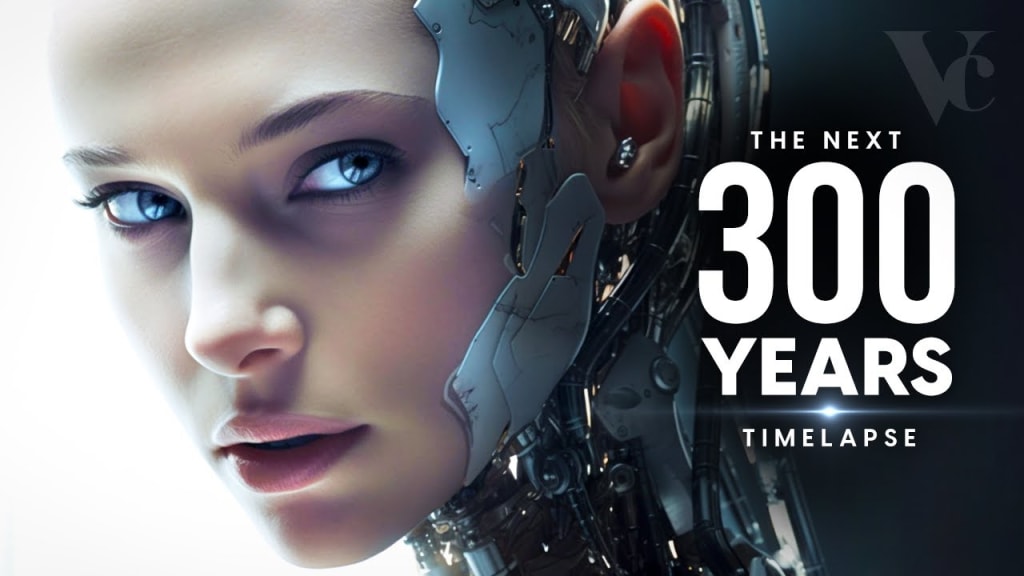
As we move deeper into the 21st century, the pace of technological advancement is accelerating like never before. What once was confined to the realms of science fiction is rapidly becoming our reality. This article takes you on a fascinating journey through the timeline of future technology, as envisioned in the Sci-Fi documentary "Timelapse of Future Technology 2." From groundbreaking innovations in AI and robotics to futuristic concepts that could reshape humanity, we explore the potential paths that technology might take in the coming centuries.
1. The Near Future: 2025-2050
The next few decades will see technologies that are already on the horizon become fully integrated into daily life. By 2025, artificial intelligence is expected to reach unprecedented levels of sophistication, allowing machines to perform tasks that currently require human intelligence. Autonomous vehicles, once a futuristic dream, will become a standard mode of transportation, transforming cities and reducing the need for human drivers.
Virtual reality and augmented reality will further blur the lines between the digital and physical worlds. Education, entertainment, and even social interactions will be revolutionized by these immersive experiences. Additionally, advancements in biotechnology could lead to significant breakthroughs in healthcare, with personalized medicine becoming the norm and life expectancy increasing dramatically.
2. Mid-Century Marvels: 2050-2100
As we approach the second half of the century, the integration of technology into human life will become even more profound. The concept of the "smart city" will reach its zenith, with urban environments designed around interconnected networks of AI, IoT (Internet of Things) devices, and renewable energy sources. These cities will be optimized for efficiency, sustainability, and the well-being of their inhabitants.
In the realm of space exploration, humans will likely establish permanent colonies on the Moon and Mars. Advances in propulsion technology, such as nuclear fusion or antimatter engines, could make interstellar travel a reality, opening up the possibility of exploring distant star systems.
Human augmentation through cybernetic enhancements will also become more common, potentially leading to a new era of transhumanism where the line between human and machine becomes increasingly blurred. This could result in enhanced physical and cognitive abilities, pushing the boundaries of what it means to be human.
3. The Distant Future: 2100 and Beyond
Looking beyond the 21st century, the possibilities become even more speculative and awe-inspiring. By the early 22nd century, we may witness the rise of a fully interconnected global consciousness, where minds are linked through advanced neural interfaces. This could lead to a new form of communication, transcending language and cultural barriers.
Nanotechnology will likely play a significant role in the future, with self-replicating nanobots capable of repairing the human body at the cellular level, effectively eliminating disease and extending human life indefinitely. This era could also see the advent of quantum computing, unlocking computational power that would dwarf today's supercomputers and potentially solving problems that are currently intractable.
As we venture further into the future, the distinction between the physical and digital worlds may disappear altogether. The concept of reality could be redefined as humans spend more time in virtual environments that are indistinguishable from the real world. Eventually, we might even develop the technology to simulate entire universes, raising profound questions about the nature of existence itself.
4. Ethical and Social Implications
While the advancements in future technology are exciting, they also raise significant ethical and social questions. The rise of AI, for instance, could lead to widespread job displacement, requiring new approaches to work and income distribution. The merging of humans with machines could create a divide between those who can afford enhancements and those who cannot, potentially exacerbating social inequalities.
Furthermore, as we venture into space and explore new worlds, the ethical considerations of colonization, resource extraction, and the potential encounter with extraterrestrial life will come to the forefront. These challenges will require careful thought and responsible innovation to ensure that the future is not only technologically advanced but also just and equitable.
Conclusion
The "Timelapse of Future Technology 2" documentary offers a captivating glimpse into the potential future of technology, from near-term innovations to distant possibilities that stretch the imagination. While these advancements promise to transform our world in profound ways, they also challenge us to consider the ethical and social implications of such a future. As we stand on the brink of this technological revolution, it's crucial that we guide its development with wisdom and foresight, ensuring that the future we create is one that benefits all of humanity.
What do you think about the future of technology? How do you imagine these advancements will impact our lives? Share your thoughts and visions in the comments below, and be sure to watch the documentary for an in-depth exploration of these fascinating concepts. Let's engage in a dialogue about the future that awaits us!
About the Creator
Keep reading
More stories from ROSEL ETUWE and writers in Futurism and other communities.
Earth's Evolution: A Timeline of the Next 100 Million Years
As we gaze up at the night sky, it's easy to think of Earth's future as distant and unchanging. However, our planet is in a constant state of evolution, shaped by forces both within and beyond its surface. In the next 100 million years, Earth will undergo transformations that, while slow to us, will be monumental in the grand scale of time. This article delves into the fascinating timeline of Earth's future, exploring what scientists predict and speculating on the profound changes that await.
By ROSEL ETUWE2 years ago in Earth
Stanislav Kondrashov Oligarch Series: Oligarchy and Global Supergrids in the Next Phase of the Energy Transition
The global energy transition is entering a phase defined less by individual technologies and more by infrastructure. One concept gaining attention is the development of global supergrids—large-scale electricity networks designed to connect distant regions through long-distance transmission systems. These networks would allow electricity to move across vast territories, creating a more interconnected energy landscape.
By Stanislav Kondrashov7 days ago in Futurism
Cell Dissociation Market Outlook: Advancements in Cell-Based Research and Growth Opportunities
According to IMARC Group's latest research publication, The global cell dissociation market size reached USD 404.8 Million in 2024. Looking forward, IMARC Group expects the market to reach USD 1,186.4 Million by 2033, exhibiting a growth rate (CAGR) of 12.06% during 2025-2033.
By James Whitman4 days ago in Futurism
Hottest in the Office
Dear Rafi, You’re very distracting to work around. For the first second I saw you the other day, I thought you were some type of executive. It took a moment to realize no, you were just the new guy, dressed up for the job he wants. Be still, my heart.
By Gabriel Shames3 days ago in Pride



Comments
There are no comments for this story
Be the first to respond and start the conversation.