
Earth's Evolution: A Timeline of the Next 100 Million Years
Exploring Earth's Transformative Journey Through the Next 100 Million Years
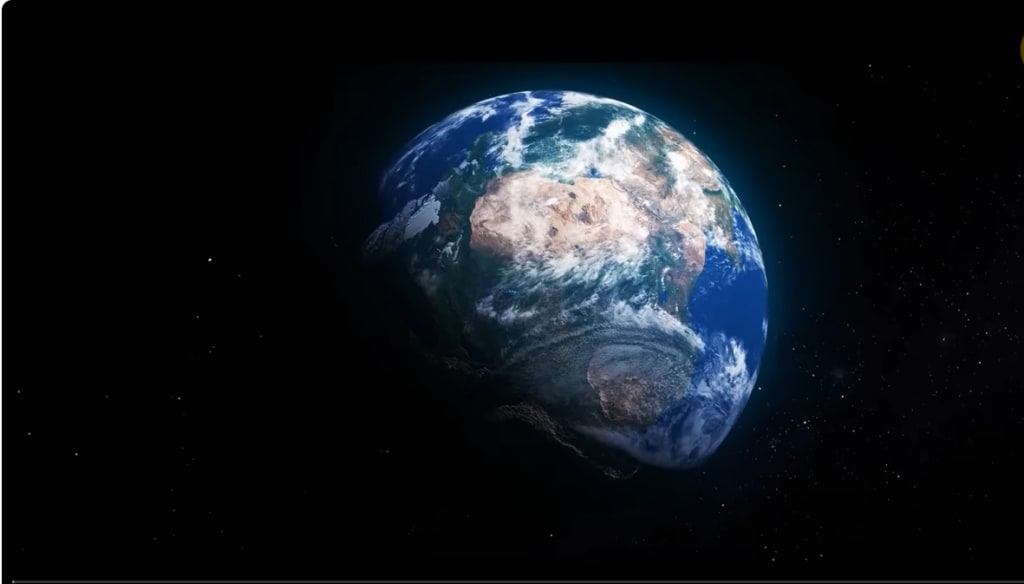
As we gaze up at the night sky, it's easy to think of Earth's future as distant and unchanging. However, our planet is in a constant state of evolution, shaped by forces both within and beyond its surface. In the next 100 million years, Earth will undergo transformations that, while slow to us, will be monumental in the grand scale of time. This article delves into the fascinating timeline of Earth's future, exploring what scientists predict and speculating on the profound changes that await.
Understanding Earth's Geological Timescale
To comprehend the future, it's essential to understand Earth's geological past. Over the last 4.5 billion years, our planet has experienced dramatic shifts, from the formation of continents to the rise and fall of entire species. Tectonic movements have rearranged the continents, while volcanic eruptions and asteroid impacts have reshaped the landscape. These processes, along with climate shifts and biological evolution, are key to predicting the next 100 million years.
Earth's history teaches us that nothing is permanent. The continents that seem so fixed today were once part of supercontinents like Pangaea, only to drift apart over millions of years. Similarly, the climate has swung between extremes, from ice ages to periods of intense heat. As we look forward, these same forces will continue to drive change, setting the stage for Earth's future.
The Next 10 Million Years: Continental Drift and Climate Shifts
In the next 10 million years, the slow but relentless movement of tectonic plates will continue to reshape the Earth's surface. Scientists predict that Africa will collide with Europe, closing the Mediterranean Sea and creating a new mountain range. Meanwhile, Australia is expected to move northward, eventually merging with Asia. These movements will have profound effects on the global climate, as ocean currents and wind patterns adjust to the new continental configurations.
As the continents drift, so too will the climate shift. Areas that are currently temperate may become arid deserts, while tropical regions could cool. The formation of new mountain ranges will alter rainfall patterns, potentially creating new ecosystems. These changes will have a significant impact on biodiversity, with some species adapting to the new conditions while others face extinction.
The Next 20-50 Million Years: Oceanic Changes and Atmospheric Evolution
The next 20 to 50 million years will bring even more dramatic changes. As tectonic activity continues, new ocean basins may open, while others close. The Atlantic Ocean, for example, could widen as the Americas drift further away from Europe and Africa. This period could also see the rise of new volcanic islands and the submersion of existing landmasses.
The Earth's atmosphere will also evolve during this time. The balance of gases like oxygen and carbon dioxide may shift, driven by factors such as volcanic activity, plant life, and the decay of organic matter. These changes could have far-reaching effects on the climate, potentially leading to periods of global warming or cooling. In turn, these shifts would influence the evolution of life on Earth, with some species thriving while others struggle to survive.
The Next 50-100 Million Years: The End of an Era?
As we look 50 to 100 million years into the future, the Earth may undergo changes that could mark the end of an era. One possibility is a mass extinction event, similar to the one that wiped out the dinosaurs 65 million years ago. This could be triggered by a variety of factors, including asteroid impacts, volcanic eruptions, or significant climate shifts.
However, it's also possible that this period will see an evolutionary burst, with new species emerging to fill the ecological niches left by extinct organisms. Human influence may play a crucial role in this process, as our activities continue to shape the environment. From climate change to genetic engineering, humanity's impact on the planet could determine whether the future is one of decline or new beginnings.
Another factor to consider is the sun’s increasing luminosity. Over time, the sun will grow hotter, gradually making Earth’s climate less hospitable. In 100 million years, the planet may become too warm to support life as we know it, prompting the need for drastic adaptations or even the colonization of other planets.
Speculative Futures: Beyond 100 Million Years
Looking beyond 100 million years, the future of Earth becomes even more speculative. Some scientists believe that the continents will eventually merge into a new supercontinent, similar to Pangaea. This massive landmass would dominate the planet's surface, surrounded by a vast ocean.
However, as the sun continues to heat up, Earth could face a slow demise. The increasing temperatures could lead to the evaporation of oceans, turning the planet into a barren, desert-like world. Alternatively, if life continues to evolve, Earth might see the rise of entirely new forms of life, adapted to the changing conditions.
In any scenario, space exploration could play a critical role in humanity’s future. As Earth becomes less hospitable, the search for new habitable planets could become a necessity rather than a curiosity. Colonizing other worlds may be the key to ensuring the survival of our species in the distant future.
Conclusion
The next 100 million years will bring profound changes to Earth, driven by forces that have shaped the planet for billions of years. From the drifting of continents to shifts in climate and atmosphere, these changes will redefine the planet as we know it. While some scenarios may seem daunting, they also offer opportunities for adaptation and evolution. By understanding and preparing for these changes, we can ensure that life on Earth—or beyond—continues to thrive.
What do you think the future holds for Earth? Share your thoughts and predictions in the comments below, and don’t forget to watch the video for a detailed visual timeline of our planet’s next 100 million years. Let's explore this fascinating journey together!
About the Creator
Keep reading
More stories from ROSEL ETUWE and writers in Earth and other communities.
The Hidden Truths of Antarctica: A Revelation from the Last Surviving Member of Admiral Byrd's Expedition
Antarctica, a vast, icy expanse at the bottom of our world, has long been a realm of mystery and intrigue. Shrouded in perpetual winter, this remote continent has captivated explorers, scientists, and conspiracy theorists alike. Beneath its icy carapace, secrets of colossal proportions may be concealed, waiting to be unearthed.
By ROSEL ETUWE2 years ago in Earth
Venus and Jupiter Shine Together: A Stunning Planetary Display in Earth’s Sky
For skywatchers across the world, there are few sights more captivating than seeing bright planets glowing in the night sky. Among these celestial wonders, the close appearance of Venus and Jupiter from Earth is one of the most spectacular. When these two brilliant planets appear close together in the sky, they create a stunning astronomical event that fascinates both professional astronomers and casual stargazers alike.
By Irshad Abbasi 6 days ago in Earth




Comments
There are no comments for this story
Be the first to respond and start the conversation.