
The Rise of Remote Work: Transforming the Future of Employment
Future

**The Rise of Remote Work: Transforming the Future of Employment**
In recent years, remote work has emerged as a defining trend in the modern workplace, fundamentally altering how we think about employment. Once considered a perk for a select few, remote work has become a mainstream option, driven by technological advancements, changing attitudes towards work-life balance, and, most notably, the global COVID-19 pandemic. As businesses and employees alike adapt to this new reality, the rise of remote work is reshaping the future of employment in ways that were once unimaginable.
### The Evolution of Remote Work
Remote work is not a new concept. For decades, freelancers, consultants, and digital nomads have worked from home or while traveling the world. However, for most traditional companies, the idea of allowing employees to work from anywhere was met with skepticism. Concerns about productivity, communication, and team cohesion kept many employers from embracing remote work on a larger scale.
The advent of high-speed internet, cloud-based tools, and collaboration platforms like Zoom, Slack, and Microsoft Teams began to chip away at these barriers. Gradually, remote work started to gain traction, especially in tech companies and startups. Yet, it wasn’t until the pandemic struck in 2020 that remote work truly exploded into the mainstream. With offices around the world forced to close, millions of employees found themselves working from home overnight.
### The Benefits of Remote Work
The sudden shift to remote work revealed numerous benefits, both for employers and employees. One of the most significant advantages is the increased flexibility it offers. Without the need to commute, employees have more time to spend with family, pursue hobbies, or simply rest. This flexibility can lead to higher job satisfaction and better work-life balance, which, in turn, can enhance overall well-being.
For employers, remote work can lead to cost savings. With fewer employees in the office, companies can reduce expenses related to office space, utilities, and other overhead costs. Additionally, the ability to hire talent from anywhere in the world expands the pool of qualified candidates, allowing businesses to build more diverse and skilled teams.
Remote work also has the potential to boost productivity. Without the distractions of a busy office environment, many employees find that they can focus better and accomplish more in less time. Moreover, remote work enables employees to work during their most productive hours, whether that’s early in the morning or late at night.
### Challenges of Remote Work
Despite its many benefits, remote work is not without its challenges. One of the most significant is the potential for isolation and loneliness. Working from home can be isolating, especially for those who live alone or in small apartments. The lack of in-person interaction can lead to feelings of disconnection from colleagues and the company culture.
Communication is another challenge. While technology has made it easier to stay in touch, virtual meetings and messaging platforms can never fully replace the nuances of face-to-face communication. Misunderstandings can arise more easily, and building strong working relationships can be more difficult in a remote environment.
Maintaining work-life balance can also be tricky when your home becomes your office. Without clear boundaries, it’s easy to fall into the trap of working longer hours or feeling the need to be “always on.” This can lead to burnout, which negates the benefits of flexibility that remote work offers.
### The Future of Remote Work
As the world emerges from the pandemic, the future of remote work remains a hot topic of discussion. Some companies have fully embraced remote work, allowing employees to work from anywhere permanently. Others have adopted hybrid models, where employees split their time between the office and home. Still, others are eager to bring their teams back to the office full-time, believing that in-person collaboration is essential for innovation and creativity.
Regardless of the approach, it’s clear that remote work is here to stay in some form. The pandemic has proven that remote work is not only possible but can be highly effective. As companies continue to refine their remote work policies, we can expect to see new innovations in how work is organized and managed.
### The Impact on Society
The rise of remote work has broader implications beyond the workplace. For one, it could lead to a shift in urban planning and real estate. With fewer people commuting to city centers daily, there may be less demand for office space and public transportation. This could prompt a reevaluation of how cities are designed and how resources are allocated.
Remote work also has the potential to democratize access to opportunities. By removing geographic barriers, people from underrepresented regions or communities can compete for jobs that were once out of reach. This could lead to greater diversity and inclusion in the workforce.
Additionally, remote work can contribute to environmental sustainability. With fewer people commuting, there is a reduction in greenhouse gas emissions and traffic congestion. This could play a role in addressing climate change and promoting a more sustainable future.
### Conclusion
The rise of remote work is more than just a trend—it’s a fundamental shift in how we work and live. While it presents challenges, the benefits are undeniable, and it offers exciting possibilities for the future of employment. As companies and employees continue to navigate this new landscape, remote work has the potential to create a more flexible, inclusive, and sustainable world of work. The key to success will be finding the right balance between remote and in-person work, embracing the opportunities that remote work offers, and addressing its challenges with thoughtful solutions.
About the Creator
About Binding Prometheus
I want to start actively advocating on behalf of my own work, and the most valuable part of my canon is, without a doubt, Binding Prometheus, the play I have been working on since 2019 and only finished in 2023 as part of my MA. The play itself is an amalgamation of a million different inspirations. On one end, it evokes the Ancient Greek myth-play, deriving its own title from the earliest extant work of Western drama we have, Aeschylus’s Prometheus Bound. On the other end, it borrows significantly from the sci-fi bulwarks from over the years, namely Mary Shelley’s Frankenstein and Karel Capek’s Rossum’s Universal Robots. The play could be an episode of Black Mirror, I fear. I don’t know. I’ve only ever seen one episode of Black Mirror.
By Steven Christopher McKnight17 days ago in Futurism
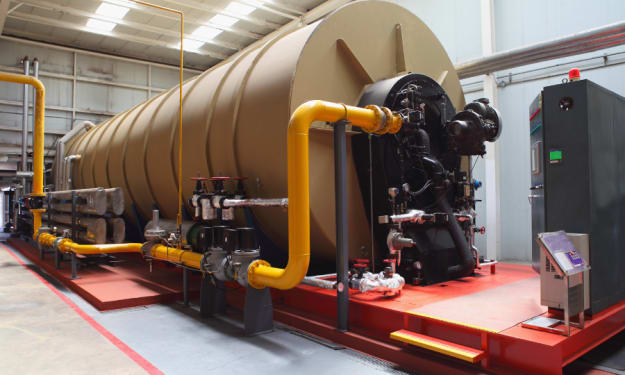
Saudi Arabia Boiler Market: Clean Energy Transition, Vision 2030, Emission Control & Modern Heating Systems
Saudi Arabia's boiler market grows through Vision 2030-driven industrialization, with rising demand in petrochemicals and power plants. Innovations like energy-efficient and biomass-fired models support sustainability goals, while Aramco expansions boost adoption of advanced systems amid rapid infrastructure projects. According to IMARC Group's latest research publication, Saudi Arabia boiler market size reached USD 902.70 Million in 2024. The market is projected to reach USD 1,631.91 Million by 2033, exhibiting a growth rate (CAGR) of 6.10% during 2025-2033.
By Jeffrey Wilson5 days ago in Futurism



Comments
There are no comments for this story
Be the first to respond and start the conversation.