
The New Space Race
Russia and the U.S. in the Arena of Space Warfare

# The New Space Race: Russia and the U.S. in the Arena of Space Warfare
## Introduction
As technology advances and the stakes of geopolitical rivalry escalate, space has emerged as a new frontier for conflict between major powers, particularly Russia and the United States. The concept of "space wars" encompasses a range of activities, from satellite espionage and missile defense systems to potential direct confrontations in orbit. This article explores the historical context, current developments, and implications of the evolving space conflict between these two nations.
## Historical Context
### The Cold War and Early Space Exploration
The rivalry between the U.S. and the Soviet Union during the Cold War laid the groundwork for today's space competition. The launch of Sputnik 1 in 1957 marked the beginning of the space race, culminating in significant milestones, such as the U.S. moon landing in 1969. While both nations were initially focused on exploration and scientific advancement, military applications of space technology soon came to the forefront.
The 1970s saw the development of anti-satellite (ASAT) weapons, with both countries testing systems designed to destroy or disable enemy satellites. The Soviet Union launched the first successful ASAT test in 1968, while the U.S. followed suit in the 1980s with its own programs.
### Post-Cold War Developments
The dissolution of the Soviet Union in 1991 shifted the dynamics of space competition. While the U.S. enjoyed a period of unchallenged dominance in space, Russia faced significant challenges in maintaining its capabilities. However, the resurgence of Russian military and technological ambitions in the 2000s reignited tensions, leading to a renewed focus on space as a strategic domain.
## Current Landscape of Space Conflict
### Militarization of Space
In recent years, both nations have increasingly militarized space, viewing it as a critical domain for national security. The U.S. has established the United States Space Force (USSF) as a separate branch of the military, tasked with protecting American interests in space. The establishment of the USSF underscores the importance of space in modern warfare, signaling a commitment to developing offensive and defensive capabilities.
Russia, for its part, has prioritized its own space capabilities, developing advanced satellite systems and ASAT technologies. In 2020, Russian officials highlighted the importance of space in military strategy, asserting that the nation must prepare for potential conflicts that could extend beyond Earth.
### Notable Incidents and Escalation
Several incidents have underscored the growing tensions in space. In 2020, the U.S. accused Russia of conducting a test of a new space-based weapon system. The Russian military has denied these allegations, claiming that its activities are purely defensive. Similarly, the U.S. has engaged in its own provocative maneuvers, conducting surveillance missions near Russian satellites.
One of the most alarming developments occurred in 2021, when Russia conducted a successful ASAT test, destroying one of its own defunct satellites. This event generated widespread concern in the international community, as the debris created posed a significant risk to operational satellites and the International Space Station (ISS).
## Strategic Implications
### National Security Concerns
Both nations view control of space as integral to their national security. For the U.S., satellite systems are vital for communication, navigation, and intelligence-gathering. A successful attack on these assets could cripple military operations and hinder the country's ability to project power globally.
Russia, on the other hand, perceives U.S. dominance in space as a direct threat. The Kremlin has articulated its intent to develop countermeasures, including ASAT systems and electronic warfare capabilities designed to disrupt enemy satellites. This strategic posture reflects a broader trend of seeking to undermine U.S. advantages while enhancing its own deterrence capabilities.
### The Role of Allies
Alliances play a crucial role in the space strategies of both countries. The U.S. has sought to bolster its partnerships with NATO allies and other nations, emphasizing collaborative efforts in space security. Initiatives like the U.S.-Japan Space Framework and the establishment of the Artemis Accords aim to foster cooperation in space exploration and enhance collective security.
Russia, meanwhile, has turned to partnerships with countries like China and India to bolster its position in the space arena. The Sino-Russian partnership has deepened, particularly in the context of joint space missions and satellite development. This cooperation may serve as a counterbalance to U.S. alliances and contribute to a multipolar space environment.
## Technological Developments
### Advances in ASAT Capabilities
Both Russia and the U.S. have invested heavily in developing advanced ASAT technologies. Russia's recent tests of missile systems capable of targeting satellites highlight its intent to maintain a credible deterrent. The development of ground-based lasers and electronic warfare systems further showcases Russia's commitment to countering U.S. satellite dominance.
The U.S. has also pursued ASAT capabilities, focusing on both kinetic and non-kinetic approaches. The integration of advanced sensors and space-based platforms enhances the ability to detect and neutralize threats to its satellite infrastructure. This technological arms race raises the stakes for both nations, as each seeks to gain an upper hand.
### Emerging Technologies
The rise of new technologies, such as artificial intelligence (AI), machine learning, and space-based sensors, has transformed the landscape of space warfare. These innovations have the potential to revolutionize surveillance, targeting, and decision-making processes in space operations. The U.S. has been at the forefront of these advancements, investing in research and development to leverage AI for military applications.
Russia, however, has not been passive in this arena. The country has made strides in developing its own AI capabilities and integrating them into its military operations. The competition for technological superiority in space is intensifying, as both nations seek to harness these tools for strategic advantage.
## International Response and Treaties
### Space Governance and Treaties
The militarization of space has prompted calls for international governance and regulation. The Outer Space Treaty of 1967, which established the framework for the peaceful use of outer space, is increasingly seen as inadequate in addressing contemporary challenges. Efforts to update or create new treaties have been met with resistance, as nations grapple with the complexities of space security.
The U.S. has advocated for a "rules-based order" in space, emphasizing the need for transparency and accountability. Russia, conversely, has criticized U.S. policies as aggressive and unilaterally driven. The lack of consensus on governance poses challenges for future cooperation and conflict prevention in space.
### The Role of Multinational Organizations
Multinational organizations, such as the United Nations Office for Outer Space Affairs (UNOOSA) and the European Space Agency (ESA), have sought to address the growing concerns about space security. Initiatives aimed at promoting dialogue and fostering cooperation among nations are essential in mitigating the risks of conflict.
However, the effectiveness of these organizations is often hampered by geopolitical rivalries. The need for dialogue and cooperation in addressing space-related challenges is more critical than ever, as the consequences of conflict in space could have far-reaching implications for global security.
## Conclusion
The emerging conflict between Russia and the U.S. in the realm of space reflects broader geopolitical tensions and the militarization of new frontiers. As both nations invest in advanced technologies and develop strategies to secure their interests, the potential for conflict in space remains a pressing concern. The international community must prioritize dialogue and cooperation to prevent an arms race in space and ensure that this critical domain remains open for peaceful exploration and use.
The stakes are high, and the consequences of a miscalculated conflict in space could extend beyond Earth, affecting life and security on our planet. As the new space race unfolds, the world watches closely, hoping that diplomacy and mutual understanding can prevail over rivalry and conflict.
About the Creator
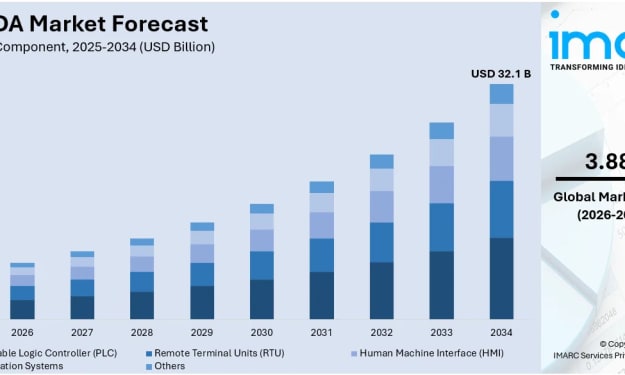
SCADA Market Trends: Smart Manufacturing Shift, Edge Computing Integration & Forecast to 2034
Rising demand for industrial automation, the rapid integration of the Industrial Internet of Things (IIoT), and the increasing need for real-time data monitoring across critical infrastructure are driving the SCADA market growth. These systems are becoming essential for optimizing operations in the oil and gas, power generation, and water management sectors, where reducing downtime and increasing efficiency are top priorities. According to IMARC Group’s latest data, the global SCADA market size was valued at USD 22.8 Billion in 2025. Looking forward, IMARC Group estimates the market to reach USD 32.1 Billion by 2034, exhibiting a CAGR of 3.88% from 2026-2034.
By Andrew Sullivana day ago in Futurism
Intravascular Warming Systems Market Outlook: Perioperative Care Advancements and Growth Opportunities
According to IMARC Group's latest research publication, The global intravascular warming systems market size reached USD 153.2 Million in 2024. Looking forward, IMARC Group expects the market to reach USD 194.8 Million by 2033, exhibiting a growth rate (CAGR) of 2.57% during 2025-2033.
By Michael Richard8 days ago in Futurism
This Is What I Do When People Throw Rocks At Me
Rocks have been thrown at me for a greater part of my life. Some have been small and missed hitting me. When people don't get a reaction from me, they throw bigger rocks with a better aim. Many have been hurled at me with precision over the years. For a long time, I thought my only options were to dodge them or be crushed by them.
By Margaret Minnicks6 days ago in Confessions



Comments
There are no comments for this story
Be the first to respond and start the conversation.