
The Psychology of Deep Space Missions: Loneliness, Fear, and Existential Reckoning
Space

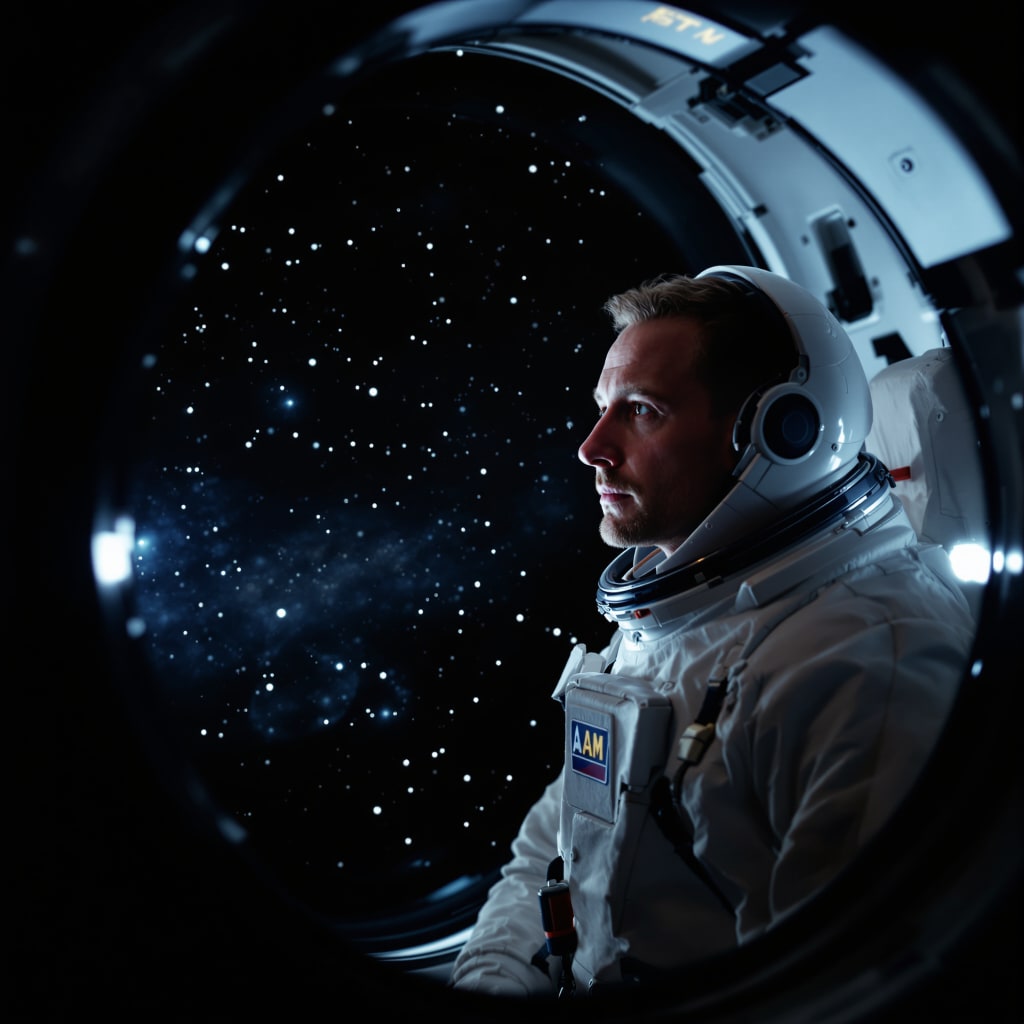
Space is often seen as the final frontier — vast, silent, and endlessly mysterious. But beyond the technical marvels and heroic narratives lies a quieter, deeper challenge: the human mind. As we push further from Earth in our quest to explore the cosmos, astronauts face not only physical trials but also intense psychological battles. Loneliness, fear, and existential reflection become constant companions. What happens to a person’s mind when Earth is just a fading blue dot in an endless sea of black?
Alone in the Void
Living aboard the International Space Station (ISS) for months is already a test of resilience — confined spaces, high-stress environments, and limited personal freedom. Yet astronauts aboard the ISS still remain within real-time communication with Earth. There are video calls, scheduled messages, and the psychological comfort of knowing help is just a few hours away.
Now imagine being on a mission to Mars. The ship is small, support is millions of kilometers away, and even a simple message takes anywhere from 5 to 20 minutes to reach Earth — and the same delay to receive a response. There's no stepping outside to feel the wind or smell the trees. No escape from the same walls, faces, and routines.
This kind of isolation isn't just physical — it's deeply emotional. Even with crewmates, astronauts may experience a profound sense of detachment from humanity. And in the case of a malfunction, injury, or personal conflict, there's no quick rescue. The psychological weight of responsibility and solitude can be overwhelming.
The Unquiet Mind: Fear in Deep Space
The human brain is wired for connection, community, and environmental stimulation. Space provides none of these. In deep space, the usual stressors are amplified: unexpected noises may indicate danger, equipment glitches trigger panic, and even silence itself becomes ominous.
Radiation, micrometeoroids, loss of communication, and system failures aren’t sci-fi horror — they’re everyday risks. Even the most seasoned astronauts admit that the farther they travel from Earth, the more exposed and vulnerable they feel.
Microgravity also affects brain chemistry and physiology. Sleep disorders, sensory disorientation, reduced motivation, and irritability are common. The lack of a day-night cycle and limited exposure to nature can gradually erode psychological well-being.
Existential Space: When the Mind Turns Inward
Perhaps the most profound effect of deep space travel isn’t found in data logs or medical records, but in the human soul. When everything familiar is stripped away — society, nature, normalcy — what remains is a raw confrontation with the self.
Astronauts often describe intense existential experiences. Alone with the stars, questions arise: Who am I, really? Why am I here? What’s the point of this mission? Psychologists refer to this as an existential crisis, a mental state where one re-evaluates the meaning of life, purpose, and identity.
But this isn’t always negative. Some astronauts describe a sort of awakening — a newfound connection to the universe, a shift in perspective. Edgar Mitchell, an Apollo astronaut, famously said after walking on the Moon, “You develop an instant global consciousness... an intense dissatisfaction with the state of the world, and a compulsion to do something about it.”
Coping Mechanisms: Training the Mind for the Stars
Space agencies are well aware of these mental challenges and invest heavily in preparation. Astronauts train in remote Arctic outposts, underwater habitats, and dark isolation chambers. These environments simulate confinement and test group dynamics, emotional endurance, and mental resilience.
To help astronauts cope, NASA and other space programs use a mix of psychological tools — including virtual reality simulations of Earth, regular video messages from loved ones, structured leisure time, and emerging artificial intelligence companions that serve as digital counselors.
Yet, the key to surviving — and thriving — during long missions isn't found in software or therapy alone. It's personal resilience. The ability to find inner peace, self-motivation, and philosophical meaning becomes a survival skill as important as engineering or piloting.
The Final Frontier Isn’t Just Out There
As we look toward future missions to Mars and beyond, we must acknowledge a critical truth: space is not only a physical challenge but a psychological one. Carl Sagan once said, “The cosmos is within us. We are made of star-stuff.” But in reaching for the stars, we also confront our deepest fears, hopes, and questions.
In the end, humanity’s journey through space may teach us as much about ourselves as it does about distant planets. And perhaps, when we finally learn to live — not just survive — in the vacuum of space, we’ll be closer to understanding our true place in the universe.
About the Creator
Keep reading
More stories from Holianyk Ihor and writers in Futurism and other communities.
What Does a Person Feel Looking at Earth from Deep Space?
When astronauts first ventured beyond our atmosphere, they came back changed—not just physically, but emotionally and philosophically. They spoke of an overwhelming sense of awe and perspective that shook the foundations of how they viewed our world. But what happens when you go even farther? Not just into orbit or to the Moon, but to the far reaches of the Solar System or beyond—where Earth becomes no more than a faint glimmer, a pale blue dot lost in the void?
By Holianyk Ihor7 months ago in Futurism
About Binding Prometheus
I want to start actively advocating on behalf of my own work, and the most valuable part of my canon is, without a doubt, Binding Prometheus, the play I have been working on since 2019 and only finished in 2023 as part of my MA. The play itself is an amalgamation of a million different inspirations. On one end, it evokes the Ancient Greek myth-play, deriving its own title from the earliest extant work of Western drama we have, Aeschylus’s Prometheus Bound. On the other end, it borrows significantly from the sci-fi bulwarks from over the years, namely Mary Shelley’s Frankenstein and Karel Capek’s Rossum’s Universal Robots. The play could be an episode of Black Mirror, I fear. I don’t know. I’ve only ever seen one episode of Black Mirror.
By Steven Christopher McKnight11 days ago in Futurism
GCC Cosmetics Market: Clean Beauty Movement, Brand Expansion & Demand Dynamics
According to IMARC Group's latest research publication, GCC cosmetics market size was valued at USD 8.50 Billion in 2024. Looking forward, IMARC Group estimates the market to reach USD 14.40 Billion by 2033, exhibiting a CAGR of 6.0% from 2025-2033.
By Abhay Rajput6 days ago in Futurism


Comments
There are no comments for this story
Be the first to respond and start the conversation.