
The Most Massive and Luminous Stars in the Universe: Cosmic Giants
Space

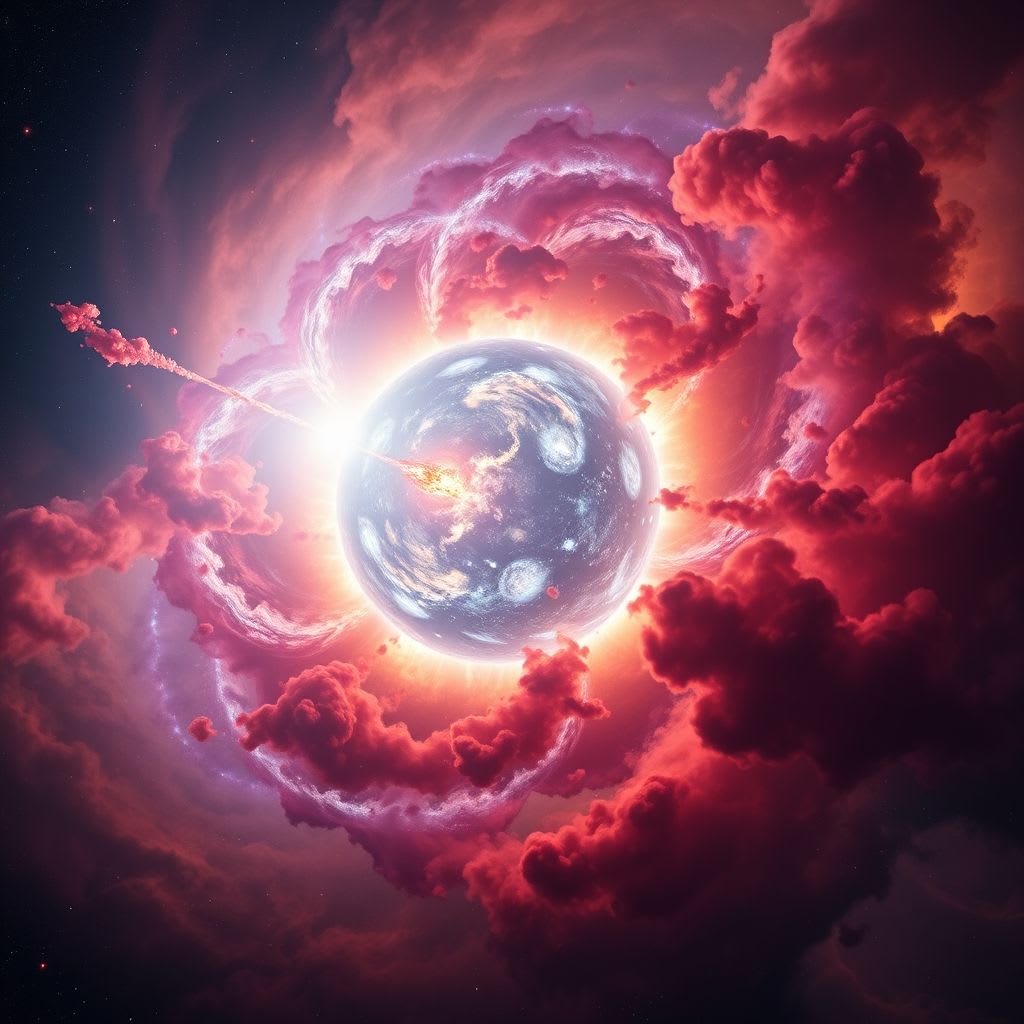
When we gaze at the night sky, the stars appear as delicate points of light, shimmering in the dark canvas above us. Yet, behind this beauty lie true titans stars so massive and brilliant that they defy ordinary comprehension. These cosmic giants form in the most extreme conditions, live fast, and die in spectacular explosions, shaping the very fabric of galaxies. Let’s journey into the fascinating world of the most massive and luminous stars in the universe.
What Are Stellar Giants?
Astronomers classify a star as “massive” when its mass exceeds at least eight times that of our Sun. But the true cosmic giants go far beyond this threshold. The most extreme examples can reach up to 200 times the Sun’s mass or possibly even more.
These stars also shine with extraordinary brightness. Some of them outshine our Sun by millions of times, pouring out vast amounts of energy in the form of light, heat, and stellar winds. Unlike our relatively stable Sun, massive stars live brief, tumultuous lives and typically end either in colossal supernova explosions or as black holes.
R136a1 — The Record Breaking Star
One of the most famous massive stars is R136a1, located in the Tarantula Nebula within the Large Magellanic Cloud, a satellite galaxy of the Milky Way. This star currently holds the record as the most massive star ever discovered, with an estimated mass of around 215 solar masses. It is also among the most luminous, emitting light more than 8 million times brighter than our Sun.
To grasp its scale: if R136a1 replaced our Sun at the center of the Solar System, it would shine so intensely that it would vaporize all the planets and leave the Solar System glowing like a second miniature galaxy.
Wolf Rayet Stars: The Fierce Titans
Among the heavyweights of the cosmos, Wolf Rayet stars deserve special mention. These are massive stars in the late stages of their evolution. They are characterized by incredibly strong stellar winds that strip away their outer layers, causing them to lose vast amounts of mass over time.
Wolf-Rayet stars are extremely hot and luminous some with surface temperatures reaching 200,000°C (360,000°F). One such star, WR 102, is believed to be among the hottest stars known. Its fate is sealed: it will likely end in a supernova or even a gamma ray burst the most powerful type of explosion in the universe, second only to the Big Bang itself.
Supergiants Like VY Canis Majoris
Not all stellar giants are defined by mass alone some are renowned for their sheer size. Take VY Canis Majoris, a red supergiant star with a radius about 1,000 times that of the Sun. If placed in the center of our Solar System, its outer layers would stretch past the orbit of Jupiter.
Despite having a relatively low surface temperature (around 3,500°C), VY Canis Majoris emits an enormous amount of energy due to its massive surface area. Though not the brightest star by light intensity, its size and advanced evolutionary stage make it an astronomical wonder.
Why Massive Stars Matter
Although they live short lives often just a few million years massive stars have an outsized influence on the cosmos. They are the engines of cosmic evolution, playing several vital roles:
Creation of heavy elements: Through nuclear fusion in their cores, these stars produce essential elements like carbon, oxygen, and iron. These elements are released into space when the star explodes as a supernova, enriching future generations of stars and planets.
- Triggering star formation: Their intense radiation and shockwaves compress surrounding gas clouds, leading to the birth of new stars.
- Seeding the universe with compact objects: They leave behind exotic remnants such as neutron stars and black holes, contributing to the life cycle of the galaxy.
The Mystery of the Mass Limit
Astrophysicists still debate whether there is a firm upper limit to how massive a star can be. In theory, stars with masses above 250 solar masses should be unstable, tearing themselves apart due to overwhelming radiation pressure. But discoveries like R136a1 challenge this idea and suggest that the universe might still harbor even more massive and brighter giants waiting to be discovered.
Final Thoughts: The Rulers of the Starscape
Massive and luminous stars are more than just celestial ornaments; they are the architects of the universe. Their fiery lives sculpt galaxies, forge the building blocks of life, and seed the cosmos with mystery. As we study them, we not only peer into the ancient past but also glimpse the dynamic future of our ever changing universe.
These brilliant behemoths remind us of one thing: the universe is far grander, more powerful, and more awe inspiring than we can ever imagine and we’ve only just begun to understand its stellar giants.
About the Creator
Keep reading
More stories from Holianyk Ihor and writers in Futurism and other communities.
How the Moon Influences Earth: The Invisible Threads of Gravity and Light
The Moon is far more than a glowing nightlight hanging in the sky. For poets and lovers, it’s a symbol of beauty and mystery but scientifically, it's a vital player in Earth’s natural systems. From ocean tides to climate stability and even the biological rhythms of life, the Moon’s influence is both profound and far-reaching. If our celestial neighbor were to vanish, Earth would become an entirely different and far less hospitable place.
By Holianyk Ihor7 months ago in Futurism
About Binding Prometheus
I want to start actively advocating on behalf of my own work, and the most valuable part of my canon is, without a doubt, Binding Prometheus, the play I have been working on since 2019 and only finished in 2023 as part of my MA. The play itself is an amalgamation of a million different inspirations. On one end, it evokes the Ancient Greek myth-play, deriving its own title from the earliest extant work of Western drama we have, Aeschylus’s Prometheus Bound. On the other end, it borrows significantly from the sci-fi bulwarks from over the years, namely Mary Shelley’s Frankenstein and Karel Capek’s Rossum’s Universal Robots. The play could be an episode of Black Mirror, I fear. I don’t know. I’ve only ever seen one episode of Black Mirror.
By Steven Christopher McKnight17 days ago in Futurism
Health Insurance Market: Preventive Care Focus, Value-Based Models & Industry Trends
According to IMARC Group's latest research publication, global health insurance market size reached USD 1,949.84 Billion in 2024. Looking forward, IMARC Group expects the market to reach USD 3,457.98 Billion by 2033, exhibiting a growth rate (CAGR) of 5.90% during 2025-2033.
By Andrew Sullivan5 days ago in Futurism




Comments
There are no comments for this story
Be the first to respond and start the conversation.