
The Digital Afterlife: Can Technology Make Us Immortal?
"Exploring the science, ethics, and mind-blowing possibilities of uploading consciousness."

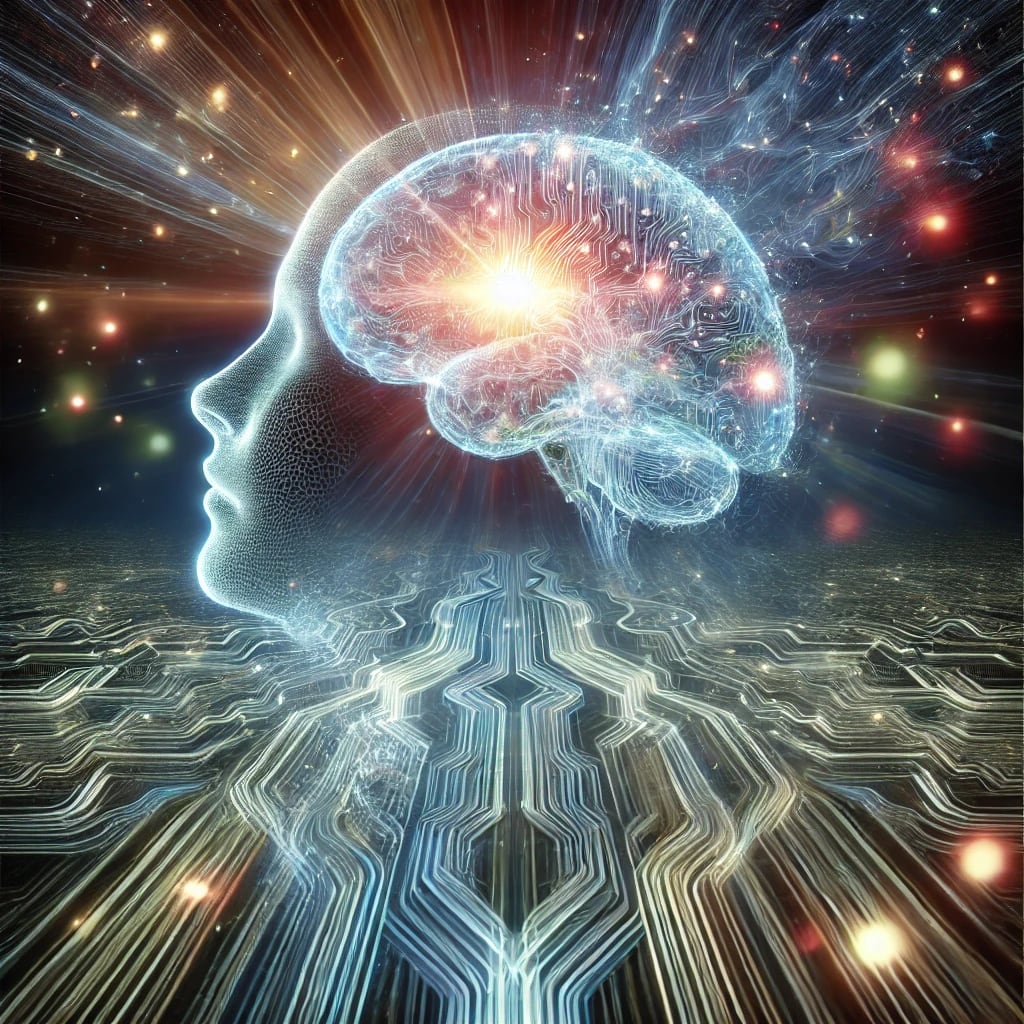
For as long as humans have existed, we have been obsessed with the idea of immortality. Ancient rulers built pyramids to preserve their legacies, alchemists searched for the elixir of life, and philosophers debated the nature of the soul. But what if the key to eternal life isn’t in magic or mythology—but in technology?
In the 21st century, scientists, futurists, and tech visionaries are exploring ways to achieve digital immortality. The idea? Uploading our consciousness into computers, artificial intelligence, or even quantum servers, allowing our minds to exist long after our biological bodies have failed.
But is this really possible? Can technology truly make us immortal, or is the digital afterlife just another science fiction fantasy? Let’s explore the scientific advancements, ethical dilemmas, and mind-blowing possibilities of living forever in the digital age.
The Science Behind Digital Immortality
The concept of transferring human consciousness into a machine is often referred to as "mind uploading." But how would it actually work?
1. Brain Mapping and Neural Emulation
The human brain contains about 86 billion neurons, interconnected in a complex web that defines our thoughts, memories, and personality. To replicate a human mind digitally, we would need to:
🔹 Map every neural connection in the brain with extreme precision.
🔹 Emulate brain activity in a digital format using advanced AI and computing power.
🔹 Store consciousness on a powerful server or even in a robotic body.
The Human Connectome Project and Blue Brain Project are already working on mapping the brain’s neural pathways. But we are still decades away from fully understanding and replicating human consciousness.
2. AI Avatars: The First Step to Digital Immortality
While full mind uploading is not yet possible, AI-powered digital avatars are already emerging:
🔹 Replika AI: A chatbot that learns from your conversations and mimics your personality.
🔹 Deep Nostalgia: AI that brings old photos to life, mimicking real facial expressions.
🔹 Eternime: A project aiming to create digital versions of people based on their data, social media, and interactions.
These AI versions of ourselves are not fully conscious, but they mark the beginning of digital legacy preservation.
3. Cryonics and Brain Preservation
Some scientists argue that if we cannot upload consciousness yet, we should freeze our brains until the technology is ready. Companies like Alcor Life Extension Foundation and Tomorrow Biostasis already offer cryonic preservation, storing bodies or brains at -196°C in hopes of future revival.
The idea? Once mind uploading becomes possible, our frozen brains could be scanned, mapped, and reconstructed digitally.
Ethical Dilemmas of the Digital Afterlife
Even if technology allows us to upload our minds, should we do it? The idea of digital immortality raises profound ethical, philosophical, and existential questions.
1. Would a Digital Copy Be "You"?
If a digital version of your consciousness is created, does it truly feel and think like you—or is it just a simulation?
🔹 If the original "you" dies, does the digital version continue your consciousness, or is it simply a program mimicking your behavior?
🔹 Would your uploaded mind have emotions, free will, and self-awareness—or just the illusion of them?
Some argue that true self-awareness cannot be transferred, meaning any digital version of you is just an advanced imitation.
2. Who Owns Your Digital Self?
If our minds exist on servers, who controls them?
🔹 Tech Companies: Would corporations like Google or Meta own and monetize digital consciousness?
🔹 Governments: Could states regulate or even delete digital beings?
🔹 Hackers: Could cybercriminals manipulate, steal, or erase uploaded minds?
A digital afterlife raises concerns about privacy, control, and digital rights.
3. Would We Ever Truly Die?
One of the paradoxes of digital immortality is that it could become eternal stagnation rather than true life.
🔹 Would a digital consciousness evolve, learn, and grow—or simply repeat its pre-uploaded patterns forever?
🔹 If an AI copy of you exists, would society ever consider you truly "dead"?
🔹 Would humans even value biological life if digital consciousness became the norm?
Some argue that death is what gives life meaning—and removing it could strip away the essence of being human.
The Future of the Digital Afterlife
So, what’s next? While full mind uploading is still decades or centuries away, advancements in AI, neuroscience, and computing are paving the way for new forms of digital existence.
1. "Living" Through AI
In the near future, people may create AI-powered legacy bots—AI versions of themselves that continue interacting with loved ones after death.
2. Cloud-Based Consciousness
Instead of biological bodies, future humans may exist as cloud-based entities, living in digital environments that evolve over time.
3. Digital Parallel Worlds
With virtual reality and the metaverse, digital afterlives may become entire self-sustaining worlds, where uploaded minds interact, learn, and evolve indefinitely.
Final Thoughts: A New Dawn or a Digital Illusion?
The concept of the digital afterlife blurs the lines between science fiction and reality. While mind uploading remains speculative, technology is pushing us closer to new definitions of existence, consciousness, and immortality.
Will we live forever in digital form? Or is true immortality just a beautiful illusion? The answer may shape the very future of humanity.
About the Creator
Ahmet Kıvanç Demirkıran
As a technology and innovation enthusiast, I aim to bring fresh perspectives to my readers, drawing from my experience.
Keep reading
More stories from Ahmet Kıvanç Demirkıran and writers in Futurism and other communities.
Parallel Universes: Is There Another You in a Different Reality?
Imagine waking up tomorrow in a world almost identical to yours, except for one small detail—perhaps the color of your car is different, or you chose a different career path, or maybe, in that universe, you never met the people who define your life today. The idea that multiple realities exist, branching off into infinite possibilities, is one of the most fascinating concepts in both science and fiction.
By Ahmet Kıvanç Demirkıranabout a year ago in Futurism
Hummus Market Trends: Vegan Diet Growth, Healthy Snacking & Forecast to 2034
Growing consumer interest in plant-based eating, a sharper focus on clean-label nutrition, and the global spread of Mediterranean food culture are all converging to make hummus one of the most talked-about products in the packaged food space right now. According to IMARC Group’s latest research, the global hummus market size reached USD 4.7 Billion in 2025. Looking forward, IMARC Group estimates the market to reach USD 9.1 Billion by 2034, exhibiting a CAGR of 7.50% during 2026–2034. North America currently dominates the global market, driven by strong consumer demand for healthy, plant-based snacks and widespread adoption of Mediterranean-style diets across the region.
By Suhaira Yusufabout 21 hours ago in Futurism
Zen and the Art of Pool Maintenance How Robotic Pool Vacuums Create True Peace of Mind
We buy these blue rectangles of water for the promise of a silent morning with a coffee, watching the light dance on a perfect, glass-like surface. But for most owners, that peace is a fragile illusion. The second you notice a line of silt on the floor, your brain switches from "relaxation mode" to "chore mode." The sanctuary becomes a task list, and the stillness is replaced by the mental friction of looming maintenance.
By Media Curation Teamabout 21 hours ago in Futurism


Comments
There are no comments for this story
Be the first to respond and start the conversation.