
Planets That Spin Faster Than Dawn: Where Night Lasts Just a Blink
Space

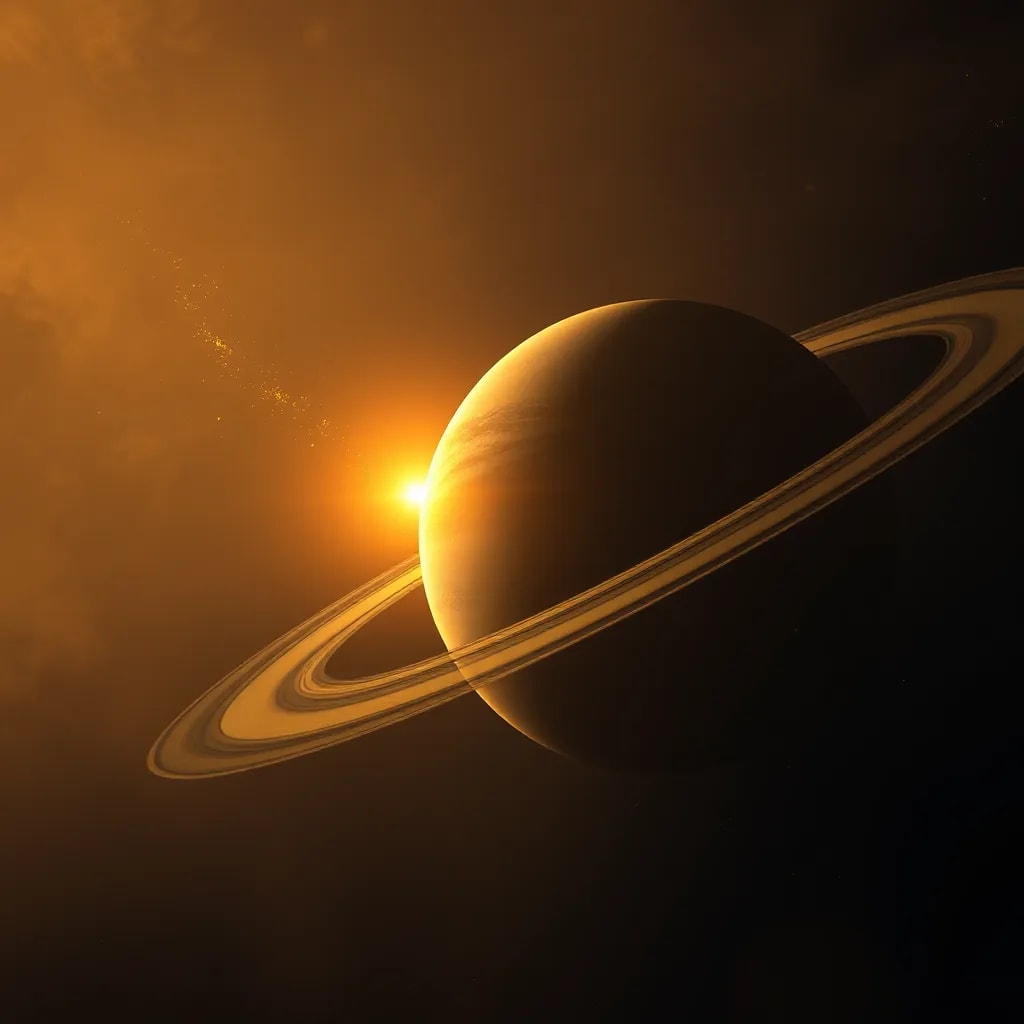
Imagine a world where the sunrise is gone before you even have time to say “good morning.” A planet where day and night whirl past in a matter of minutes—or even seconds. These are not scenes from a sci-fi movie, but real cosmic possibilities in our universe. Welcome to the extraordinary worlds where rotation happens so fast, the sun barely peeks over the horizon before vanishing again. Let’s take a journey to planets where a full day is shorter than an hour.
What Does “Faster Than Dawn” Really Mean?
On Earth, dawn is a gradual transition. First, the sky brightens, then the sun slowly rises, bathing the landscape in light. But on some planets, that luxury of slow light simply doesn’t exist. Their rotation is so rapid that sunrise and sunset happen in the blink of an eye.
This occurs when a planet spins around its axis in far less time than a typical Earth day—sometimes completing a full rotation in just a few hours, or even minutes. On these worlds, there’s no lingering twilight, no calm progression from night to day. The sun rockets across the sky like a time-lapse video playing at high speed.
The Fastest Spinners in the Universe
In our Solar System, Jupiter holds the crown for the fastest rotation. This gas giant completes one spin in just 9 hours and 55 minutes. At its equator, that means it’s rotating at over 45,000 kilometers per hour! This incredible speed even distorts its shape, making Jupiter noticeably flattened at the poles.
But exoplanets take it even further. Beta Pictoris b, a gas giant orbiting a star 63 light-years from Earth, rotates once every 8 hours—despite being several times more massive than Jupiter. Its equatorial speed? An astonishing 100,000 kilometers per hour.
These are truly cosmic tops, spinning with such force that they warp themselves and their surroundings.
What Happens on These Super-Fast Worlds?
1. Ferocious Winds and Storms
Rapid day-night cycles mean huge temperature swings in short spans of time. Atmospheres on these planets don’t have time to stabilize, creating powerful jet streams and monstrous storms. On Jupiter, some storms last for centuries—including the famous Great Red Spot, a hurricane wider than Earth.
2. Disrupted Biological Rhythms
Earth’s life is deeply synchronized with the 24-hour day-night cycle. But on planets with 3-hour or even 10-minute days, circadian rhythms would be chaotic. If life did evolve on such a world, it might rely on magnetic, chemical, or gravitational rhythms instead of sunlight to organize its biology.
3. Shape-Shifting Planets
Planets spinning this fast aren’t perfect spheres. Their rapid spin flattens them at the poles, creating an oblate shape. This can affect gravity, weather patterns, and even the stability of any moons orbiting them. Think of them as cosmic pancakes—thick in the middle and squashed at the top and bottom.
Why Do Some Planets Spin So Fast?
Planetary rotation speeds are inherited from their formation. As a planet condenses from the dust and gas of a stellar nursery, it inherits angular momentum. If nothing slows it down, it keeps spinning at breakneck speeds. But gravitational interactions—especially with nearby stars or large moons—can brake that motion over time.
For instance, Mercury and Venus rotate extremely slowly because of tidal interactions with the Sun. Their days are longer than their years!
What If Earth Spun Like Jupiter?
Let’s say Earth completed one rotation in just 10 hours. Here’s what would happen:
- We’d have three sunrises and sunsets every Earth day.
- Hurricane-force winds would likely dominate weather patterns.
- Earth would bulge significantly at the equator.
- Climate systems would become unstable, with less time for the atmosphere to regulate heat.
- Life as we know it might not exist—or would have evolved in radically different ways to cope with constant change.
A Universe of Extremes
Planets that spin faster than dawn aren’t just astronomical curiosities. They’re extreme laboratories of physics, weather, and even potential alien biology. They show us just how diverse—and wild—the universe can be.
While Earth takes its time with gentle sunrises and long afternoons, some planets race through time like sprinting giants. Somewhere out there, in a far-off star system, there may be a world where a whole day fits inside a yawn. And nightfall? It arrives before you even have time to say, “Good night.”
Conclusion
The next time you watch the sun rise slowly over the horizon, remember: this calm rhythm isn’t universal. Some worlds live on fast-forward, where dawn and dusk are fleeting flashes of light. These planets remind us that time is not just a human experience—it’s a cosmic variable, spun into different patterns across the stars.
About the Creator
Keep reading
More stories from Holianyk Ihor and writers in Futurism and other communities.
The Block Universe Theory: Has Everything Already Happened?
Time is one of the most mysterious and elusive concepts that human consciousness grapples with. We experience it as a flowing river: the past is behind us, the present unfolds right now, and the future lies ahead, unwritten and uncertain. But physics especially Einstein’s theory of relativity paints a very different picture. Perhaps time doesn’t flow at all. Welcome to the concept of the block universe or block time, where past, present, and future all exist simultaneously in a timeless whole.
By Holianyk Ihor7 months ago in Futurism
About Binding Prometheus
I want to start actively advocating on behalf of my own work, and the most valuable part of my canon is, without a doubt, Binding Prometheus, the play I have been working on since 2019 and only finished in 2023 as part of my MA. The play itself is an amalgamation of a million different inspirations. On one end, it evokes the Ancient Greek myth-play, deriving its own title from the earliest extant work of Western drama we have, Aeschylus’s Prometheus Bound. On the other end, it borrows significantly from the sci-fi bulwarks from over the years, namely Mary Shelley’s Frankenstein and Karel Capek’s Rossum’s Universal Robots. The play could be an episode of Black Mirror, I fear. I don’t know. I’ve only ever seen one episode of Black Mirror.
By Steven Christopher McKnight16 days ago in Futurism
GCC Quick Commerce Market: Convenience Economy, Fast Fulfillment & Retail Evolution
According to IMARC Group's latest research publication, The GCC quick commerce market size reached USD 2.1 Billion in 2024. Looking forward, IMARC Group expects the market to reach USD 22.6 Billion by 2033, exhibiting a growth rate (CAGR) of 30.2% during 2025-2033.
By Abhay Rajput5 days ago in Futurism


Comments
There are no comments for this story
Be the first to respond and start the conversation.