
The concept of human reproduction in space is rapidly becoming a reality.
Technology for space-based human reproduction

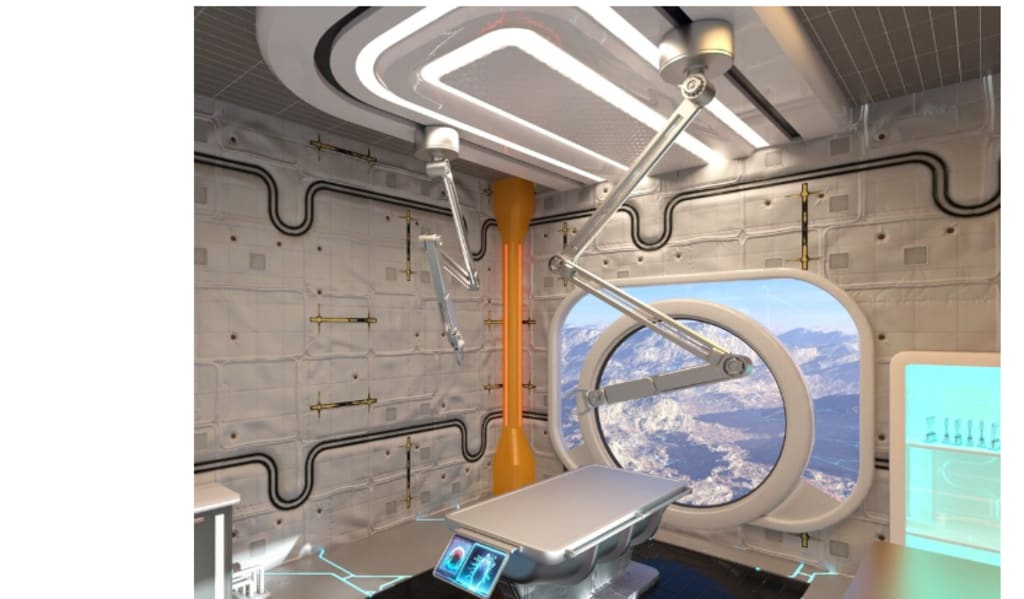
One uncomfortable subject is becoming more difficult to ignore as spaceflight transitions from infrequent government missions to something more akin to everyday travel and employment: what happens to human reproductive health when we are away from Earth?
According to a recent assessment, this is no longer sci-fi but rather "urgently practical," particularly as more people spend more time in space and as commercial trips increase.
According to clinical embryologist Giles Palmer, "two scientific breakthroughs more than 50 years ago reshaped what was thought biologically and physically possible: the first Moon landing and the first proof of human fertilisation in vitro."
"Now, more than 50 years later, we contend in this report that these formerly distinct revolutions are coming together in a useful and little-known reality: space is evolving into a destination and a place of employment, and assisted reproductive technologies have become extremely sophisticated, increasingly automated, and widely available."
The intention is not to persuade anyone to attempt conception in orbit. The report's message is more straightforward: the regulations are ambiguous, the risks are predictable, and the statistics are scant.
Significant standards gaps, not only data
According to the authors, industry-wide guidelines for controlling the dangers to reproductive health in space are currently lacking.
This covers topics including unintentionally becoming pregnant while travelling, the impact of radiation and micro-gravity on reproduction, and where ethical limits should be set as space research advances.
They are advocating for a common framework that unifies bioethics, aeronautical health, and reproductive medicine before snap judgements are made.
The body is harsh in space.
According to the report, space is both "a hostile environment" for human biology and "an increasingly routine workplace." The stresses are not obscure; the body is known to be troubled by cosmic radiation, changing gravity, and circadian disruption.
The authors note that there is a lack of long-term human data, particularly on male fertility, but animal research indicates that short-term radiation exposure can interfere with menstrual cycles and increase the risk of cancer. Indeed, there is a "critical knowledge gap" about the impact of cumulative radiation on male fertility.
More information is required.
Data from female astronauts from the Shuttle era indicates that subsequent pregnancy rates and complications are comparable to those of age-matched women on Earth, which is a somewhat reassuring finding.
However, the paper highlights that this does not address the more complex issues with extended missions. Additionally, it ignores the expanding population of private astronauts, whose health profiles and mission circumstances may differ greatly.
According to the authors, fresh data will be needed "to guide diagnostic, preventive, and therapeutic strategies in extraterrestrial environments" for longer-duration missions in both men and women.
Technology for space-based human reproduction
Even though menstruation is frequently suppressed with hormonal techniques and pregnancy is currently prohibited for spaceflight, this approach reflects current operational limitations rather than long-term biological certainty.
According to the report, advancements in assisted reproductive technologies are making these instruments more automated and compact, which raises the prospect that they may eventually be able to satisfy the practical requirements of space-based medical care and reproductive research.
Palmer stated that advancements in assisted reproductive technologies (ART) frequently start from harsh or marginal circumstances but swiftly spread beyond them.
Because it addresses circumstances where reproduction is physiologically viable but structurally limited by the environment, health, time, or societal circumstances—constraints that are already prevalent on Earth—ART is extremely transportable.
Planning ethically cannot wait.
According to the paper, ethical planning must wait, even though human reproduction in space still seems far off. It brings up issues that seem straightforward until you consider them in the context of a mission: responsibility in the event of an emergency during a lengthy trip, genetic screening, informed consent for research, and pregnancy disclosure.
"Space-based IVF methods are no longer just theoretical. Palmer clarified, "It is a predictable extension of existing technologies."
"Genetic screening, gamete storage, and embryo culture are advanced, portable, and becoming more automated. Reproduction goes from being a theoretical potential to a real worry as human activity progresses from brief excursions to extended stays outside of Earth.
Additionally, the authors caution that these technologies have a tendency to "incrementally, quietly, and often justified after the fact" infiltrate real-world practice, which is precisely why they want safeguards put in place right now.
A blind area in policy
"Reproductive health cannot continue to be a policy blind spot as human presence in space increases," stated NASA research scientist Dr. Fathi Karouia.
"As we progress toward a sustained presence beyond Earth, international cooperation is desperately needed to close important knowledge gaps and establish ethical guidelines that protect both professional and private astronauts – and ultimately safeguard humanity."
The lesson is less "space babies soon" and more that reproductive health needs the same planning, standards, and ethics as any other extreme workplace if space is becoming a regular location to work.
About the Creator
Keep reading
More stories from Francis Dami and writers in Futurism and other communities.
Specialty Medical Chairs Market: Patient Comfort Focus, Clinical Efficiency & Industry Growth Outlook
According to IMARC Group's latest research publication, global specialty medical chairs market size reached USD 4.4 Billion in 2024. Looking forward, IMARC Group expects the market to reach USD 7.7 Billion by 2033, exhibiting a growth rate (CAGR) of 6.08% during 2025-2033.
By sujeet. imarcgroup7 days ago in Futurism
AI-Enabled Identity Management in Healthcare Transforming Digital Trust
The healthcare industry is rapidly evolving with digital-first ecosystems, AI-powered platforms, and interoperable health systems. As hospitals, clinics, payers, and digital health startups continue to adopt advanced technologies, one foundational challenge remains constant—securely managing identities. Identity management in healthcare has become a critical pillar for ensuring patient safety, regulatory compliance, and seamless access to care across complex digital environments.
By Steve Waugh4 days ago in Futurism
📢 Raise Your Voice Thread: 02/05/2026
Our “Raise Your Voice Threads” are hosted most alternating Thursdays at 12PM ET to offer creators more avenues to uncover exceptional stories on Vocal. As we are continuously searching for fresh creators and inspiring stories, this thread provides an opportunity to exchange and discuss the stories that have moved and motivated us on Vocal.
By Raise Your Voice by Vocala day ago in Resources




Comments
There are no comments for this story
Be the first to respond and start the conversation.