
The Book of Enoch Revisited: Part Two: The Nephilim Among Us
When we compare the tales of the Nephilim from the Book of Enoch to the ancient Sumerian stories of the Anunnaki, the similarities are striking. Both narratives speak of beings who descended from the heavens.
Giants in the Earth
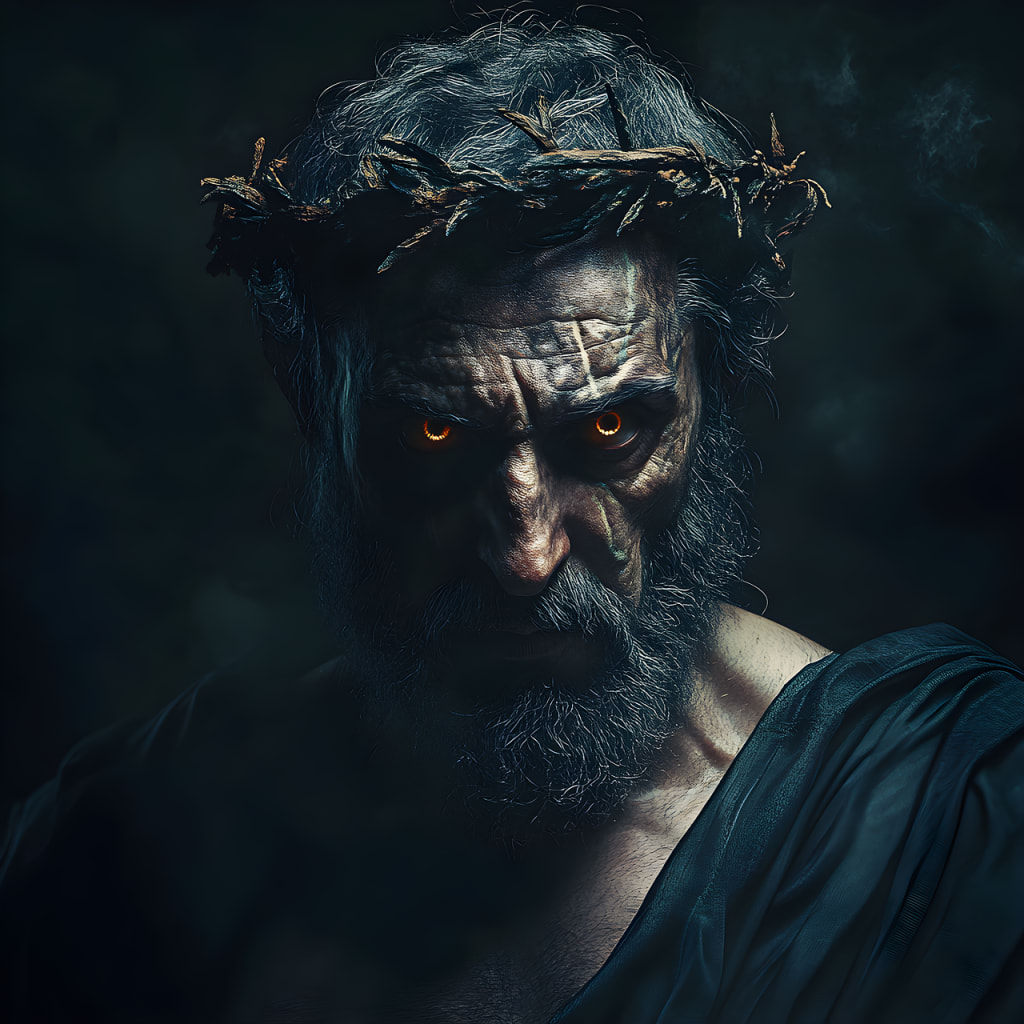
When the Watchers fell and took wives from humanity, they did more than violate divine law; they birthed a new kind of being. The Book of Enoch refers to them as the Nephilim, a term often translated as "giants," but whose meaning is closer to "fallen ones" or "those who cause others to fall."
The Nephilim, with their massive size, immense strength, and terrifying intelligence, were a force to be reckoned with. Their insatiable appetites, which no earth could satisfy, led them to devour crops, animals, and eventually even humans. Their physical attributes, such as size and strength, enabled them to become rulers and tyrants, plunging the world into violence and fear. Some texts even suggest that their heads touched the clouds, their voices shook the mountains, and their mere presence left destruction in their wake, underscoring their power and influence.
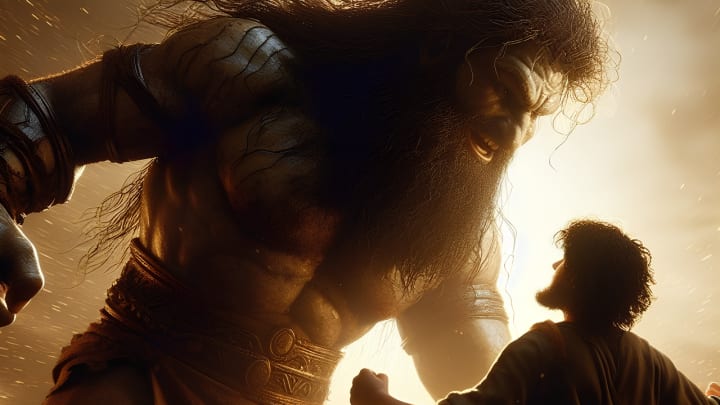
In Genesis, they are mentioned only briefly: "There were giants in the earth in those days, and also after that." This brief mention deepens the mystery, hinting that even after the flood was intended to destroy them, they somehow survived or returned. Later biblical accounts of the Anakim, the Rephaim, and Goliath describe beings that seem like echoes of the Nephilim: oversized, overbearing, and alien.
The story of the Nephilim is not confined to the Bible. The Sumerians spoke of demigods and hybrid kings who ruled for thousands of years before the flood. The Epic of Gilgamesh tells the story of a mighty hero, two-thirds divine, who roams the earth as both a savior and a destroyer, a figure unexpectedly similar to the Nephilim. In Greek mythology, the Titans and Gigantes fought against the gods, embodying the chaos that arises when heaven and earth mix unlawfully. Native American and Norse traditions also speak of giants who walked the world before the current age, their bones buried in mountains and valleys, waiting to be uncovered.
Even today, tales of their presence linger. Allegations of massive skeletons unearthed in North America, Central Asia, and the Middle East have emerged, although they have often been quickly dismissed as hoaxes or hidden. Old newspaper clippings from the nineteenth and early twentieth centuries report findings of bones more than twelve feet long, with skulls twice the size of a human's. In modern myths, stories of cryptids - strange, humanoid creatures, and "super soldiers" offer glimpses into the concept that something ancient still walks among us, or that their legacy persists in our blood.
The Nephilim as a Legacy: Inspiring and Timeless
The lingering question that captivates readers of Enoch is whether the flood truly eradicated the Nephilim. If they were hybrid beings, part divine, could they have found a way to endure? Might their essence have been passed down through generations, diluted but never fully extinguished? This mystery adds a layer of intrigue to the Nephilim's story, inviting readers to delve deeper into the myth.
Some traditions claim that while their bodies were destroyed, their spirits remained, restless and embittered, and they became the demons and unclean spirits that haunt humanity to this day. The Book of Enoch states that their souls, denied both heaven and earth, wander the air, whispering into human minds, feeding war, lust, and ambition.
Some believe that the Nephilim bloodline continues in the hidden corridors of power. Conspiracy theories suggest that royal families, secret societies, and shadowy elites are descended from these hybrid beings, who, like their ancestors, seek dominion over the earth and its people. The notion of the "divine right of kings," which asserts that a monarch's authority comes directly from God, or rulers of "blue blood," a term used to describe the nobility, may stem from this ancient belief that specific lineages carry more than just human DNA.
And here is where the warning becomes urgent. If we, through the lens of science, embark on the path of self-remaking, manipulating our genes, merging with machines, and birthing life in artificial wombs, are we not treading the same forbidden ground? Are we not, in essence, creating new Nephilim, new hybrids that straddle the line between man and God? This contemplation serves as a cautionary tale, urging readers to consider the potential perils of our technological advancements.
Were the Nephilim the Anunnaki?
When we compare the tales of the Nephilim from the Book of Enoch to the ancient Sumerian stories of the Anunnaki, the similarities are striking. Both narratives speak of beings who descended from the heavens, larger and more powerful than humans, who bestowed knowledge upon us, and who also enslaved, ruled, and often corrupted humanity.
In Sumerian texts, the Anunnaki are described as "those who came from the heavens to earth," sent by the supreme God Anu to shape and govern humanity. They taught humans how to farm, build cities, and understand the movements of the stars. However, they also demanded worship, tribute, and labor, and their rule became cruel and oppressive. According to the Atrahasis Epic, the gods grew angry at the noise of humanity. They decided to send a great flood to wipe them out, echoing the biblical flood intended to cleanse the earth of the Nephilim's corruption.
Some researchers suggest that the Nephilim and the Anunnaki are two names for the same beings, remembered through different cultural lenses. One culture viewed them as rebellious angels, while another saw them as celestial kings, and yet another as gods. The details may change, but the pattern remains consistent: beings from above descended, mingled with humans, brought forbidden knowledge, and incited catastrophic judgment.
Even their offspring share characteristics. The Nephilim were described as giants, violent and domineering. Similarly, Sumerian texts speak of hybrid rulers and demigods, half-god, half-human kings whose reigns lasted hundreds or even thousands of years. The famous Sumerian King List recounts these reigns before the flood, referring to them as "mighty ones," which aligns with the Nephilim's description as "mighty men of old, men of renown."
Could it be that the Watchers and their children, known in Hebrew as the Nephilim, were remembered by the Sumerians as the Anunnaki and their hybrid kings? Both stories point to the same extraordinary and terrifying encounter between humanity and entities that are not entirely human, suggesting a potential shared origin or a common thread in these mythological narratives.
In tribute to the Nephilim in Egyptian, Greek, and Roman Myths
The story of the Nephilim and the Anunnaki extends beyond Sumer and Israel. Similar narratives appear in the myths of Egypt, Greece, and Rome, albeit dressed in different names and symbols.
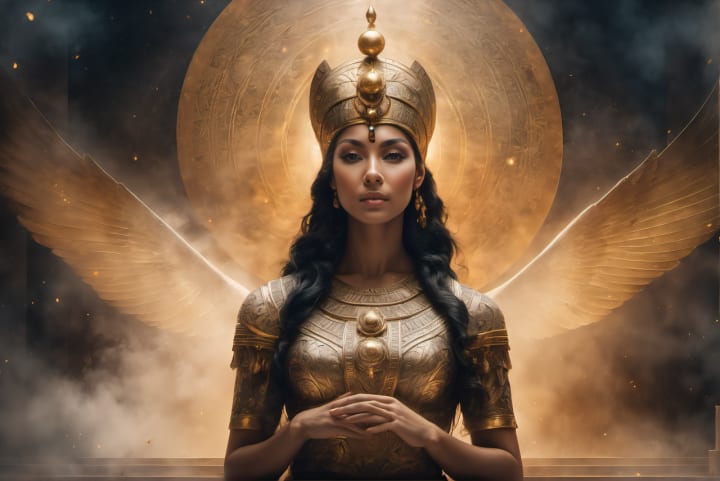
In ancient Egypt, pharaohs were considered gods on earth, believed to be direct descendants of the sky gods who once ruled over men. The Pyramid Texts mention the "Shemsu-Hor," or "Followers of Horus," a mysterious group that emerged before the pharaohs, powerful beings who taught the Egyptians their arts and sciences. The gods themselves, Osiris, Isis, Horus, and Seth, were said to have walked the earth during a golden age before the reign of mortal kings, much like the Nephilim and Anunnaki are said to have ruled before the flood. Their hybrid offspring were believed to retain divine blood, legitimizing their right to rule.
In Greek mythology, the Titans and the Gigantes, towering, violent beings, waged war against the Olympian gods and were cast down into Tartarus, a fate reminiscent of the imprisonment of the Watchers in the abyss. Demigods of Greece, such as Hercules, Perseus, and Achilles, were born from unions between gods and mortals, just as the Nephilim were. These heroes, celebrated yet tragic, carried within them a dangerous blend of divine power and human fragility.
In Roman tradition, these myths persisted, albeit softened by centuries of empire. The Romans adopted Greek myths in their entirety and even claimed descent from the gods through Aeneas, the son of Venus. Their emperors often styled themselves as divine or semi-divine, heirs to a cosmic lineage that began with gods walking among men.
Across all these cultures, one theme remains constant: beings of immense power descended to earth, mingled with humanity, imparted knowledge and power, and left behind a mixed legacy of greatness and destruction. Whether we refer to them as Nephilim, Anunnaki, Titans, or gods, the story is the same: an enduring memory etched in our collective psyche of a time when heaven and earth collided.
As we navigate the modern age, creating new hybrids of flesh and machine, striving for immortality, and unlocking the secrets of the cosmos, these myths feel less like distant fairy tales and more like warnings - ones we have heard before yet continue to forget.
Signs of the Nephilim Today
Some people point to modern giants, not in terms of physical size, but in influence, individuals and institutions that stand above the rest of humanity, shaping the world with an almost inhuman reach. Corporations that track every thought and purchase. Governments that possess weapons capable of annihilating millions. Visionaries who talk of transcending death, colonizing other planets, and rewriting the human genome.
These figures may not be literal giants, but they are larger than life, driven by the same ambitions that once consumed the Nephilim; the distinction between symbolism and reality blurs when we recognize that these patterns repeat. The old warning was not just about size; it was about hubris, insatiable hunger, and the destruction that follows when limits are disregarded.
Occasionally, the bones of enormous beings are still discovered, relics from a time when such creatures walked the earth. While many of these finds are dismissed or concealed, they serve as silent witnesses to a forgotten chapter of our history. In whispers, shadows, bloodlines, and legends, the Nephilim may still be among us.
Toward the End of the Age
In this part of our exploration, we see the Nephilim as embodiments of the consequences stemming from the rebellion of the Watchers. They are living warnings, monstrous offspring born of arrogance and desire. Whether these beings are truly gone or hidden, their story is far from over.
In the final part of this series, we will explore the spiritual, technological, and societal implications of repeating the same mistakes for us today. We will question whether humanity is once again teetering on the brink of another great fall. Furthermore, we will confront the enduring question that has lingered since Enoch first penned his words: What happens when the Watchers return?
About the Creator
The Secret History Of The World
I have spent the last twenty years studying and learning about ancient history, religion, and mythology. I have a huge interest in this field and the paranormal. I do run a YouTube channel
Keep reading
More stories from The Secret History Of The World and writers in Futurism and other communities.
Do Spirits Have Guardians? Climbing the Infinite Ladder of Consciousness
The Spiritual Realm An age-old belief, whispered across cultures and in ancient texts, is that an invisible presence watches over every human or animal. Some call it a guardian angel, others a spirit guide, and some refer to ancestral protectors or divine watchers. These presences are said to guide our footsteps, shield us from unseen harm, and gently whisper truths into our dreams when the world becomes heavy. This belief is deeply embedded in the human spirit. Even in moments of silence or despair, we often feel that someone, or something, is there, just beyond the veil.
By The Secret History Of The WorldExclusive • 7 months ago
About Binding Prometheus
I want to start actively advocating on behalf of my own work, and the most valuable part of my canon is, without a doubt, Binding Prometheus, the play I have been working on since 2019 and only finished in 2023 as part of my MA. The play itself is an amalgamation of a million different inspirations. On one end, it evokes the Ancient Greek myth-play, deriving its own title from the earliest extant work of Western drama we have, Aeschylus’s Prometheus Bound. On the other end, it borrows significantly from the sci-fi bulwarks from over the years, namely Mary Shelley’s Frankenstein and Karel Capek’s Rossum’s Universal Robots. The play could be an episode of Black Mirror, I fear. I don’t know. I’ve only ever seen one episode of Black Mirror.
By Steven Christopher McKnight18 days ago in Futurism
Singapore Electronic Paper Display Market Driven by Innovation and Investments
The Singapore electronic paper display market has reached USD 47.6 Million in 2024 and is set to experience remarkable expansion over the next decade. According to a new market research report by IMARC Group, the market is projected to reach USD 436.3 Million by 2033, reflecting a compound annual growth rate (CAGR) of 24.8% during 2025-2033.
By Abhishek Dixit6 days ago in Futurism




Comments
There are no comments for this story
Be the first to respond and start the conversation.