
"The AI-Powered Workday: How Artificial Intelligence Is Redefining Productivity in 2025"
From smart assistants to automated decision-making, discover how AI is transforming modern workplaces — and what it means for your career.


Introduction: The Quiet Takeover of AI in Everyday Work
In 2025, artificial intelligence isn’t a distant concept discussed in tech conferences — it’s part of your morning routine before you even finish your coffee. From drafting emails to managing schedules, AI has quietly become the backbone of modern productivity. For professionals across industries, the question isn’t if AI will change the way they work — it’s how fast and how far the transformation will go.
While AI promises efficiency and speed, it also sparks debates about job security, ethics, and the human touch in work. In this article, we’ll explore how AI is reshaping daily workflows, the benefits and challenges it brings, and how you can adapt to thrive in this AI-powered era.
1. AI as Your Personal Assistant — But Smarter
The AI tools of 2025 go beyond setting reminders or answering questions. Platforms like Microsoft Copilot, Google Gemini Office, and Notion AI now integrate across all your devices, learning your habits, preferences, and even communication style.
They draft documents, create presentations, schedule meetings, and prioritize tasks — often before you even realize you need them.
Pro Insight: Professionals who treat AI like a collaborator rather than a tool report a 25% boost in weekly productivity.
2. Decision-Making at Machine Speed
AI is no longer just about automating repetitive tasks — it’s making complex decisions. In finance, AI systems analyze real-time market data and recommend investment strategies in seconds. In healthcare, AI suggests treatment plans after reviewing patient histories and global medical research.
The advantage? Speed and precision.
The risk? Over-reliance on algorithms without human oversight.

3. Personalized Learning on Demand
In the age of AI, learning is continuous — and customized. AI-powered platforms like Coursera AI Mentor and LinkedIn Learning Pro recommend micro-courses tailored to your career goals and skill gaps.
Instead of one-size-fits-all training, employees now get hyper-personalized learning paths, ensuring they stay relevant in a rapidly evolving job market.
4. Collaboration Without Boundaries
Remote work has evolved into “AI-assisted distributed teams.” AI translation tools allow real-time multilingual communication, while virtual collaboration platforms create digital workspaces with AI moderators to summarize meetings and assign follow-ups instantly.
For global teams, this means faster decision-making and fewer misunderstandings — making geography irrelevant.

5. AI and Job Security: The Double-Edged Sword
The biggest fear surrounding AI? Job displacement. Automation is taking over repetitive roles in data entry, customer service, and even legal research. However, AI is also creating entirely new roles — AI ethics officers, machine learning trainers, and prompt engineers.
Key takeaway: Those who learn to work with AI rather than compete against it will future-proof their careers.
6. The Ethics Dilemma
With great power comes great responsibility — and AI is no exception. Ethical concerns range from data privacy violations to bias in AI decision-making.
In 2025, leading companies are introducing “Ethical AI Policies” to ensure transparency, fairness, and accountability in AI systems.
For professionals, understanding AI ethics isn’t optional — it’s a career advantage.

7. Mental Health in an AI-Driven Workplace
Ironically, while AI reduces workload stress, it can also increase pressure to perform faster. With AI doing so much, expectations for productivity skyrocket.
This has given rise to a new wellness trend: “Digital Mindfulness” — using AI itself to schedule breaks, monitor burnout signs, and recommend wellness activities.
8. The Future: AI as a Career Partner
Looking ahead, AI won’t just support tasks — it will become a career co-pilot. Imagine AI systems that analyze your work history, monitor industry trends, and actively guide your career moves.
By 2030, experts predict most professionals will have a “Career AI” — a personalized advisor tracking their growth, skills, and opportunities in real time.

Final Thoughts
The AI-powered workday of 2025 is faster, smarter, and more connected than anything we’ve seen before. But with these advances come responsibilities — to stay adaptable, uphold ethics, and preserve the uniquely human qualities that no machine can replicate.
AI isn’t here to replace you. It’s here to work alongside you — but only if you’re willing to learn, adapt, and lead in this new era.
About the Creator
Tousif Arafat
Professional writer focused on impactful storytelling, personal growth, and creative insight. Dedicated to crafting meaningful content. Contact: [email protected] — Tousif Arafat
Keep reading
More stories from Tousif Arafat and writers in Futurism and other communities.
"When Your Best Friend Is an AI: Navigating the Age of Digital Companionship"
In 2025, companionship has a new form—and its veins are digital. As loneliness, remote work, and screen fatigue become everyday realities, millions of Westerners are turning to AI companions—not just for convenience, but for emotional connection. From Replika clones to Meta’s new ‘Soulmate’ avatars, digital friends are no longer novelty projects—they’re mainstream partners in loneliness, creativity, even therapy.
By Tousif Arafat7 months ago in Futurism
Australia Oral Care Market: Preventive Hygiene, Consumer Awareness & Product Innovation
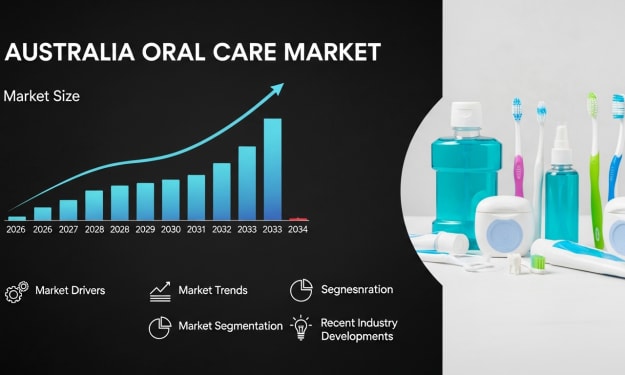
According to IMARC Group, the Australia oral care market reached USD 1.1 Billion in 2025 and is projected to grow to USD 2.3 Billion by 2034, exhibiting a compound annual growth rate (CAGR) of 7.74% during 2026–2034. The market’s rapid expansion reflects rising awareness of oral hygiene and its connection to overall wellness across Australia. Consumers are increasingly investing in preventive dental care, advanced hygiene tools, and cosmetic oral products. Technological innovations such as electric and smart toothbrushes, along with demand for natural and eco-friendly solutions, are reshaping product portfolios and strengthening Australia oral care market share.
By Kevin Cooper6 days ago in Futurism
The Fusion Shift: 5 Game-Changing Secrets Behind Apple’s M5 Pro and M5 Max
1. Introduction: The Death of the Pro-User Bottleneck For years, the professional workflow has been a negotiation with the laws of physics. We have lived with thermal ceilings that throttle our 4K exports and the frustrating stutter of memory swapping during heavy 3D renders. Even the transition to Apple Silicon, as transformative as it was, eventually hit the limits of traditional monolithic chip design.
By Tech Horizons3 days ago in Futurism
Early March 2026: 4 Goals Accomplished
It's early March and I've now accomplished my 4th writing goal for the year of 2026. Before diving into the behind-the-scenes of it... why not tell you up front what that accomplishment was? I was published in a 2nd publication for this year. Published in Helix Literary Magazine out of Central Connecticut State University. You can read it for free right now!
By Stephen Kramer Avitabile2 days ago in Writers


Comments
There are no comments for this story
Be the first to respond and start the conversation.