
The 8 React UI Frameworks You Must Master For 2026
Evaluate the top 8 React UI frameworks for 2026 based on RSC readiness and zero-runtime CSS. Choose your architecture wisely for performance.


I'm going to be completely honest with you: The way we choose a React UI framework needs to change. The old criteria—GitHub stars, bundle size, and a massive component catalog—simply aren't enough anymore. As we move into 2026, the entire React ecosystem is undergoing the most significant architectural shift since Hooks, driven by two major developments: React Server Components (RSC) and the React Compiler.
If you're a Senior Developer or Tech Lead starting a new large-scale application, your choice of UI framework today will determine your application's ultimate performance ceiling and its long-term maintenance headache. I've spent weeks digging into the architectural roadmaps and implementation details of the top contenders so I can give you a definitive, future-proof guide.
This isn't another generic listicle. This is my comprehensive evaluation of the Top 8 React UI Frameworks you must master for 2026, analyzed specifically through the lens of RSC readiness, zero-runtime CSS, and long-term scalability. Let's find the library that won't make you rewrite your app in two years.
Why 2026 is the Most Critical Year for UI Framework Selection
The framework selection process has fundamentally shifted from "which one looks best" to "which one is architecturally compliant." The underlying mechanics of React have changed, and if your UI framework relies too heavily on old client-side paradigms, you will pay a steep performance cost.
The React Compiler Mandate Zero-Runtime CSS
The forthcoming React Compiler (codenamed "Forget") promises to aggressively memoize and optimize component renders. The libraries best positioned for this future are those that minimize or eliminate runtime JavaScript for styling. Traditional CSS-in-JS solutions that require a client-side bundle to inject styles are becoming an anachronism. The focus is now on utility-first approaches like Tailwind CSS or native CSS solutions. Your 2026 UI framework must be styled primarily off the critical path.
Server Components (RSC) and The Hydration Cost
React Server Components allow us to render entire branches of the component tree on the server, shipping only pure HTML and the smallest possible client-side JavaScript "payload" to hydrate interactive components. The major pain point for traditional UI frameworks is hydration. The best UI frameworks for 2026 are those that: Enable components to be imported into RSCs without forcing the entire library to be client-side and have minimal runtime JavaScript.
Our Selection Methodology: The Future-Proof Score (FPS)
To cut through the noise, I developed the proprietary Future-Proof Score (FPS), which is weighted heavily toward architectural viability. The three factors are:
- Architectural Alignment (RSC Readiness): This is the most crucial factor, rewarding libraries that are modular, have minimal client-side runtime overhead, and actively support modern Next.js/Remix paradigms.
- Customization and Zero-Lock-in: Libraries that provide low-level primitives for deep customization without compromising accessibility or performance score higher.
- Developer Experience (DX): A comprehensive ecosystem, excellent typing support (TypeScript), and crystal-clear documentation.
The Top 8 React UI Frameworks for 2026
I've ranked these 8 based on their overall Future-Proof Score, balancing current enterprise adoption with the promise of the 2026 architectural future.
- Shadcn/UI (FPS: 9.5/10): The 2026 Trendsetter. It's a curated collection of reusable components built on Radix UI and Tailwind CSS. It dominates because you own the source code, allowing for maximum tree-shaking, minimal bundle size, and true RSC control.
- Radix UI (FPS: 9/10): The Headless Accessibility Core. Provides low-level, unstyled primitives for logic and complex accessibility (A11Y) interactions. Zero UI lock-in and the ideal backbone for a custom design system.
- Mantine (FPS: 8.0/10): DX Focused with Hooks Power. A complete, feature-rich library with a vast ecosystem of over 100 dedicated hooks. It’s actively addressing the RSC shift and is a great choice for teams prioritizing rapid development.
- Chakra UI (FPS: 7.5/10): The Modern, Flexible Starter. Popular for its style-props API and excellent accessibility. Great for rapid prototyping.
- NextUI (FPS: 7.5/10): Vercel-Focused and Performant. Built on Tailwind CSS, leveraging a zero-runtime approach. Its design and focus on performance make it ideal for the Next.js stack.
- MUI (Material UI) (FPS: 6.0/10): The Reliable Giant. Still the most popular, but its reliance on runtime CSS-in-JS and its monolithic nature means it carries a heavier hydration cost compared to the headless options.
- Ant Design (FPS: 5.5/10): The Enterprise Dashboard King. The gold standard for complex, data-heavy internal dashboards. While heavy, its feature-set for forms and tables is unparalleled for complex business tools.
- BlueprintJS (FPS: 5.0/10): Specialized Data Tooling. Tailored for building complex, data-dense desktop-like applications, focusing on feature-richness for niche data-centric use cases.
The New Divide: Component Libraries vs. Headless Primitives
In 2026, the real choice isn't which framework, but what type of framework you need. You choose a full library (MUI, Ant Design) when you need velocity over customization and are willing to accept the higher bundle size. You choose a headless system (Radix, Shadcn/UI) when you need performance, customization, and future-proofing above all else.
This headless path requires slightly more effort upfront, but the long-term benefit is a dramatically smaller client bundle, superior architectural alignment with RSC, and true control. For companies focused on the highest-quality user experience in the competitive mobile app market, this is the superior strategy. It gives your team, or a trusted partner specializing in high-performance application development, the complete flexibility to deliver. If you are currently evaluating the right technical path for a high-performance customer-facing application, especially for an aggressive launch, for high-quality mobile app development service I recommend consulting with the mobile app development experts.
Final Verdict: My 2026 Recommendation
The choice for 2026 is clear: Embrace modularity and performance.
While MUI and Ant Design are safe bets for stability in established enterprise contexts, the clear path forward for competitive, high-performance customer-facing applications leads to the Headless movement. For greenfield projects, I strongly recommend utilizing Shadcn/UI paired with Tailwind CSS. It is the most future-proof combination, giving you unmatched customization and the lowest possible client-side JavaScript footprint, which is exactly what the React core team is pushing toward with RSC and the Compiler.
This future is not just about features; it’s about architecture. As the esteemed developer and educator, Kent C. Dodds, noted on the evolution of React, “Seasoned React developers need to unlearn the way we used to do things to be able to understand the improvements that React Server Components offer.” This mindset of unlearning and prioritizing new architectural realities is precisely what should guide your framework selection for 2026.
By prioritizing architecture over feature bloat, you ensure your application remains fast, scalable, and responsive to the future of the web.
FAQs
1. What is the difference between a React UI Framework and a Component Library?
A Component Library (like Radix UI) provides pre-built, reusable UI pieces (buttons, inputs, modals) focusing on logic and accessibility. A React UI Framework (like NextUI or Chakra UI) is a component library plus a unified design system, styling engine, and theming solution, offering a more complete out-of-the-box solution.
2. Can I use these UI frameworks with React Server Components (RSC)?
Yes, but with caveats. You must wrap the UI components that require client-side interaction (state, hooks, event listeners) with the 'use client' directive. Frameworks built on headless primitives (like Shadcn/UI and Radix) are the easiest to integrate, as they minimize the client-side hydration footprint.
3. Is Tailwind CSS replacing React UI frameworks?
No, but it is fundamentally changing them. Tailwind CSS is a utility-first CSS framework, not a component library. Modern UI frameworks like NextUI and Shadcn/UI are built on top of Tailwind. The trend is moving away from proprietary styling engines toward Tailwind's zero-runtime approach, combined with headless component libraries for logic and accessibility.
4. Which framework offers the best accessibility (A11Y) out of the box?
Radix UI is arguably the best. Since its core mission is to provide unstyled, highly accessible primitives, it handles complex A11Y features (keyboard navigation, ARIA attributes) flawlessly. Libraries built on Radix, like Shadcn/UI, inherit this strength.
5. Should I choose a framework based on bundle size alone?
No. While bundle size is an important metric, focusing solely on it ignores the full performance picture. You must also consider hydration cost (how much JavaScript runs to make the page interactive) and developer experience. A slightly larger library that radically improves DX and long-term maintainability (like Mantine) may provide better overall ROI.
About the Creator
Keep reading
More stories from Devin Rosario and writers in Futurism and other communities.
The AIE Trinity 2026 Marketing Strategy for Resilience
As a marketing leader today, I know you are likely exhausted. The turbulence of 2025—when AI became a widely accessible commodity and not a competitive edge—has culminated in a fractured digital landscape. The threat of the "death of SEO" resurfaced, but this time, the squeeze feels genuine. The convergence of aggressive AI Overviews (AIOs) in search results, the final deprecation of third-party cookies, and the consumer shift toward private, community-driven platforms has led to a dramatic Contraction of Clicks.
By Devin Rosario3 months ago in Futurism
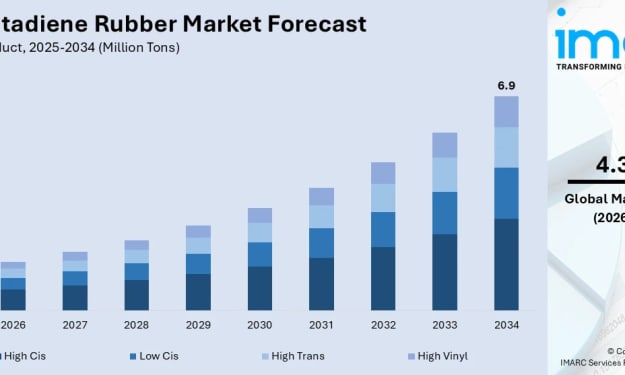
Polybutadiene Rubber Market Trends: Green Tires, Low Rolling Resistance & Industry Outlook to 2034
Rising demand from the automotive sector, particularly for high-performance tires, and the increasing use of synthetic rubber in industrial goods are propelling the polybutadiene rubber market. Supported by advancements in polymerization technology and a shift toward sustainable, low-rolling-resistance materials, the industry continues to expand across key manufacturing hubs. According to IMARC Group’s latest data, the global polybutadiene rubber market size reached 4.7 Million Tons in 2025. Looking forward, IMARC Group estimates the market to reach 6.9 Million Tons by 2034, exhibiting a CAGR of 4.31% during 2026-2034.
By Andrew Sullivan5 days ago in Futurism


Comments
There are no comments for this story
Be the first to respond and start the conversation.