literature
Science fiction's most popular literary writers from Isaac Asimov to Stephen King and Frank Herbert, and the rising stars of today.
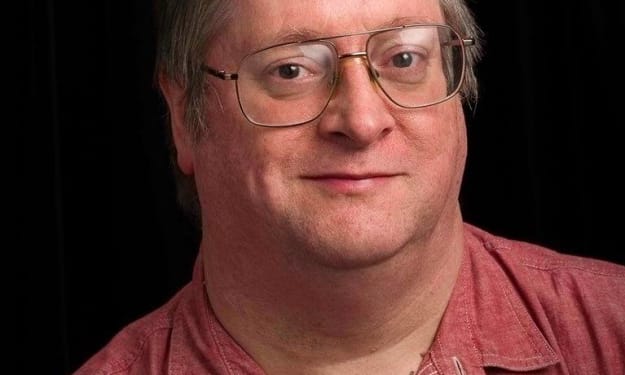
Interview with Martin Shoemaker
Omni had the opportunity to speak with Martin L. Shoemaker, multi-award winning author and professional programmer. His short story Today I Am Paul was nominated for a Nebula Award and he has won much accolade in the span of his six year career. Martin has written for publications such as Analog, Galaxy’s Edge and Clarkesworld. He has a number of upcoming projects, including several novels.
By Joshua Sky9 years ago in Futurism
Sci-Fi's Obsession with Ancient Greece and Rome
Sometimes science fiction returns to the past for places, people, and themes to enrich its mind-journeys into the future. Such is the case with these sci-fi movies, TV episodes, and works of fiction, each one drawing from the ancient worlds of Greece or Rome to dress its story. Brit Marling, a screenplay co-writer of Another Earth, says that this isn’t really surprising. “We’re retelling the same dramas from Ancient Greece,” Marling said. “These stories are so fundamentally old, the mythology that they come from, the hero’s journey — the way a narrative works. Science allows you to take the same story and see it from a new perspective because the science is always new and fresh.” Science fiction’s interest in the ancient world goes beyond mere allusion, as in the middle name of Captain James Tiberius Kirk (Tiberius, in case you’re wondering, was a somber, reclusive Roman ruler who nevertheless left the empire in a better state than he found it). If you’re deeply interested in how the speculative worlds of the future and the worlds of ancient Rome and Greece intersect, you may be interested in a serious paper by academic Tony Keen, “The 'T' stands for Tiberius: models and methodologies of classical reception in science fiction.” If that sounds a little heavy, enjoy the following summary of a few times when togas, laurel wreaths, aliens, and spaceships partied it up in one crazy combination.
By Sarah Quinn9 years ago in Futurism
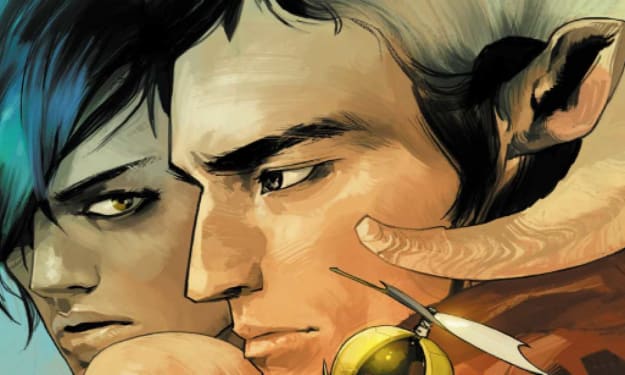
The Best New Sci-Fi Graphic Novels
Picture books aren’t just for kids. In fact, when it comes to the best sci-fi graphic novels, they usually aren’t for kids at all (here be mature themes, like crazy alien sex and buckets of violence). Immerse yourself in tantalizingly rendered stories of robots, aliens, human beings, and creatures that lie somewhere in between. From struggling underwater colonies waiting for an inevitable supernova to the madcap adventures of all-American scientific geniuses, you’ll find the story that’s right for you - one that's harder and harder to tear yourself away from.
By Sarah Quinn9 years ago in Futurism
Sci-Fi Books that Changed the Genre Forever
When thinking of sci-fi books that changed the genre forever, there are a number of contexts that need to be considered. Science fiction books have been know to predict the future and speak to the past in a way that few other forms of fiction do. They point out social issues and bring up questions of morality and the human condition. The great ones are the first to do so or to do it in a way that is so wholly unique as to influence that world around them. Great sci-fi novels also inspire the generations after them. Here is a list of sci-fi books that changed the genre forever.
By Peter Carriveau9 years ago in Futurism
Heart-Rending Poems for Sci-Fi Fanatics
Distant relatives to the familiar "Twinkle, Twinkle, Little Star," these sci fi poems are raw, real, and sometimes almost too close for comfort. They blur the line between speculation and reality in their carefully composed stanzas and bring us to mini existential crises - not earth-shattering ones. Each is just the right size to bring along to a good evening of poetry for the starry-eyed dreamer. (And if no one you know is cool enough to host one, you'd better send out invitations to your own. I suggest hot beverages, an antipasto platter, and no, I'm not doing anything, of course I would be delighted to come, thank you for asking!)
By Sarah Quinn9 years ago in Futurism
Space
In a recent Omni article, "New Words Were Needed," I looked at some of the commonalities between modernism and science fiction. After inventorying some of the ways science fiction transposes modernist formal concerns to the level of story, I wrote, "And those are just some of the techniques of modernism; I won't even mention postmodernism."
By M. Thomas Gammarino9 years ago in Futurism
Orwell's 1984 Was Optimistic
When George Orwell wrote his most famous, and last, novel, 1984, it was against a backdrop of rising fascist totalitarianism in Europe. Hitler, Stalin, Mussolini, Franco, all turned their respective democratic nations into oppressive regimes. While Hitler sought war with Europe, Stalin declared war on his own people, purging the Soviet Union of anyone he feared might usurp him – they numbered in the millions. It was after participating in the Spanish Civil War, against Franco’s Nationalists, that Orwell’s writing direction turned towards one of speaking out against totalitarianism and promoting democratic socialism.
By Jacob Frommer9 years ago in Futurism
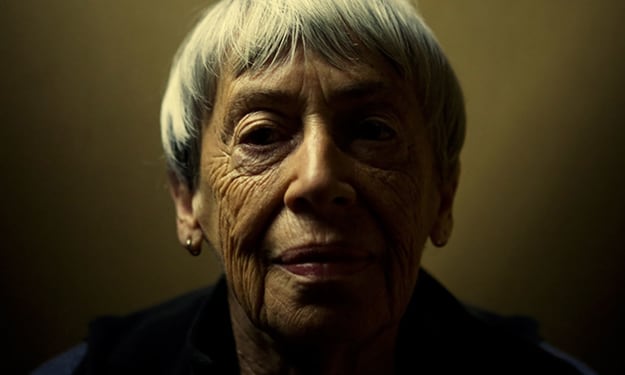
Most Influential Female Sci-Fi Authors
Science fiction is traditionally a boys club. Men have dominated the genre for years, and it wasn't until the second wave of feminism in the 60s that more and more female sci-fi authors began to be recognized. Women like Madeleine L'Engle, Octavia Butler, and Ursula K. Le Guin were just a few to break out into the sci-fi scene with a vengeance. Their novels and short stories have inspired women of all ages to enter the science fiction and fantasy genres and demand to be respected as equals, and the exceptional authors they are. The women who make up the list of the most influential female sci-fi authors will continue to lead a generation of women to create award-worthy work for years to come.
By Danielle Banner9 years ago in Futurism
How to Write a Gothic Novel
Since Walpole, many writers have written books set in a world with meager villages back-dropped by terrifying but alluring castles, and a heroine fleeing from dangers. Two Gothic novels have pervaded popular culture, Mary Shelly's Frankenstein and Bram Stroker's Dracula. Frankenstein or The Modern Prometheus. With its themes of mad science and technology run amok the book is considered by some scholars to be the first true science fiction novel. Shelly devised her novel through imagination alone, but Stroker was inspired by historical events. Dracula from the historical account of Vlad the Impaler, also known as Vlad III Dracula of Wallachia. Vlad earned the name 'Dracula' after being initiated into the Order of the Dragon in 1431. In Romanian, the word 'dracul' can mean 'the dragon' or, more often today, 'the devil.' It should mean 'vampire.'
By George Gott9 years ago in Futurism
Best 'Star Wars' Expanded Universe Books
In a galaxy far, far away, there are even more Star Wars universes. The Star Wars Expanded Universe (SWEU) is a marvelous creation of fictional material to complement the Star Wars saga beyond the movies, the Clone Wars movie and book trilogy, and many other parts of the Star Wars bibliography. Apart from the fact that the Expanded Universe includes comic books, video games, toys, and other assorted media, the focus of the entire galactic story is in the bibliography. Moreover, many of the Star Wars Expanded Universe books are comparable in quality to the Star Wars trilogy itself. In fact, many overlap with out list of the Best Star Wars Books. OMNI has compiled a list of some of the best Star Wars Expanded Universe books.
By Chelsea Lynne9 years ago in Futurism
Reviewing Ann Leckie's 'Ancillary Justice'
To say that Ann Leckie’s Ancillary Justice was one of the most important novels of 2013 would be a bit obvious. The novel won both the Hugo and the Nebula for Best Novel and a host of other awards. It is all the more impressive considering that it is Leckie’s first. The ambitious style, believable characterization, and a gripping conspiratorial plot has excited old fans of science fiction, and even gathered the attention of critics of so-called 'mainstream' literature. True, not everyone has been so impressed. Nina Allan, writing for Arc, felt that the novel gave in too easily to the broadest tropes of the space opera genre. I disagree. I think, instead, that giving in to such tropes while stressing our conception of them is precisely where the novel derives its strength.
By Michael Gold9 years ago in Futurism
Reviewing Neil Stephenson’s 'Snow Crash'
Re-reading Snow Crash by Neal Stephenson a little over a year after reading it for the first time was not only fun, but necessary. Snippets of the book from my first reading had been coming back to me for the last year or so, but so much happens in the space of 469 pages that I was remembering separate plots of the book as belonging to entirely different novels. That isn’t to say, however, that the book is especially confusing, or even complicated. It is, however, dealing with a lot of big, esoteric ideas, and Stephenson’s genius shows itself in his ability to expound on all these ideas in detail without slowing the story down. The exposition and explanation is as entrancing as the fast-paced plot.
By Michael Gold9 years ago in Futurism