literature
Science fiction's most popular literary writers from Isaac Asimov to Stephen King and Frank Herbert, and the rising stars of today.
Chris Beckett's 'Dark Eden'
Chris Beckett’s Dark Eden highlights the evolution of narrative in a quiet coming-of-age story set on an alien planet with no sun. Often considered one of the best space colonization books, the novel spends much of its first half detailing the ways in which humans cope with life on a dark world. Light and warmth comes from “lantern trees,” which pump up hot liquid of some kind from the center of the planet. People hunt dark animals with green-grey meat. They measure time in “wombs” (the amount of time it takes for a baby to be born), as well as in “wakings” and “periods.” Words in Chris Beckett's Dark Eden universe have developed double meanings to make them emphatic, as language evolved from standard English. All five-hundred members of Family (as they are called) are descended from two humans who decided to stay on this strange planet, called Eden, and that the “Three Companions” made a risky attempt to return to Earth. Now, once a year (years are the Earth-time kept by the oldest members of Family), they gather to see the story of their origin acted out in drama, and to touch items from Earth.
By Futurism Staff9 years ago in Futurism
Greatest Sci-Fi Authors of All Time. Top Story - August 2016.
Readers of science fiction sometimes neglect to do our homework, don’t we? We fail, at intervals, to learn more about the creative geniuses slaving over their typewriters and keyboards to provide us with our daily amusement. That ain’t right! The greatest sci-fi authors have given us so very much, these authors; Through their painstaking labors, they’ve allowed us countless hours of reading pleasure as well as plenty of genre fodder to debate with our friends. Thus they deserve better. They deserve our respect, our affection, and for the intent of this article, a few moments of our attention as we rut around in their history to explore the factors and forces which forged them into the stars they became!
By Matt Cates9 years ago in Futurism
David Brin on Science Fiction, Fact, and Fantasy
David Brin is one of the “10 authors most-read by AI researchers.” Naturally, he's the guy to consult before Terminators take over the planet. With an extensive resume and years of research experience under his belt, Brin has become the go-to authority on all things science.
By Natasha Sydor9 years ago in Futurism
Strongest Female Leads in Sci-Fi Books
Strong-chinned blokes with muscled forearms all too often bear the role of savior to the cliched damsel in distress. But the days of polished knights on stallions may be winding down, for the times, they are a’changin’. Yes, women are resurgent everywhere you look—as they should be! From the wide realm of comics to the IMAX screen, strong female leads are storming the stage and letting the world know they’re every bit as rough n’ tumble as a "man of steel," and certainly just as clever as the "world’s greatest detective." To recite the words of playwright David Mamet, "What one man can do, a woman can do!"
By Matt Cates9 years ago in Futurism
Present Rewritten
He knew it was an explosion, but only because of the compression. The quick, crystalline blowout happened so fast that everything was over before the sound even reached his ears. He watched his kindergarten year flash through his mind. There wasn't even time for first grade.
By Steve Benton9 years ago in Futurism
Greatest Sci-Fi Antagonists
Why are nice readers attracted to evil literary characters? Yes, I’m talking to you! But I’m also guilty, and I have finally reached a point where I can speak about this openly. There’s no denying it—we all crave villains. A good author better know about this phenomenon, for the merits of their protagonists are measured against the strengths of their opponents. It’s no fun reading about a hero fighting a 90-pound pushover! So have no fear, faithful reader, for we’ve assembled a list of sci-fi’s most fiendish fiends. You will never find a more wretched hive of scum and villa—oh, okay, sorry! I don’t want to get busted for plagiarizing Obi-Wan Kenobi. These guys are the worst of the worst.
By Matt Cates9 years ago in Futurism
Predictions from Sci-Fi Authors
Science fiction authors are modern-day prophets. Many of the predictions from the great writers like Isaac Asimov and Philip K. Dick came to fruition at the turn of the 21st century. Writer Michael Banks closely followed the growth of online web services and the evolution of the internet from the early 1980s onward. His perception on the predictive nature of science fiction can be proven through a study of the the great sci-fi author's ability to blur the lines between speculation and fact are often the catalyst for authentic advance in tech. His books, including Crosley: Two Brothers and a Business Empire That Transformed the NationandOn the Way to the Web: The Secret History of the Internet and Its Foundersdelve into the results of this chain of predictions. His perceptions will continue to drive further authors to continue to essentially create the future. Many of his theories were captured in a 1978 article from vintage sci-fi magazine Starlog.
By Futurism Staff9 years ago in Futurism
Liu Cixin’s 'The Three-Body Problem'
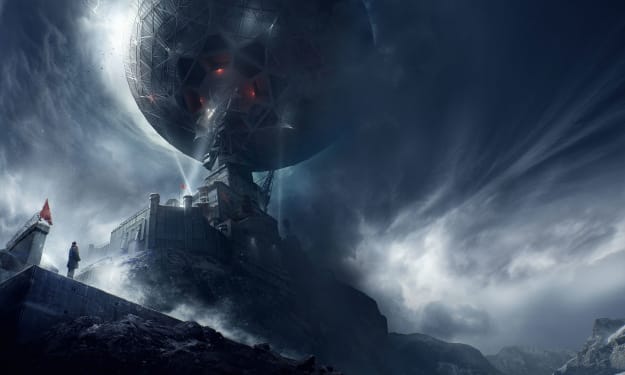
Liu Cixin’s The Three-Body trilogy became one of the most popular science fiction series in China rapidly after its publication. Starting in 2015, English-speaking audiences were finally given the opportunity to see what China had been buzzing about since 2008, when Tor Books published an English translation of the series. The Three-Body Problem is a promising start to a science fiction series: A brilliant plot unfolds against a tightly composed background that binds together physics, philosophy, and history. It is a novel that takes time to read because the philosophical positions of each character have to be carefully considered. The back and forth between the book’s factions shows that the author carefully considered the pressing issues at hand: humanity's place in the world, the value of human civilization, and the repercussions of extraterrestrial contact. The lively translation accomplished by Ken Liu in the English version brings all these elements to life on the page for English-speaking audiences.
By Michael Gold9 years ago in Futurism
Best Hard Sci-Fi Books
Fans of the sci-fi genre have been known to be… picky. Sure, we want our trail mix of starships, androids, cleverly disguised social commentary, “big thought-provoking ideas,” and snappy banter from severely conflicted cyborg characters. We also want, somewhere in the middle, an enormous, spacey McGuffin to keep the plot moving at warp speed. But all that’s a given; That’s the minimum essential goods. What most discerning fans demand is a level of authenticity; We want to know exactly “how” that tractor beam works, “how” that near-light speed engine runs, “how” that police telephone booth is really bigger on the inside. In other words, we want an author who knows what they’re talking about when it comes to the techy stuff—even if that stuff is totally imaginary! And not just Wookiepedia-level knowledge, either. Basically we want a genuine physicist like Michio Kaku whispering into the writer’s ear, telling them how all this stuff could, theoretically, work. Hard sci-fi answers these questions with its emphasis on technical accuracy and scientific detail.
By Matt Cates10 years ago in Futurism
Most Terrifying Sci-Fi Books
Peanut butter and jelly. Hot rods and bikinis. Sci-fi and horror. Some things are meant to go together! Yet, while most of us are all too familiar with our two favorite genres mixing it up in motion pictures, it’s often under appreciated how well these types blend in book form. Together, we can correct that fault, by cherry-picking a few classics, blowing off the binary dust which has shamefully accumulated upon these wizened tomes, and gearing up to get our wits scared out of us!
By Matt Cates10 years ago in Futurism