literature
Science fiction's most popular literary writers from Isaac Asimov to Stephen King and Frank Herbert, and the rising stars of today.
Can Science Fiction Predict the Future?
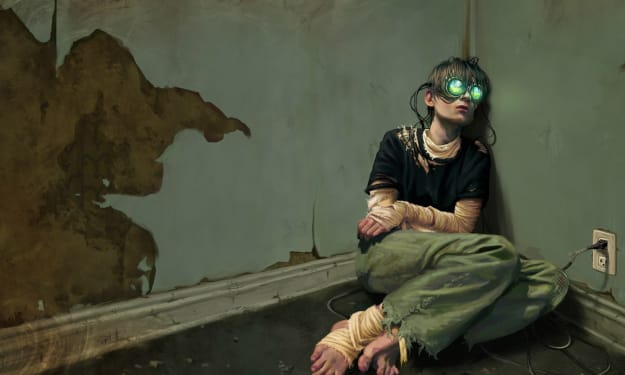
"Well, you know, William Gibson was writing about that in 1984." It's become a running joke among my friends that I say something like this every few months, usually when discussion turns to the increasingly science fictional resonances of our everyday world. Science fiction writers can be a prescient lot, by trade. But William Gibson, in particular, has a remarkable track record for what seems like genuine prophecy, starting with his very first short stories, published in—surprise—OMNI magazine.
By Glenn McDonald9 years ago in Futurism
Irving Wallace Predictions of That Came True
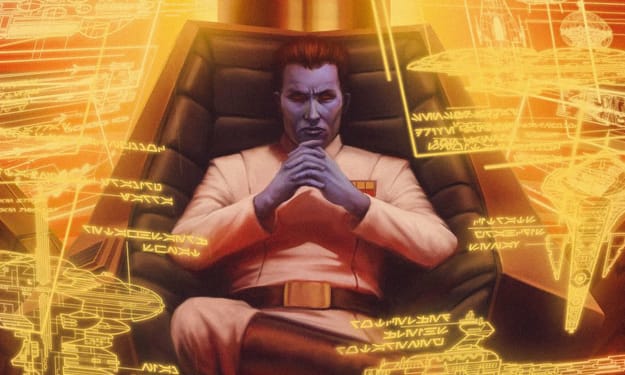
Irving Wallace is a name from the past. If you are a Gen-X kid, you may have grown up in a world where every bathroom featured The Book of Lists, Wallace’s book (with kids Amy Wallace and David Wallechinsky—he had to take the old man’s Ellis Island name, huh?) that updated to The Guinness Book of World Records in the hip 70s. Why, just yesterday, before I wrote this article, I posted for friends Irving Wallace’s mind-blowing 1972 movie The Man, in which a fateful plane accident causes president pro tempore of the Senate James Earl Jones to become the President. A black President?! 1972 America’s collective mind is blown. Halfway between the Dr. Strangelove airplane and Darth Vader, JEJ is, of course, a magnificent voice and a majestic avatar of human dignity. Burgess Meredith—you know, Rocky’s trainer—plays the evil sculduggerous Southern teabagger who plots President Vader’s ruin.
By Matthew Wilder9 years ago in Futurism
Thrilling 'Star Wars' Audio Books
Travel to a galaxy far, far away and never leave the comfort of your sedan. Any commute can be improved with a little help from the soothing sounds of a Wookiee. Audio books are a great way to immerse yourself in the alternate universe that has captured generation after generation. These Star Wars audio books offer the intense action of a movie with the in-depth narrative of a novel that can be enjoyed almost anywhere. Imagine you are sitting in bumper to bumper traffic on your way home from a long day at the office, only to have the speakers of your car blaring the the struggle of Yoda trying to instill peace on Djun, an inventive tale of good versus evil or a narration that follows Princess Leia, Han Solo, and Luke Skywalker as the rebels' last hope. Your favorite Star Wars moments are now reimagined and reinvented in an advancement that is the way of the future. Dread traffic no more with the most thrilling Star Wars audio books.
By James Lizowski9 years ago in Futurism
Word-Worlds
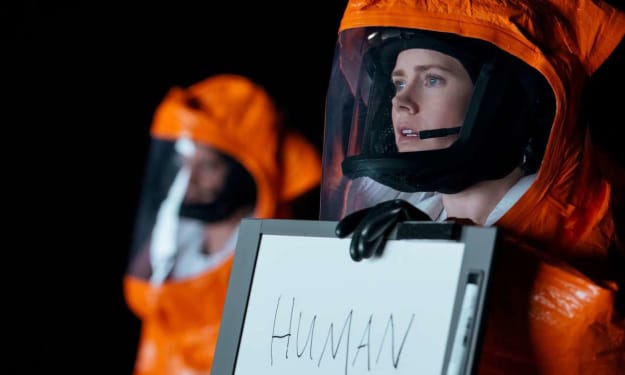
Ted Chiang is among the greatest short story writers in the history of science fiction, and I've been recommending his work to students for years. That said, I was somewhat disappointed by Arrival, Denis Villeneuve's recent film adaptation of Chiang's masterful short story "Story of Your Life." The film, in my view, is too noncommittal genre-wise. It doesn't know what it wants to be—action-adventure or philosophical meditation, Independence Day or Ex Machina. I suppose there's a way to elegantly split that difference, but I don't think it happens here. To be fair, it's a tough story to adapt: high-concept, but cerebral and exposition-y. "Story of Your Life" features none of the fate-of-the-Earth-hangs-in-the-balance testosterone of Arrival; what's most interesting about it is the peculiar linguistics of the alien language, particularly the written script, which Chiang's narrator explores in depth. The film dumbs all this down. We get squiddy aliens ejaculating ideograms, and some montage-like scenes of Amy Adams' character trying to decipher them at her desk, but we're not really privy to her insights, and, though a major plot twist depends on it, we never get the full picture of how the aliens' language is a natural outgrowth and/or determinant (or both?) of their relationship to time, which is, or ought to be, the story's great payoff.
By M. Thomas Gammarino9 years ago in Futurism
Best 'Star Wars' Han Solo And Chewbacca Books
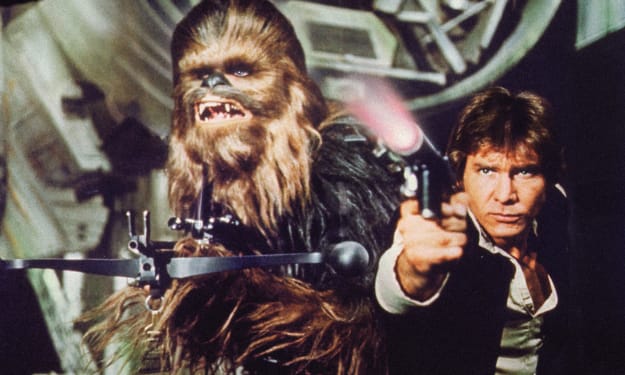
Every Star Wars fan knows the famous duo of Han Solo and Chewbacca well. While Han Solo was a human smuggler known for being a member of the Rebel Alliance and later the New Republic, he originates from the planet Corellia where he was orphaned at an early age. Taken by the pirate Garris Shrike to serve with his crew, Han was treated cruelly, which is the main reason he became a smuggler. After entering the Imperial Academy at Carida where he served with distinction, his life changed when he refused to beat a Wookiee named Chewbacca with a neuronic whip and the two eventually fled from the imperials together. That was the moment Han Solo and Chewbacca bonded, and Chewbacca became his partner in crime as his life debt to Solo. The adventures of Han Solo and Chewbacca are present in many Star Wars books. Here are our picks for the best Han Solo and Chewbacca books.
By James Lizowski9 years ago in Futurism
Philip K. Dick's VALIS Analyzes Religious Destiny
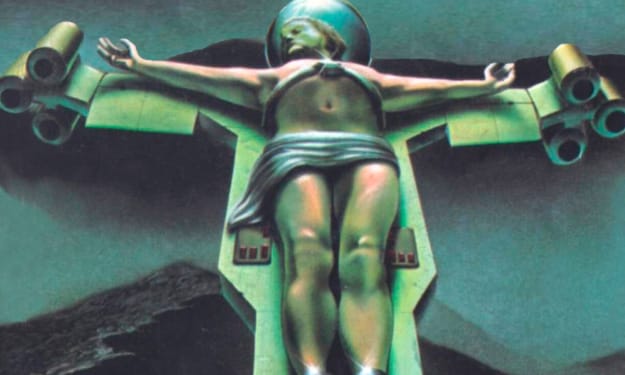
If you really think about it, the story of Jesus is a work of science fiction. He's a man with superpowers that include turning water to wine, healing others, and coming back from the dead. All jokes aside, religion and science fiction truly go hand in hand although people often try to separate the two. Some of the religious themes that permeate sci-fi stories include the idea of the afterlife, reincarnation, original sin, fictional religions, Messianism, and many other themes that can be found in the works of Philip K. Dick. As a science fiction writer, Dick wrote 44 novels and 121 short stories including Do Androids Dream of Electric Sheep?,A Scanner Darkly, Flow My Tears, the Policeman Said, VALIS, and many others. Some of the films that have been adapted from these stories include Blade Runner, Total Recall, A Scanner Darkly, Minority Report, Paycheck, Next, Screamers, The Adjustment Bureau, and Impostor. Throughout his lifetime, he won several awards including three Hugo Awards, five Nebula Awards, one British Science Fiction Association Award, and many others. There is even a Philip K. Dick Award that was established in 1983 which honors the previous year's best science fiction paperback original published in the US. In 2007, Dick became the first science fiction writer to be included in The Library of America series. The writer died in 1982 after suffering two strokes at the age of 53, but his legacy lives on today in his stories such as VALIS.
By Mackenzie Lu9 years ago in Futurism
Science Fiction Feminist Dorris Lessing
Doris Lessing, made famous by her epic novel of the female experience, The Golden Notebook, was also a prolific writer of science fiction. She was not a fan of genre distinctions. She called science fiction "some of the best social fiction of our time," writing woozy, difficult books about psychic women and fallen paradises.
By Stephanie Gladwell9 years ago in Futurism
Surprising Science Fiction Stories from the Ancient World
Some think of Mary Shelley’s Frankenstein as the beginning of science fiction. Others would say that it didn’t really begin until H.G. Wells began writing down his marvelous, speculative stories in which he imagined terrible - and wonderful - possibilities for the futures. While these might be the beginnings of science fiction or speculative fiction as we define it today, there are many stories from the ancient world and early cultures all over the planet that contained elements of science and speculation similar to the ones we love today.Whether they’re early tales from Japan or surprising elements of the Bible, these stories will inspire you to take a closer look at what you consider the origins of your favorite genre.
By Sarah Quinn9 years ago in Futurism
Best Sci-Fi Graphic Novels for Kids
It can be challenging to find science fiction graphic novels for children that aren’t too scary or violent, but also don’t demean kids or gloss over their interests. While you have to make the call for your own kids, here are six great choices for all the youngsters on your Christmas list. Whether they’re preschoolers who can’t yet read or high school students who’ve been adoring fans of the genre for years, you’re sure to find something that’s just right. (And yes, it’s totally ok to devour it from front to back before you wrap it and pass it on to them. I won’t tell.)
By Sarah Quinn9 years ago in Futurism
The Most Amazing Quotes About Science Fiction
Science fiction is a world worked in and lived in by necessity, not by choice. If we as readers are seeking a world so dark and revealing when we could be visiting Rivendell instead, we’re seeking it because we need it. Why? The answer depends on the person. Some of us are in a perpetual state of near-frantic scientific curiosity that demands more satisfaction than our own research can give us. Some of us are struggling with mental illness, and the world of science fiction is a reassuring reminder that every world has its horrors. Some of us need to hear that we are not the only ones who would turn tail and run in the face of almost-certain death and unimaginable horrors. No matter why we seek it, there are always certain passages that speak the thoughts we can’t put into words, and in so doing give us a peace we can hardly explain. Here are a few; they’re just a sample of the many inspiring words from speculative authors, scientists, and visionaries.
By Sarah Quinn9 years ago in Futurism
To Preserve a Demon
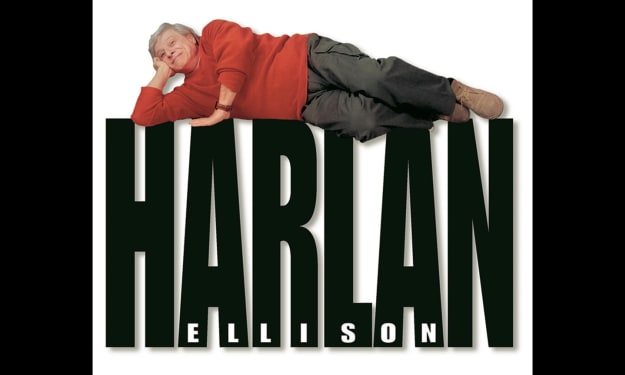
Writer/editor Jason Davis has a special ambition -- to catalog, digitize, edit, correct, annotate and re-publish (or publish for the first time, in some cases) all of Harlan Ellison's writings. Twenty-six four-foot-wide drawers of typescripts, over 100 feet of paper if stacked, the lifework of a man who is easily one of the most influential and cantankerous authors of the 20th century. Jason is spearheading the Harlan Ellison Books Preservation Project, a grand undertaking "To create definitive versions of all Harlan Ellison's writings, fiction and non-fiction, to preserve in print for posterity."
By Joshua Sky9 years ago in Futurism