intellect
Insightful post about reason, abstract thinking, and science, highlighting gifted science fiction influencers.
One rock at a time, revealing Mars's buried history
The surface of Mars is only the first step in the exploration process. For this reason, the Perseverance rover from NASA is engaged in more than merely gathering core samples. Additionally, it is sifting through Martian pebbles in search of mysteries hidden behind the dusty exterior.
By Francis Dami8 months ago in Futurism
The 'cosmic web,' the universe's secret roads, is seen for the first time by astronomers.
Space isn't empty. Even the greatest telescopes have trouble seeing the minuscule strands of matter that are woven throughout it. This enormous network is known to astronomers as the cosmic web. It is the unseen framework that holds galaxies in place and directs their expansion.
By Francis Dami8 months ago in Futurism
Elon Reeve Musk FRS Isn’t Like Other Billionaires
When people hear the word “billionaire,” certain images come to mind — luxury yachts, private jets, boardroom meetings, and safe investments. But Elon Musk doesn’t fit that picture. He’s not just building wealth; he’s rewriting the rulebook on how to use it. While other billionaires focus on expanding their empires, Musk is aiming to change the future of humanity itself.
By Azam Tariq8 months ago in Futurism
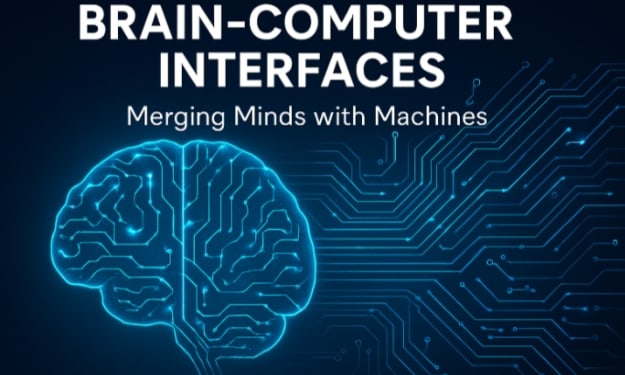
Brain-Computer Interfaces: Merging Minds with Machines
Introduction: A New Era of Human-Machine Connection What if you could send a message, play a game, or control a robotic arm using just your thoughts—no speaking, typing, or touching required? This is no longer science fiction. It is the fast-approaching reality of Brain-Computer Interfaces (BCIs). As neuroscience merges with artificial Introduction: A New Era of Human-Machine Connectionintelligence, BCIs are shaping up to be one of the most disruptive and transformative technologies of the 21st century. They promise to revolutionize how we treat illness, connect with others, and interact with machines—redefining the boundaries of the human mind.
By Rayyan Joseph 8 months ago in Futurism
Why Old-School Leaders Are Losing Gen Z - and What Visionary Leaders Do Instead
🚨 The world of work has changed. Have you? Gen Z is entering the workforce in waves. AI is reshaping how we operate. And yet - many leaders still cling to control, structure, and outdated expectations.
By Deepika D.9 months ago in Futurism
Part Two: The Ice Curtain: Secret Space Programs, Extraterrestrial Agendas, and the Forbidden History of Earth
While mainstream academia often dismisses these claims as mere speculation, a different narrative is told behind closed doors. Secret space programs, black budget operations, and public space agencies have reportedly been active in and around Antarctica for decades. Insiders allege that these programs involve advanced propulsion systems, interstellar missions, and even alliances with extraterrestrial beings.
By The Secret History Of The World9 months ago in Futurism
Big Bang Theory: Confirmed by the Quran 1400 Years Ago?. AI-Generated.
The origin of the universe has always been one of the most fundamental questions in science and philosophy. For centuries, scientists, philosophers, and theologians have pondered how this vast universe came into existence. One of the most widely accepted scientific explanations today is the Big Bang Theory, which states that the universe began from a single, extremely dense and hot point about 13.8 billion years ago and has been expanding ever since.
By Hanif Ullah 9 months ago in Futurism
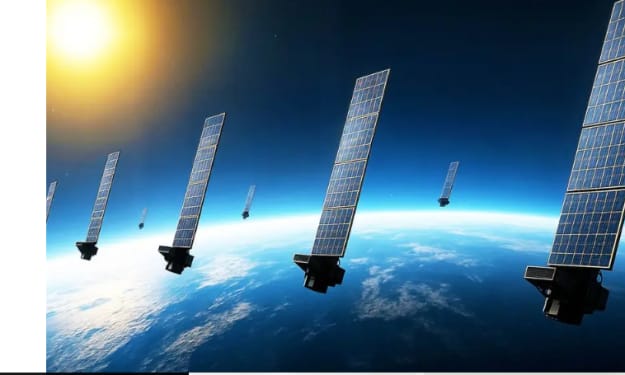
Radio transmissions from SpaceX's Starlink satellites are leaking, endangering astronomy.
At the frequencies that radio telescopes value most, space is typically quiet. However, over the past two years, researchers searching for hints from the young universe have been hearing radio signals from SpaceX's Starlink fleet, a noisy new neighbor
By Francis Dami9 months ago in Futurism
The Mountain He Moved for Me
A Bond Like No Other In a quiet town in Turkey, lived a man named Harun, a humble tailor known for his calm voice and strong hands. He didn’t have much no car, no big house, no fancy clothes but he had a heart larger than the mountains around his village.
By Muhammad Hayat9 months ago in Futurism
Awakening the Sixth Sense: Reclaiming Our Forgotten Power Part 3
The Language of the Universe, the Force of Intention, and the Return of the Magick Within In our contemporary society, many individuals have drifted away from the profound practice of genuinely listening, not merely with our auditory faculties but with our hearts, souls, and the vibrant energy that flows both within and around us. Somewhere along the intricate timeline of human history, we were either gently or perhaps forcibly nudged away from our inherent spiritual senses and intuitive intelligence, diminishing our connection to a vast and expansive reality that transcends mere physical perception. Yet, a remarkable awakening has unfolded in recent years as countless individuals start to remember this vital connection. Beneath the surface of our material existence lies a silent language, a communication transcending spoken words.
By The Secret History Of The World9 months ago in Futurism