evolution
The evolution of science, science fiction, and mankind throughout the years.
How 9/11 Changed the Design of Skyscrapers
The September 11, 2001 terrorist attacks had a profound impact on the way skyscrapers are designed. In the years since the attacks, building codes have been updated to include new safety features that are designed to prevent future attacks and to help people evacuate buildings more quickly in the event of an emergency.
By Plantera Digital Media 3 years ago in Futurism
The Interstate Highway System: A History and a Legacy
The Interstate Highway System is one of the most iconic and important infrastructure projects in American history. It is a network of over 47,000 miles of highways that connects every major city in the United States. The system was built in the 1950s and 1960s, and it has had a profound impact on the way Americans live, work, and travel.
By Plantera Digital Media 3 years ago in Futurism
The Challenges of AI
Artificial Intelligence (AI) has undoubtedly revolutionized various industries, but it also comes with a set of concerns and potential pitfalls that need to be addressed. So let's explore some of these "scary truths" about AI and shed light on the challenges and implications associated with its rapid advancement.
By Tonia Rucker3 years ago in Futurism
the Yamaha motorcycle History and evolution over the years
the Yamaha motorcycle History and evolution over the years Los Angeles motorcycle Yamaha has come a long way since its inception in 1955. Initially, l. A. Moto was marketed as a cheap and convenient means of shipping for ordinary mortals. However, over the years, the brand has refined and refined its layout to create some of the most popular bikes on the market today. Many people appreciate Yamaha bikes for their quality production and overall performance capabilities.
By Abdo Amina3 years ago in Futurism
Web3 & Crypto
Once upon a time, the world was ruled by centralized systems. Governments, banks, and corporations had all the power. People needed to go through intermediaries in order to transact, and the cost was often high. Inequality was rampant, and corruption was a constant threat to the system.
By Nathan Weiss3 years ago in Futurism
Unveiling the Rich Tapestry of Spain: Your Ultimate Travel Companion
Welcome to a land where history whispers through ancient ruins, where passionate flamenco rhythms fill the air, and where stunning landscapes beckon at every turn. Spain, a country that epitomizes charm and diversity, offers an incredible array of experiences for travelers. Whether you're captivated by architectural marvels, yearning for culinary delights, or eager to explore idyllic coastal towns, Spain has it all. In this blog, we will unravel the secrets of Spain's rich tapestry, guide you through the process of obtaining a Apply Spain visa from the UK, and inspire you to embark on a journey of a lifetime.
By Spain visas3 years ago in Futurism
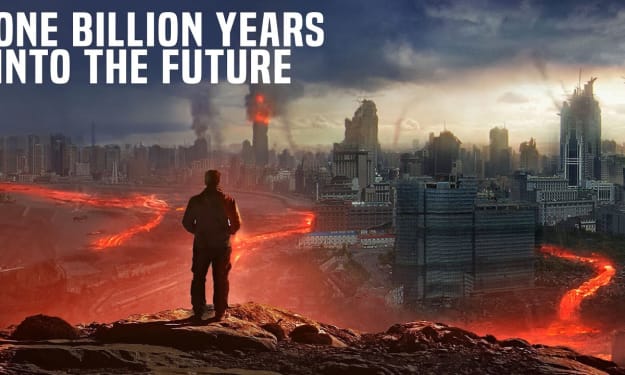
What Would Happen If You Went One Billion Years Into the Future?
If you travelled 10,000 years into the future, what would planet Earth look like? Would most of its surface be covered in volcanoes, or would it be frozen in ice? What if you travelled even further, one million years in the future? Would all of the oceans have evaporated, or would they have become one giant water world? Okay, now what about 1 billion years? Would there be any humans left, or would they have settled in other parts of the galaxy? This is what would happen if you travelled 1 billion years into the future. Let's face it, the chances of any humans being around to greet you when you arrive 1 billion years into the future are pretty low. Several key existential threats face the human race, and if we want to be around in one billion years, we'll need to endure them all. We've seen how much we've struggled to come together just to survive a global pandemic, so how do we have any chance of enduring the threats of climate change? Overpopulation, global nuclear war, killer asteroids and comets, natural ice ages, and the sun getting a whole lot hotter Well, let's take a look into the future and find out that just under ten thousand years from now, we're going to run into a big problem called the decamillennium bug. In the year 10,000, the ad software encoding the ad calendar year won't encode dates with more than four decimals. Remember y2k? Yeah, it's just like that, except hopefully we won't panic as much this time around. On the bright side, in 10,000 years, genetic differences and traits between humans will no longer be regional traits like skin and hair color but will be evenly distributed around the world. Maybe that will help us all get along. Finally, twenty thousand years into the future, none of the current languages will be recognizable. Future languages will only contain one percent of the core vocabulary words of their present-day counterparts. Fifty thousand years from now will mark a new glacial period for the earth, which will start a new ice age. Niagara Falls will have eroded into Lake Erie completely, and interestingly, a full day on earth will also increase by one second at this point in time, giving you much more time for activities. In 250 000 years, the Loihi volcano will rise above the water to form a new island in Hawaii, and in 500 000 years, it's likely that an asteroid with a diameter greater than one kilometer will hit Earth unless we can prevent it. The resulting crater will be no less than 400 kilometers across. It will start fires all over the planet and make the air unbreathable, so there's something to look forward to, and in case that's not enough, in 1 million years we'll likely have another super volcano eruption large enough to spew out 3200 cubic kilometers of ash. It would produce enough lava to fill 75 percent of the Grand Canyon. This would be similar to the Toba eruption that almost wiped out humanity 70 000 years ago. Oh, and the nearby star Beetlejuice will have exploded into a supernova by this time, making it visible from earth even during the daytime in 2 million a.d. Humanity will have settlements throughout the solar system. This also means that if populations on different planets have remained separate, humans may have evolved into other species adapted to their specific world. In 10 million years, a huge part of eastern Africa will break off, forming a new ocean basin. Africa will collide with Europe, closing off the Mediterranean Sea, and a new mountain range will form between the two land masses. This mountain range may include a mountain taller than Mount Everest. Out in space, Mars will collide with its moon, resulting in it developing a ring system like Saturn's in 60 million years. The Canadian and American Rockies will have eroded entirely in 80 million years. All Hawaiian islands will be below the water in 100 million years. An asteroid 10 kilometers wide, similar to the one that killed the dinosaurs 66 million years ago, will most likely strike Earth in 250 million years. All of earth's continents will be fused together like pangaea, except this time it will be called pangaea ultima, but don't get too attached to it because in 400 to 500 million years, Pangaea ultima will separate again in 500 to 600 million years.
By Durga Prasad3 years ago in Futurism
Artificial Intelligence (AI)
Artificial Intelligence (AI) refers to the simulation of human intelligence in machines that are programmed to think, learn, and perform tasks typically requiring human intelligence. AI systems can analyze data, make decisions, recognize patterns, and interact with the environment or humans.
By MR. R O S H A N R O S H A N3 years ago in Futurism