book review
Books reviews of the best science fiction stories, texts, educational texts, and journals.
Dr. Hans Moravec's Robotic Future
Dr. Hans Moravec was perhaps the world's most vocal advocate of humanlike robots: creations resembling us that could theoretically live forever—and make us obsolete. As the author of a controversial book that proposed that robots replace the human species, Moravec was able to start arguments almost at will. He even went so far as to say that God (as he understands him) is probably using computers to design earth species. He was completely unconvinced by how traditional religions explained the future of human beings. If you explain the human condition in terms of continual progress, it's easy to look at humans evolving into robots.
By James Lizowski9 years ago in Futurism
Is Vernor Vinge's Singularity The End Of Days?
Vernor Vinge is a former San Diego State University math professor and a Hugo award-winning science fiction novelist. He is best known for his novels and novellas A Fire Upon the Deep (1992), A Deepness in the Sky (1999), Rainbows End (2006), Fast Times at Fairmont High (2002), and The Cookie Monster (2004). In Vinge's 1993 essay "The Coming Technological Singularity" Vinge wrote, "Within thirty years, we will have the technological means to create superhuman intelligence, also referred to as the singularity. Shortly after, the human era will be ended." The singularity, in essence, is the end of days.
By Joshua Samuel Zook9 years ago in Futurism
Thought Provoking Political Dystopian Books
If 2016 can teach us anything, it is that fiction can become reality. As a common rule, humanity strives for constant progress; movement towards a superior standard of living. But what happens when everything goes wrong instead? As humans we constantly question the 'what if' scenario. The dystopia genre is the anthesis of utopia and is a mainstay of science fiction writing over the years. The genre has taken the 'what if' to speculate about a future where every aspect of life has taken a distinct and frightening turn for the worse. Within the classic dystopian genre there lies the more thought provoking political dystopian theme. A typical tale involves a future society with an oppressive government that demands conformity. Sometimes this is in the wake of a disaster that has befallen humanity or society as a whole has taken a dark and oppressive turn for the worse. Often times there are no beautiful endings in these political dystopian books, only a joyless and dysfunctional future with glimpses into the light.
By George Gott9 years ago in Futurism
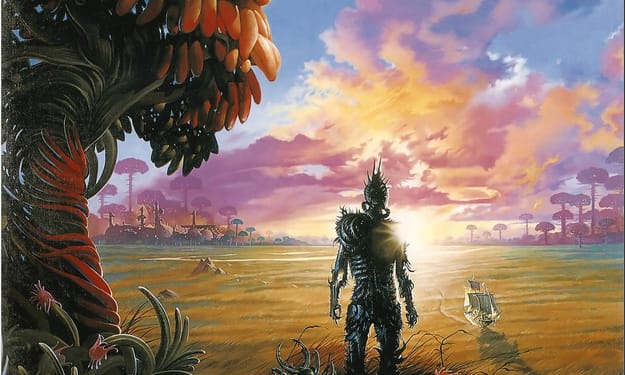
Dan Simmons' Hyperion
In Hyperion, Dan Simmons accomplished the creation of one of the most beautifully rendered science fiction universes ever encountered in the readers mind. Hyperion tells the story of a group of seven strangers on their way to the distant world of Hyperion. Earth is dead, but humanity has spread among the stars in a web of worlds (connected by an FTL transportation system called The Web) known as the Hegemony. There are worlds humans live on which are not a part of the Hegemony, but that number is in constant decline as the benefits of conformity outweigh the benefits of independence. Somewhere in the galaxy, a self-aware collective of artificial intelligence known as the TechnoCore have made their home, helping the Hegemony to care for its technology. Also spread in between the stars are the Ousters, “barbarians,” who roam in Zero-G mobile cities and flotilla, attacking Hegemony targets whenever the opportunity presents itself.
By Joshua Samuel Zook9 years ago in Futurism
Universe Collecting
“People still read books! This generation has hope!” – Harlan Ellison I love science fiction because I collect universes. Each novel, each story, is another world unto itself. I started collecting, or hoarding, as some family members might call it, when I was ten years old.
By Joshua Sky9 years ago in Futurism
Sci-Fi's Obsession with the American West
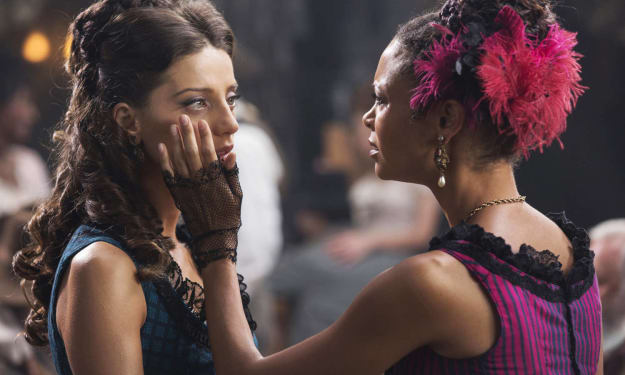
I was once in Big Bend National Park and thought I’d stepped onto another planet. If you’ve had the misfortune never to have visited, it’s a mostly parched desert wonderland with the strangest flowers, succulents, and eerie hills that you can imagine. Toss in the sexy wild lawlessness of the historical American West and you can see why science fiction would create some of its most memorable works against such an awe-inspiring backdrop. From cartoons like Cowboy Bebop and Trigun to animated shows like Galaxy Rangers and Bravestarr, science fiction clearly has a great big ol’ crush on the American West. There’s DC Comics’ Jonah Hex, a whole slew of terrible B-movies, and then there are the great ones: films like Westworld and Back to the Future Part III, books like The Gunslinger, and shows like Firefly (*sniff*). If you haven’t seen them yet, check out these incredible tributes to science fiction and the West all in one beautiful biomechanical horse meets pony-express package.
By Sarah Quinn9 years ago in Futurism
Space (Part II - Vonnegut's Cat's Cradle)
In my last article, I discussed William Gibson's cyberpunk classic Neuromancer as a key text in the convergence between science fiction and postmodernism. This time, I want to stay right on the cusp and consider the case of Kurt Vonnegut, who happens to be the writer who made me want to be one myself someday.
By M. Thomas Gammarino9 years ago in Futurism
The Best New Sci-Fi Graphic Novels
Picture books aren’t just for kids. In fact, when it comes to the best sci-fi graphic novels, they usually aren’t for kids at all (here be mature themes, like crazy alien sex and buckets of violence). Immerse yourself in tantalizingly rendered stories of robots, aliens, human beings, and creatures that lie somewhere in between. From struggling underwater colonies waiting for an inevitable supernova to the madcap adventures of all-American scientific geniuses, you’ll find the story that’s right for you - one that's harder and harder to tear yourself away from.
By Sarah Quinn9 years ago in Futurism
Space
In a recent Omni article, "New Words Were Needed," I looked at some of the commonalities between modernism and science fiction. After inventorying some of the ways science fiction transposes modernist formal concerns to the level of story, I wrote, "And those are just some of the techniques of modernism; I won't even mention postmodernism."
By M. Thomas Gammarino9 years ago in Futurism
Orwell's 1984 Was Optimistic
When George Orwell wrote his most famous, and last, novel, 1984, it was against a backdrop of rising fascist totalitarianism in Europe. Hitler, Stalin, Mussolini, Franco, all turned their respective democratic nations into oppressive regimes. While Hitler sought war with Europe, Stalin declared war on his own people, purging the Soviet Union of anyone he feared might usurp him – they numbered in the millions. It was after participating in the Spanish Civil War, against Franco’s Nationalists, that Orwell’s writing direction turned towards one of speaking out against totalitarianism and promoting democratic socialism.
By Jacob Frommer9 years ago in Futurism
Most Influential Female Sci-Fi Authors
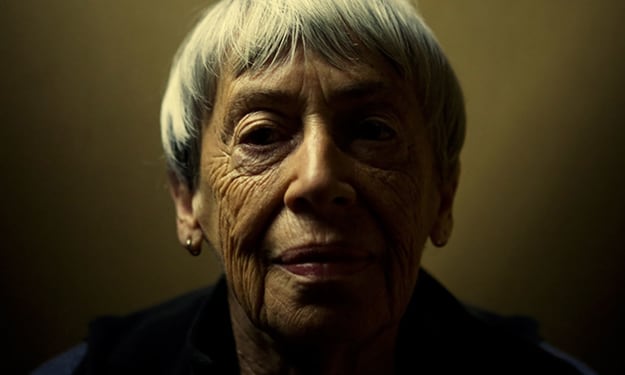
Science fiction is traditionally a boys club. Men have dominated the genre for years, and it wasn't until the second wave of feminism in the 60s that more and more female sci-fi authors began to be recognized. Women like Madeleine L'Engle, Octavia Butler, and Ursula K. Le Guin were just a few to break out into the sci-fi scene with a vengeance. Their novels and short stories have inspired women of all ages to enter the science fiction and fantasy genres and demand to be respected as equals, and the exceptional authors they are. The women who make up the list of the most influential female sci-fi authors will continue to lead a generation of women to create award-worthy work for years to come.
By Danielle Banner10 years ago in Futurism