book review
Books reviews of the best science fiction stories, texts, educational texts, and journals.
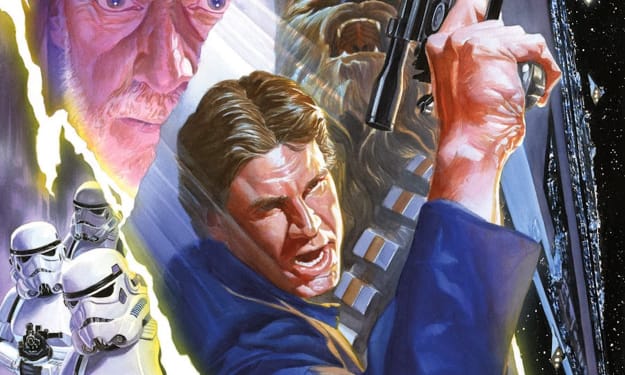
15 Characters Han Solo Met in 'Star Wars Legends Canon' (Even if He Didn't Need to)
Han Solo remains the most popular character in the Star Wars saga, so much so that Disney is funding a film all about Han Solo's life before A New Hope. This isn't the first time, of course, that Han Solo's story expanded beyond the limits of the core films. Back in the days of the Legends canon, tons of novels and comics outlined and expanded upon Han Solo's adventures and escapades.
By Anthony Gramuglia9 years ago in Futurism
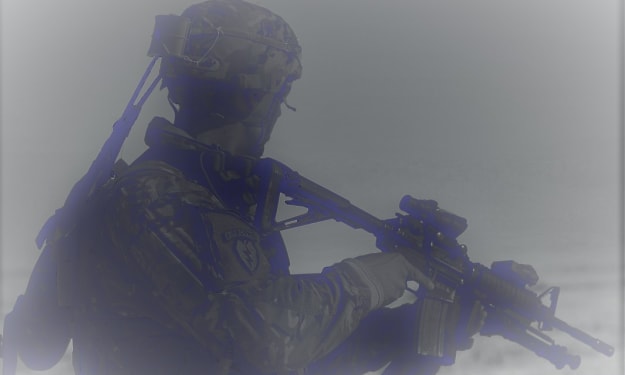
Military in Science Fiction
Military in Science Fiction Wrong uniform, wrong rank, wrong weapons, wrong movements, wrong wrong wrong. Common thoughts while reading or watching most fictional stories with military involved and specifically Science Fiction. Most modern western military (remember I said most) don’t use fully automatic assault rifles as a main weapon, it wastes too many rounds too quickly. Nobody refers to special operations units or missions as “Spec Ops”, nobody. And can you please stop making all military personnel two dimensional war fiends.
By Nickolas Rudolph9 years ago in Futurism
Asimov 101: Your Ultimate Guide to the 'Foundation' Series
Long before the incessant arguments among Star Wars fans were heard all over the galaxy about when to watch which episode, Isaac Asimov had his fans up in arms about which books of the Foundation series should—no, must—be read before the others. And rest assured that the Asimov-split had far more to contemplate given the complicated timeline of the seven books' releases; prequels and sequels were added to the original Foundation trilogy over a real-time span of 42 years from 1951 (the release of the original Foundation trilogy) to 1993 (the posthumous release of Asimov's second prequel Forward the Foundation).
By Deniz Galip Oygür9 years ago in Futurism
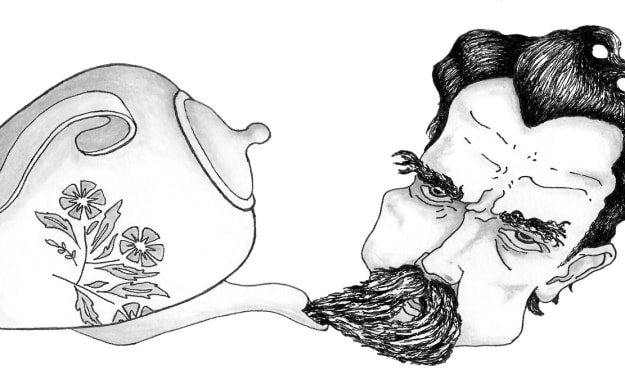
An Ontological, Existential, Tripped-Out Tempest in a Cosmic Teapot
Callens combines a touch of Douglas Adams, a dash of Dave Barry, and the allusive dexterity of James Joyce, mixes it up with a whole lotta blasphemy, philosophy, psychology, mythology, history, comparative religion, science, drugs, sex, and rock ‘n roll, to produce one of the most unique books you will ever read.
By Joseph Ferguson9 years ago in Futurism
The Shadowvectors Present The Jokeress
Welcome to the world of The Jokeress The Jokeress is a STATE of MIND. We humans are constantly told how to dress, how to look, and how to act. The Jokeress is an ebook and paperback series on the subject of obsession. It is how far our obsessions can drive us. It also reminds us of how we can search for things we already have. All we have to do is find the nearest mirror and stare into it.
By Bryan Follins9 years ago in Futurism
Young Adult Sci-Fi Books
Science fiction has been a favorite genre for a very loyal group of fans, old and new, for an incredibly long time. And while you may have started reading it young, many children might not be drawn to the complex narratives that sci-fi books often spin. So how can you best introduce your child to science fiction novels? By seeking out the best young adult sci-fi books for them to begin delving into the genre.
By James Lizowski9 years ago in Futurism
Best Soft Sci-Fi Books
Soft sci-fi books form a treasure trove of ideas combining imagined scientific scenarios, future technologies, and the progression of human society in accordance with these elements. Instead of delving deep into the technical and scientific aspects of a story, these books prioritize humanity. Thus, this brand of science fiction is more concerned about the political, economic, social, and cultural characteristics. This means that a story can still involve space colonization and superior alien races, but the main focus is on the social consequences of these occurrences. If you are looking for science fiction that puts a lot of effort into character development and exploring through the lens of the social sciences, you should definitely check out these soft sci-fi books.
By Stephanie Gladwell9 years ago in Futurism
Top Dying Earth Science Fiction Books
A sub-genre of both fantasy and science fiction, the concept of a dying earth has been around for a while. Though its first origins remount back to the Romantic Era, its true shape took form much more recently, in the 20th century. Since then, it has been explored by several authors and brought forth books that are true masterpieces of the science fantasy genre and that are hugely influential to this day.
By Stephanie Gladwell9 years ago in Futurism
Intriguing Alternate History Books
Alternate history books (AH to those in the know) speculate as to what might happen if key real world historical events occurred differently. They can, but don’t necessarily, involve speculative fiction tropes such as time travel or a character’s awareness that the timeline is “wrong.” Delve into these fascinating, often thought-provoking scenarios with this list of the most intriguing alternate history books.
By Stephen Hamilton9 years ago in Futurism
Must Read Cyberpunk Books
Cyberpunk books are a distinctive cross-section of sci-fi narratives typically taking place in dystopian, near future settings, and featuring high-tech post-industrial societies, contrasted against a gritty, seedy underbelly akin to hardboiled detective fiction. The reader navigates sprawling neon cities populated by hackers, gangsters, outcasts, and femmes fatales. The protagonist, usually an anti-hero, often struggles against an evil, above-the-law megacorporation. Another hallmark of cyberpunk books is that often hackers possess the ability to literally enter an online world, or "cyberspace," by connecting their brains to advanced computers.
By Stephanie Gladwell9 years ago in Futurism