book review
Books reviews of the best science fiction stories, texts, educational texts, and journals.
Ancestor by Matt Sheean and Malachai Ward
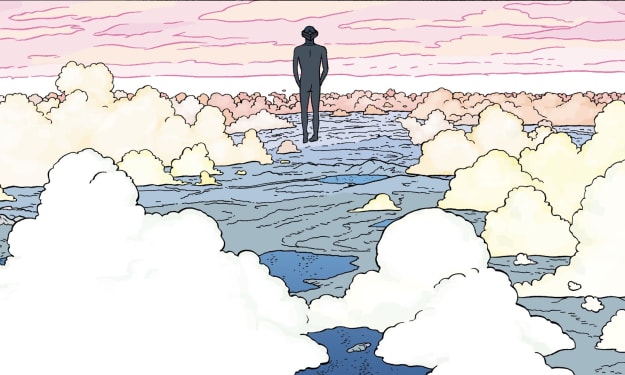
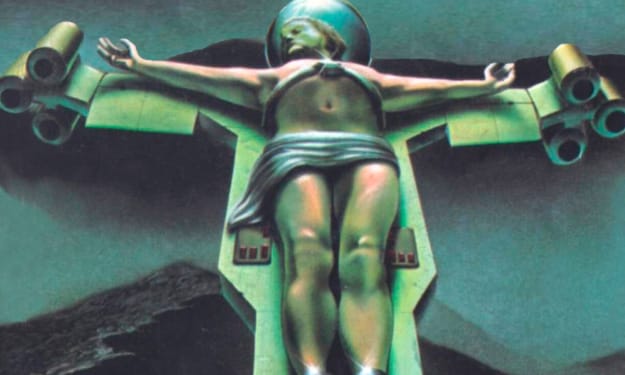
Here’s a drink you can make to best enjoy Ancestor, which was released October 2016 in trade paperback by Image Comics. Take one Philip K. Dick and one Alejandro Jodorowsky (circa The Holy Mountain) and throw them in a cocktail glass with two blackberries and a splash of agave nectar. Muddle. Add two shots of blanco tequila, two drops of Dimethyltryptamine or Lysergic Acid, and give it a dash of Black Mirror. Mix, shake, and serve. Now take your drink to a dark corner of your room, far from your computer or any wi-fi enabled devices. Read and drink slowly. Short as it is, Ancestor is a trip for the mind that’s worth your time.
By Mickey Rivera9 years ago in Futurism
Who Was Isaac Asimov?
Isaac Asimov (1920-1992) is remembered as one of the top 3 science fiction writers, along with Robert Heinlein and Arthur C. Clarke. Asimov is widely considered to be the founder of modern science fiction, born near modern-day Smolensk to a family of poor Jewish millers in Soviet Russia during the Russian Civil War. His family immigrated to the U.S. when he was three years old to escape the chaos of the Russian Revolution.
By Stephanie Gladwell9 years ago in Futurism
Books to Read if You Liked '1984'
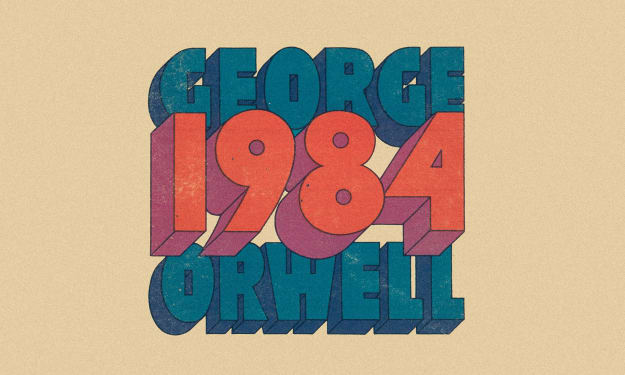
The best books to read if you liked 1984 carry on its traditional of complex themes wrapped in interesting fiction. While 1984 is mostly about surveillance, there are plenty of other themes for the books on this list to draw on. These themes include thought control, war, and the ways that societal pressures can control everyone in a collective. If you’re ready to challenge how you view society, read on.
By Joshua Samuel Zook9 years ago in Futurism
Best Pulp Sci-Fi Books
To some, the phrase “best pulp sci-fi books” may seem like an oxymoron. Pulp sci-fi has been dividing fans of science fiction for decades. You either love it or you hate it. Many certifiable pulp sci-fi obsessives understand why some people have a bit of trouble embracing it. A poorly written pulp sci-fi book can turn you away from the whole genre; and there is, sadly, no shortage of them.
By Arnold Seleskey9 years ago in Futurism
The Hot War: Bombs Away
Harry Turtledove doesn’t identify as an alternate history writer, but rather as “a historian who writes science fiction.” Bombs Away isn’t quite what most readers would think of as science fiction, but this alternate history novel does deal a lot with the science of nuclear weapons, fallout, and contamination. Turtledove delivers another masterfully crafted novel that provides a frighteningly plausible picture of World War III, or when the Cold War turned Hot.
By Zach Foster9 years ago in Futurism
The Third World War by Sir John Winthrop Hacket
Over 6,200 paperbacks line shelves in my apartment. My wife is an artist, and uses our apartment as her gallery. There was a fight for wall space and I recently lost a skirmish. My solution was logical. Consolidate and toss books that I have read which honestly I think is about 500 - 600. Part of my cathartic process is to write a quick review of the books I remember. Sometimes a quick skim ignites a memory of something particular I liked about the book. The Third World War by Sir John Winthrop Hacket was a sort of alternate reality novel, I remember reading in 1986 as a freshman in college. I must say there are some very detailed sections of, military briefings that can be skimmed through with no real impact. It seems still relevant these days with such uncertainty in American ideology and political stability.
By Arnold Seleskey9 years ago in Futurism
Philip K. Dick's VALIS Analyzes Religious Destiny
If you really think about it, the story of Jesus is a work of science fiction. He's a man with superpowers that include turning water to wine, healing others, and coming back from the dead. All jokes aside, religion and science fiction truly go hand in hand although people often try to separate the two. Some of the religious themes that permeate sci-fi stories include the idea of the afterlife, reincarnation, original sin, fictional religions, Messianism, and many other themes that can be found in the works of Philip K. Dick. As a science fiction writer, Dick wrote 44 novels and 121 short stories including Do Androids Dream of Electric Sheep?,A Scanner Darkly, Flow My Tears, the Policeman Said, VALIS, and many others. Some of the films that have been adapted from these stories include Blade Runner, Total Recall, A Scanner Darkly, Minority Report, Paycheck, Next, Screamers, The Adjustment Bureau, and Impostor. Throughout his lifetime, he won several awards including three Hugo Awards, five Nebula Awards, one British Science Fiction Association Award, and many others. There is even a Philip K. Dick Award that was established in 1983 which honors the previous year's best science fiction paperback original published in the US. In 2007, Dick became the first science fiction writer to be included in The Library of America series. The writer died in 1982 after suffering two strokes at the age of 53, but his legacy lives on today in his stories such as VALIS.
By Mackenzie Lu9 years ago in Futurism
Science Fiction Feminist Dorris Lessing
Doris Lessing, made famous by her epic novel of the female experience, The Golden Notebook, was also a prolific writer of science fiction. She was not a fan of genre distinctions. She called science fiction "some of the best social fiction of our time," writing woozy, difficult books about psychic women and fallen paradises.
By Stephanie Gladwell9 years ago in Futurism
Sci-Fi Cult Classic 'Illuminatus'
Vintage high sci-fi is science fiction that is geared to a cannabis culture, whether it's written for that culture or about it. And like any other genre it's got its share of good books and its share of cliché-ridden sci-fi pulp. We've got one of each; a three volume set called Illuminatus by Robert Shea and Robert Anton Wilson, and The Crack in the Sky by Richard Lupoff.
By Joshua Samuel Zook9 years ago in Futurism
Best Sci-Fi Graphic Novels for Kids
It can be challenging to find science fiction graphic novels for children that aren’t too scary or violent, but also don’t demean kids or gloss over their interests. While you have to make the call for your own kids, here are six great choices for all the youngsters on your Christmas list. Whether they’re preschoolers who can’t yet read or high school students who’ve been adoring fans of the genre for years, you’re sure to find something that’s just right. (And yes, it’s totally ok to devour it from front to back before you wrap it and pass it on to them. I won’t tell.)
By Sarah Quinn9 years ago in Futurism