artificial intelligence
The future of artificial intelligence.
If AI Makes Work Obsolete, Who Controls the Food Supply?
What Happened (Facts) A Guardian analysis piece by economist-journalist Eduardo Porter argues that the biggest missing debate in today’s AI panic is not “Will AI take our jobs?” but a more basic question: if human labor becomes economically irrelevant, how will people afford to live — and who decides what they get?
By Behind the Tech12 days ago in Futurism
Galaxy S26 Ultra: Samsung’s Next Flagship Aims to Shift the Smartphone Conversation
What Happened (Facts) Samsung is expected to unveil the Galaxy S26 Ultra alongside the Galaxy S26 and S26+ at a Galaxy Unpacked event scheduled for next week, according to reporting circulating ahead of the launch. The framing around the S26 Ultra is less about chasing the biggest numbers (megapixels, brightness, raw clock speeds) and more about repositioning the phone as a stable, long-life “professional tool” that anchors Samsung’s ecosystem against rivals like Apple’s iPhone 17 Pro and Google’s Pixel 10 Pro.
By Behind the Tech12 days ago in Futurism
Met Police Using Palantir AI to Flag Officer Misconduct
What Happened The Metropolitan Police has confirmed it is using artificial intelligence tools supplied by US data analytics company Palantir to analyse internal staff data in an effort to identify potential misconduct.
By Behind the Tech12 days ago in Futurism
Concern Grows Over “Chatbot Overdependence” in Relationships
What Happened A reader wrote to advice columnist Annalisa Barbieri expressing concern that her boyfriend’s heavy reliance on AI — particularly ChatGPT — may be affecting his ability to think independently.
By Behind the Tech12 days ago in Futurism
Which AI Tools Are Actually Useful in 2026?
At the start of the AI boom, every new tool promised disruption. Slide decks featured bold claims about automation, prediction, and limitless productivity. Founders pitched platforms that would “replace” entire departments. Investors poured billions into startups racing to define the future.
By Samantha Blake13 days ago in Futurism
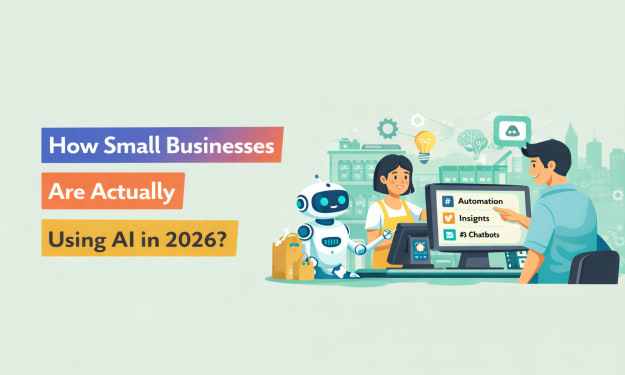
How Small Businesses Are Actually Using AI in 2026?
A bakery owner in Toronto recently described how artificial intelligence changed her weekly routine — not through futuristic robots or complex analytics dashboards, but through a simple forecasting tool that predicts demand based on weather patterns and local events. She used to guess how much to bake each morning. Now she checks a dashboard that suggests production quantities with around 90% accuracy. Waste has dropped. Staffing decisions feel less stressful. Profit margins have improved.
By Mary L. Rodriquez13 days ago in Futurism
The 10,000-Year Memory: Why Microsoft’s New Glass Storage Changes Everything
We are currently witnessing an unprecedented paradox: a civilization that produces more data than any before it, yet relies on the most ephemeral storage media in history. Our collective wisdom is currently etched onto magnetic tapes and spinning disks with lifespans measured in mere years, threatening a "digital dark age" where our history simply evaporates. We are essentially building our digital cathedral on shifting sands, constantly fighting the relentless tide of digital entropy.
By Mohammad Hamid13 days ago in Futurism
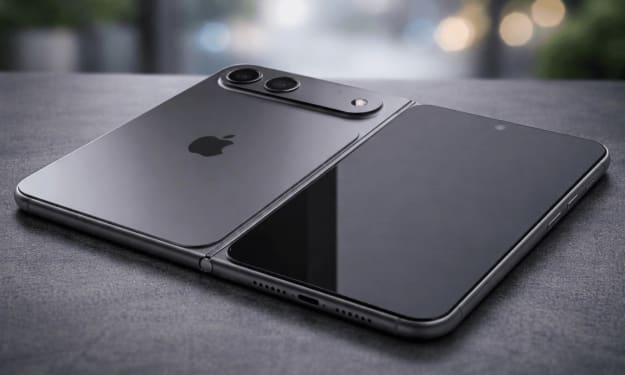
Apple’s 2026 Gamble: Why the Foldable iPhone is Arriving Sooner—and Riskier—Than Expected
For years, the prospect of a foldable iPhone has been the industry’s most persistent "ghost in the machine"—a device perpetually two years away, floating in a limbo of patent filings and supply chain rumors. Market observers long assumed Apple would maintain its characteristic "wait-and-perfect" stance, delaying entry until folding displays reached a level of durability and seamlessness that mirrors a static glass sheet. However, recent data regarding manufacturing schedules suggests an aggressive shift in strategy, indicating that Apple has moved past the stage of cautious experimentation.
By Mohammad Hamid14 days ago in Futurism
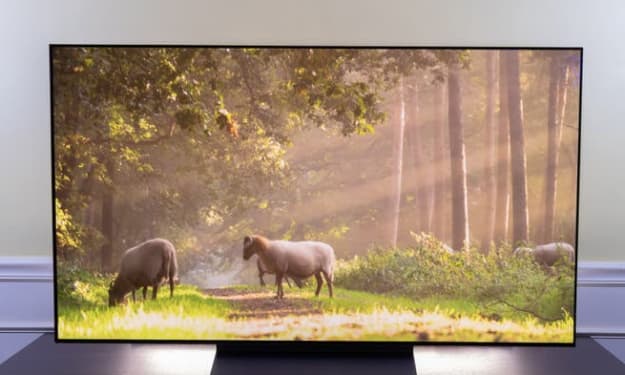
Why Your Dream TV Costs a Fortune: The Surprising Reality of OLED Pricing
It is a ritual performed every November: the hypnotic glow of the showroom floor, the deep, ink-pool blacks of a flagship OLED, and the inevitable wince when you finally glance at the price tag. While standard LCDs are practically falling into shopping carts for under $500, a high-end OLED remains a luxury investment. The math behind this disparity is startling; by 2024, the manufacturing cost of a single 65-inch OLED panel had dropped to roughly $600—a figure that, on its own, exceeds the entire retail price of a 65-inch LCD television.
By Mohammad Hamid14 days ago in Futurism