
'Super-Earth' is our best chance to date to find extraterrestrial life.
Searching Super-Earth GJ 251 c for life

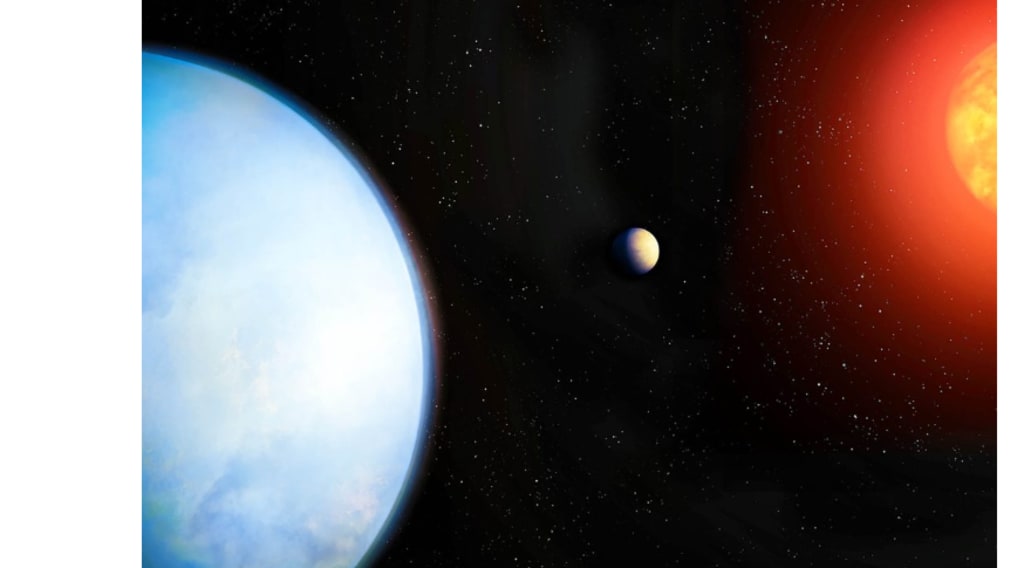
Just under 20 light-years away, astronomers have discovered a likely rocky "super-Earth" that might harbour life. The mass of the planet GJ 251 c seems to be nearly four times that of Earth. The fact that it orbits in the habitable zone—where, under ideal circumstances, liquid water may persist—has scientists excited.
The signal is one of the most promising nearby candidates for examining small world atmospheres after 20 years of observations. Researchers from Penn State University are part of an international team that made the finding.
Their approach combines new, ultra-precise spectra with long-baseline observations from several observatories. The GJ 251 system's second planet, which is located in the desired "Goldilocks" belt surrounding its star, is revealed by the result.
Searching Super-Earth GJ 251 c for life
According to Penn State astronomy professor and research co-author Suvrath Mahadevan, "we search for these kinds of planets because they are our best chance at finding life elsewhere."
"If it has the proper atmosphere, the exoplanet is in the Goldilocks zone, or habitable zone, which is the ideal distance from its star for liquid water to exist on its surface." That background is important. Future telescopes have a good chance of deciphering atmospheric fingerprints because of a nearby rocky planet that circles in moderate light from a small, quiet star.
These include gases that can provide information about surface conditions and even biological processes, such as carbon dioxide, oxygen, or methane.
GJ 251 c with wobbles found
On GJ 251, the minuscule star wobble brought on by an orbiting planet, astronomers monitored faint tugging for years. The star's own magnetic alterations can easily obscure these tiny Doppler shifts. The inner world signal, GJ 251 b, which orbits the star every 14 days, was the first to be refined by the scientists.
After establishing that baseline, they incorporated new, high-precision data. A second, slower rhythm was discovered as a result, a 54-day signal indicating the presence of a larger planet, GJ 251 c, farther out.
In order to distinguish planets from stellar static, the detection relies on a patient collection of measurements from various equipment and years, followed by advanced modelling. A consistent, periodic signature that satisfies the requirements for a super-Earth in the habitable zone was the end result.
Tools designed for this occasion
The Habitable-Zone Planet Finder (HPF) was crucial to the discovery. In Texas, it is a near-infrared spectrograph that is fixed to the Hobby-Eberly Telescope. Its purpose was to find tiny planets circling cold, close stars.
Because we are searching for worlds that are sufficiently distant from their star for liquid water to exist on their surface, we call it the Habitable Zone Planet Finder. That survey's main objective has been this, Mahadevan stated.
"In the next five to ten years, this discovery is one of the best candidates in the search for atmospheric signatures of life elsewhere." The scientists also used NEID, another ultra-stable spectrometer, to independently corroborate the 54-day cycle in order to solidify the case.
One consistent conclusion emerged from the use of several sensors and sites: GJ 251 c is unquestionably a temperate super-Earth that stands out from the background and has the capacity to support life.
Being superior to the star in its own right
The fact that stars are noisy is one of the main obstacles. In and out of view, starspots rotate. Convective cells churn and magnetic fields flare. Every impact can simulate the pull of a planet.
By examining how the star's spectrum varies at various wavelengths, the scientists tackled that issue. Additionally, they used the merged dataset to train new models.
"Teasing out subtle signals from what is basically this frothing, magnetospheric cauldron of a star surface, as well as trying to beat down stellar activity, is a difficult game," Mahadevan said.
Eric Ford, director of research for Penn State's Institute of Computational & Data Sciences (ICDS), remarked, "This discovery is a great example of the power of multi-disciplinary research at Penn State."
"Adapting the data science techniques to the unique requirements of this star and combination of instruments was just as important as using state-of-the-art instrumentation and telescope access to mitigate stellar activity noise," Ford said.
Getting ready for the next jump
Today's instruments are still unable to directly picture a small, dark planet next to a brilliant star, but this will change soon.
"With this system, we are at the forefront of technology and analysis techniques," stated Corey Beard, the paper's corresponding author. "To directly image this candidate, we need the next generation of telescopes, but we also need community investment."
Engineers are constructing 30-meter-class observatories with high-dispersion spectrographs and sophisticated coronagraphs. The atmospheres of nearby rocky worlds will be detected by these devices.
GJ 251 c is one of the most promising candidates. The planet's surface characteristics and possible habitability may be revealed via its gases if it has air.
Takeaways from GJ 251c
The finding demonstrates the cumulative effect of persistent, international efforts. Making sense of a signal that was consistently weak required decades of observation time, specialised analytics, and synchronised apparatus designed to track small Doppler shifts.
"The future is our constant focus," Beard stated. "Whether that's creating and developing new technology to detect potentially habitable planets or ensuring that the next generation of students can participate in cutting-edge research."
"GJ 251 c is a promising target for future exploration, even though we cannot yet confirm the presence of an atmosphere or life on the planet," Mahadevan added. "This planet still has a lot to teach us, but we made an exciting discovery."
GJ 251 c meets all the requirements: it is close by, most likely rocky, and located in the temperate zone of its star. Although it is not a world that is currently visible to us, it is in a prime location for the telescopes that will soon be operational.
This super-Earth will be a top target for possible life once those facilities turn on. It serves as a reminder that faint stellar tremors can become the next great step in the search for life with the help of patient measurements and well designed instruments.
About the Creator
Keep reading
More stories from Francis Dami and writers in Futurism and other communities.
Researchers use light and crystals to create new materials on demand.
One day, it may be possible to "draw" rather than "grow" crystals for use in a wide range of applications, including lasers, LEDs, and the semiconductors used in sensors in astronomical instruments, which would result in improved performance and reduced prices.
By Francis Dami3 months ago in Futurism
About Binding Prometheus
I want to start actively advocating on behalf of my own work, and the most valuable part of my canon is, without a doubt, Binding Prometheus, the play I have been working on since 2019 and only finished in 2023 as part of my MA. The play itself is an amalgamation of a million different inspirations. On one end, it evokes the Ancient Greek myth-play, deriving its own title from the earliest extant work of Western drama we have, Aeschylus’s Prometheus Bound. On the other end, it borrows significantly from the sci-fi bulwarks from over the years, namely Mary Shelley’s Frankenstein and Karel Capek’s Rossum’s Universal Robots. The play could be an episode of Black Mirror, I fear. I don’t know. I’ve only ever seen one episode of Black Mirror.
By Steven Christopher McKnight19 days ago in Futurism
Industry 4.0 Market: Smart Factories, Machine Connectivity & Innovation Trends
According to IMARC Group's latest research publication, global Industry 4.0 market size reached USD 188.5 Billion in 2025. Looking forward, IMARC Group expects the market to reach USD 599.2 Billion by 2034, exhibiting a growth rate (CAGR) of 13.71% during 2026-2034.
By Andrew Sullivanabout 2 hours ago in Futurism
Rachel Reviews: The Spiral Archive by Pieter Hendrik
It's difficult for me to know where to start with a review of this book as it was, for me, an entirely unique experience and one that I'll probably never have again. I don't want that to be interpreted as unenjoyable but it has left me scratching my head a little and ruminating on its content, its themes and its characters.
By Rachel Deeming2 days ago in BookClub



Comments
There are no comments for this story
Be the first to respond and start the conversation.