
Space Sleep: How Astronauts Rest—and What It Means for the Future of Humanity Beyond Earth
Space

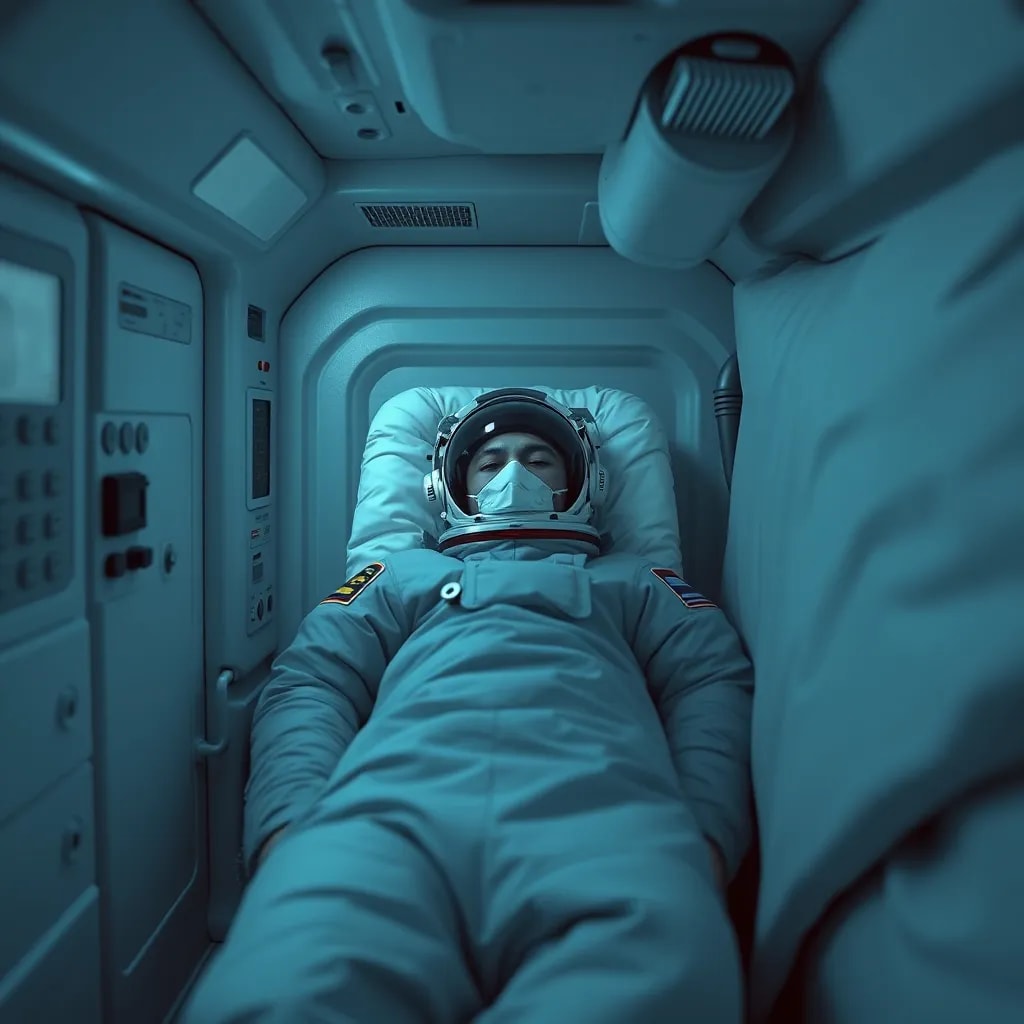
When we think of space exploration, images of rocket launches, floating astronauts, and distant planets come to mind. But few people consider one of the most fundamental human needs: sleep. In space, getting a good night’s rest becomes a serious challenge and the science of sleep physiology beyond Earth is far more fascinating (and critical) than it seems.
Why Sleep in Space Is So Complicated
On Earth, our sleep is synchronized with natural light and dark cycles thanks to our circadian rhythm, an internal 24-hour biological clock. This rhythm is tied to the rising and setting of the sun, which tells our brain when it’s time to be awake and when it’s time to sleep.
But what happens when you’re orbiting the Earth every 90 minutes, seeing 16 sunrises and sunsets a day, like astronauts aboard the International Space Station (ISS)? Your body gets confused. Without the stable day-night rhythm we take for granted, the brain struggles to release melatonin the hormone responsible for triggering sleep. And that’s just the beginning.
In microgravity, the absence of "down" means there’s no pressure from a mattress, no weight of blankets, and no intuitive body positioning. Instead of sinking into bed, your body floats completely unsupported. While this might sound relaxing, it often causes a sensation of drifting or spinning, making it hard to feel grounded enough to fall asleep.
Common Sleep Problems in Orbit
Astronauts often report a wide range of sleep disturbances, including:
- Difficulty falling asleep
- Frequent awakenings during the night
- Fragmented sleep cycles
- Decreased time in slow-wave (deep) sleep, which is essential for brain restoration
These issues don't just result in tired astronauts they impact cognitive performance, mood stability, and even metabolism. In a high-stakes environment like space, being sleep deprived can lead to dangerous mistakes.
Sleeping in Zero Gravity: What It Actually Looks Like
So how do astronauts sleep in space?
Each astronaut has a personal sleeping pod a small, quiet area just big enough for a sleeping bag. These bags are secured to the walls or ceilings of the station to prevent them from floating around. While there’s no traditional bed, the sleeping bag simulates slight body pressure, offering a comforting "hug" that mimics the feel of being tucked in.
To improve sleep quality, these pods are designed to:
- Muffle background noise from fans, computers, and life-support systems
- Block out light with curtains
- Provide some privacy and temperature control
Still, astronauts rarely get the full 7–8 hours of sleep recommended on Earth. Most average closer to 6 hours sometimes even less during busy mission schedules.
Technology Meets Biology: Tools to Help Astronauts Sleep
NASA and other space agencies have turned to science and technology to tackle this problem head on. Some key strategies include:
Light therapy: Specialized LED lighting systems on the ISS shift between blue, white, and red light to mimic Earth’s natural day/night cycle and support circadian rhythms. Blue light in the morning helps astronauts feel alert, while red hues in the evening promote sleep.
Melatonin supplements: Some astronauts use melatonin tablets to help signal bedtime to their bodies.
Structured sleep schedules: Mission planners build strict routines into astronauts' days, helping anchor their internal clocks to a predictable rhythm.
Immersive environments: New research is testing virtual reality, ambient soundscapes, and even scent to recreate relaxing Earth-like settings inside the station.
Why Sleep Science in Space Matters on Earth
This isn’t just about comfort it’s about human survival in space. For future missions to Mars, which could last over a year, chronic sleep disruption could be catastrophic. The isolation, radiation exposure, and confined environments of deep-space travel make psychological resilience more critical than ever. And restful sleep is key to that.
Interestingly, what we learn about sleep in space can benefit people back home, too. Space sleep studies are already helping researchers understand and treat insomnia, jet lag, and sleep disorders in night shift workers. For example, blue light therapy developed for the ISS has inspired tools for people struggling with seasonal affective disorder (SAD) and irregular sleep-wake cycles on Earth.
Looking Ahead: Deep-Space Hibernation?
Some scientists are exploring radical concepts like synthetic torpor, or induced hibernation. The idea is to slow down the metabolism of astronauts during long-duration missions—similar to how bears hibernate in winter. If successful, this approach could reduce food and oxygen requirements, limit psychological stress, and help crew members "sleep" through months of interplanetary travel.
Although we’re not there yet, early experiments in lowering body temperature and reducing metabolic rate in animals—and eventually humans—are underway. Within a few decades, hibernation pods may become a standard feature of Mars-bound spacecraft.
Final Thoughts: Learning to Sleep Among the Stars
Sleep physiology in space is more than just a medical curiosity—it’s a crucial piece of the puzzle as we push further into the cosmos. Whether we’re orbiting Earth or setting foot on distant planets, our ability to rest and recover will define how well we explore, create, and survive beyond our home world.
As strange as it may sound, the next giant leap for mankind may start with learning how to get a good night’s sleep—out there among the stars.
About the Creator
Keep reading
More stories from Holianyk Ihor and writers in Futurism and other communities.
Closed-Loop Air and Water Recycling: How to Survive in a Sealed World
When humans venture into the extremes whether on long-term space missions, deep sea stations, or remote Arctic outposts survival depends on more than just stored supplies. In such environments, we need systems that can sustain life by endlessly recycling air and water. Closed-loop life support systems are no longer science fiction. They are essential technologies of the future, not only for space exploration but also for survival on Earth in harsh or resource scarce environments.
By Holianyk Ihor7 months ago in Futurism
About Binding Prometheus
I want to start actively advocating on behalf of my own work, and the most valuable part of my canon is, without a doubt, Binding Prometheus, the play I have been working on since 2019 and only finished in 2023 as part of my MA. The play itself is an amalgamation of a million different inspirations. On one end, it evokes the Ancient Greek myth-play, deriving its own title from the earliest extant work of Western drama we have, Aeschylus’s Prometheus Bound. On the other end, it borrows significantly from the sci-fi bulwarks from over the years, namely Mary Shelley’s Frankenstein and Karel Capek’s Rossum’s Universal Robots. The play could be an episode of Black Mirror, I fear. I don’t know. I’ve only ever seen one episode of Black Mirror.
By Steven Christopher McKnight18 days ago in Futurism
Home Shopping Market: Convenience-Led Retail & Growth Outlook
According to IMARC Group's latest research publication, The global home shopping market size was valued at USD 4,598.70 Billion in 2024. Looking forward, IMARC Group estimates the market to reach USD 12,791.25 Billion by 2033, exhibiting a CAGR of 11.44% during 2025-2033.
By James Whitman4 days ago in Futurism



Comments
There are no comments for this story
Be the first to respond and start the conversation.