
Revolutionizing Healthcare
How Robotics is Transforming Patient Care and Surgical Precision
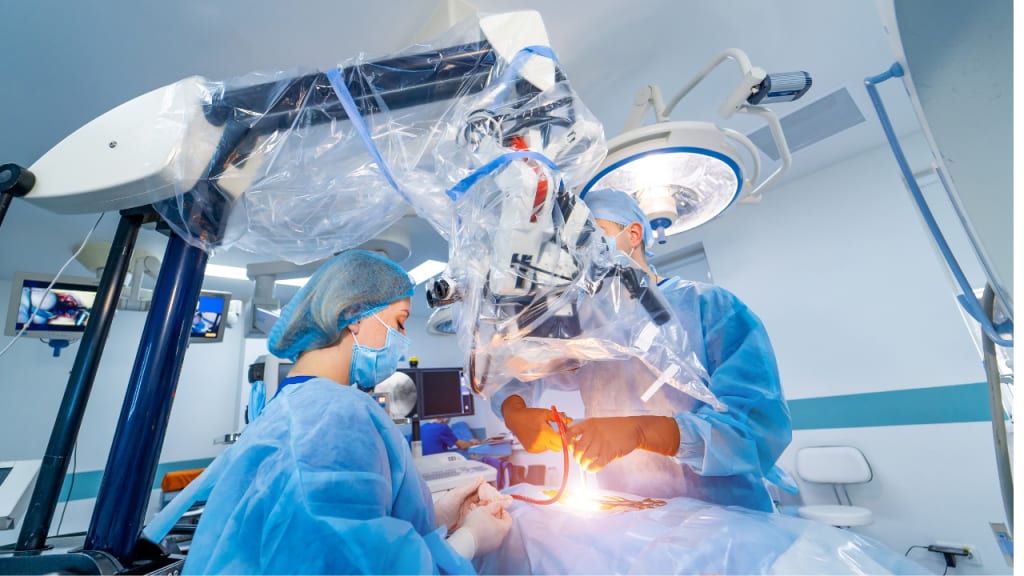
In the rapidly advancing field of healthcare, robotics is playing a pivotal role in revolutionizing patient care and surgical precision. The integration of robotics in medical procedures has opened up new frontiers, enabling doctors to perform complex surgeries with enhanced precision and improved patient outcomes. This article explores the remarkable advancements in robotics within the healthcare industry, shedding light on the benefits, applications, and future potential of this cutting-edge technology.
The Rise of Surgical Robotics
Surgical robotics has witnessed a remarkable rise in recent years, enabling healthcare professionals to overcome the limitations of traditional surgical procedures. From robotic-assisted surgeries to minimally invasive techniques, the integration of robotics in the operating room has transformed the way surgeries are performed. With the aid of robotic systems such as the da Vinci Surgical System, surgeons can achieve unparalleled precision, dexterity, and control during intricate procedures. This has resulted in reduced trauma, smaller incisions, faster recovery times, and improved patient outcomes.
Applications in Patient Care
Beyond the operating room, robotics has found valuable applications in patient care. Robotic exoskeletons are being used to assist individuals with mobility impairments, helping them regain independence and improve their quality of life. Telemedicine robots enable remote patient monitoring and virtual consultations, bridging the gap between patients and healthcare providers, especially in underserved areas. Additionally, robots are being utilized in rehabilitation therapy, enabling repetitive and precise movements that aid in the recovery of stroke patients and individuals with physical disabilities.
Ethical Implications and Human-Machine Collaboration
The integration of robotics in healthcare raises important ethical considerations. While robotics offers numerous benefits, it is crucial to maintain a balance between technological advancements and human expertise. Human touch, intuition, and critical thinking remain vital in healthcare decision-making and patient care. Healthcare professionals must be mindful of the potential risks associated with over-reliance on technology and ensure that human oversight and judgment are upheld throughout the robotic-assisted procedures.
Additionally, the equitable distribution of robotic technology is essential to avoid creating healthcare disparities. Efforts should be made to ensure that all individuals, regardless of their socioeconomic status or geographic location, have equal access to the benefits of robotic-assisted surgeries and advanced patient care technologies.
Collaboration between humans and machines will be a key focus in the future. The human-machine interface will evolve to enhance the capabilities of healthcare professionals rather than replacing them. Robots will act as powerful tools, augmenting the skills and expertise of surgeons, radiologists, and other healthcare providers. This collaboration will lead to improved diagnostic accuracy, enhanced surgical precision, and more personalized patient care.
Advantages and Challenges
The integration of robotics in healthcare brings forth numerous advantages. The high precision, reduced invasiveness, and improved outcomes benefit both patients and healthcare professionals. Robotics also enables surgeons to overcome anatomical limitations and perform procedures that were previously deemed impossible. However, challenges such as the high cost of robotic systems, the need for specialized training, and concerns regarding patient safety and ethical considerations must be addressed. Striking a balance between human expertise and robotic assistance is crucial to maximize the potential benefits while mitigating risks.
The Future of Robotics in Healthcare
The future of robotics in healthcare is brimming with possibilities. As technology continues to advance, we can expect even greater integration of robotics in surgical procedures, including autonomous robotic surgeries. Robotic systems may become more affordable, enabling their widespread adoption across healthcare facilities. Moreover, the development of intelligent robotic companions and caregivers could revolutionize the way we provide support to the elderly and individuals with chronic conditions. The fusion of robotics with artificial intelligence, machine learning, and data analytics holds immense potential for personalized medicine and precision diagnostics.
In conclusion, robotics is ushering in a new era of healthcare, improving surgical precision and patient care in unprecedented ways.
About the Creator
Keep reading
More stories from Nikki Love and writers in Futurism and other communities.
Unlocking Devices with Your Fingerprint
In today's digital age, security and convenience are paramount concerns for individuals and organizations alike. Traditional methods of authentication, such as passwords and PINs, are increasingly vulnerable to cyber threats. However, a revolutionary technology called biometrics is transforming the way we verify our identities. One of the most intriguing and widely adopted forms of biometrics is fingerprint recognition. In this article, we delve into the fascinating world of biometrics and explore how fingerprint authentication is reshaping our digital landscape.
By Nikki Love3 years ago in Futurism
Australia Steel Market: Infrastructure Development, Mining Demand & Manufacturing Growth
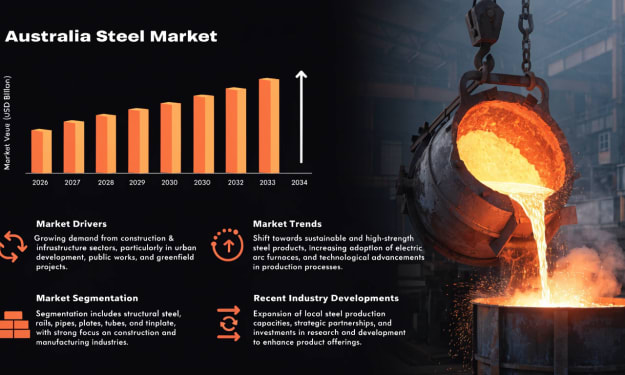
According to IMARC Group, the Australia steel market reached USD 20.1 Billion in 2025 and is projected to grow to USD 26.2 Billion by 2034, exhibiting a compound annual growth rate (CAGR) of 2.91% during 2026–2034. Steel remains one of the most essential materials supporting economic development in Australia. Its widespread applications across construction, mining, transportation, and manufacturing sectors make it a critical component of the country’s industrial ecosystem. Large-scale infrastructure development, expansion in mining operations, and rising domestic manufacturing activity are strengthening Australia steel market share. Additionally, government investments in renewable energy infrastructure and transport modernization projects are further increasing demand for advanced steel products.
By Kevin Cooper6 days ago in Futurism
An unidentified space object was observed "screaming" out of our galaxy at a speed of more than one million miles per hour.
Although our Sun appears to be the center of the universe, it is actually moving at a speed of around 500,000 miles per hour as it circles the Milky Way galaxy. That's quick, but it pales in comparison to a star runaway that was just found and is speeding across space.
By Francis Damiabout 7 hours ago in Futurism
From ad men to mad men
It's after 2am in the morning when a local police patrol vehicle in Northern New Jersey spots a figure costumed as Quasimodo, The Hunchback of Notre Dame, proceeding southbound on the sidewalk along Lydecker Street. Though the hunchback’s costume stuffing offers added insulation, it's January, and friggin’ freezing. Carefully, the officers slow down, gently question the subject, and offer him a ride home.
By David W. Maury6 days ago in Humor



Comments
There are no comments for this story
Be the first to respond and start the conversation.