
Phosphorus Molecules Found in a Stellar Nursery: A Clue to the Origins of Life
Space

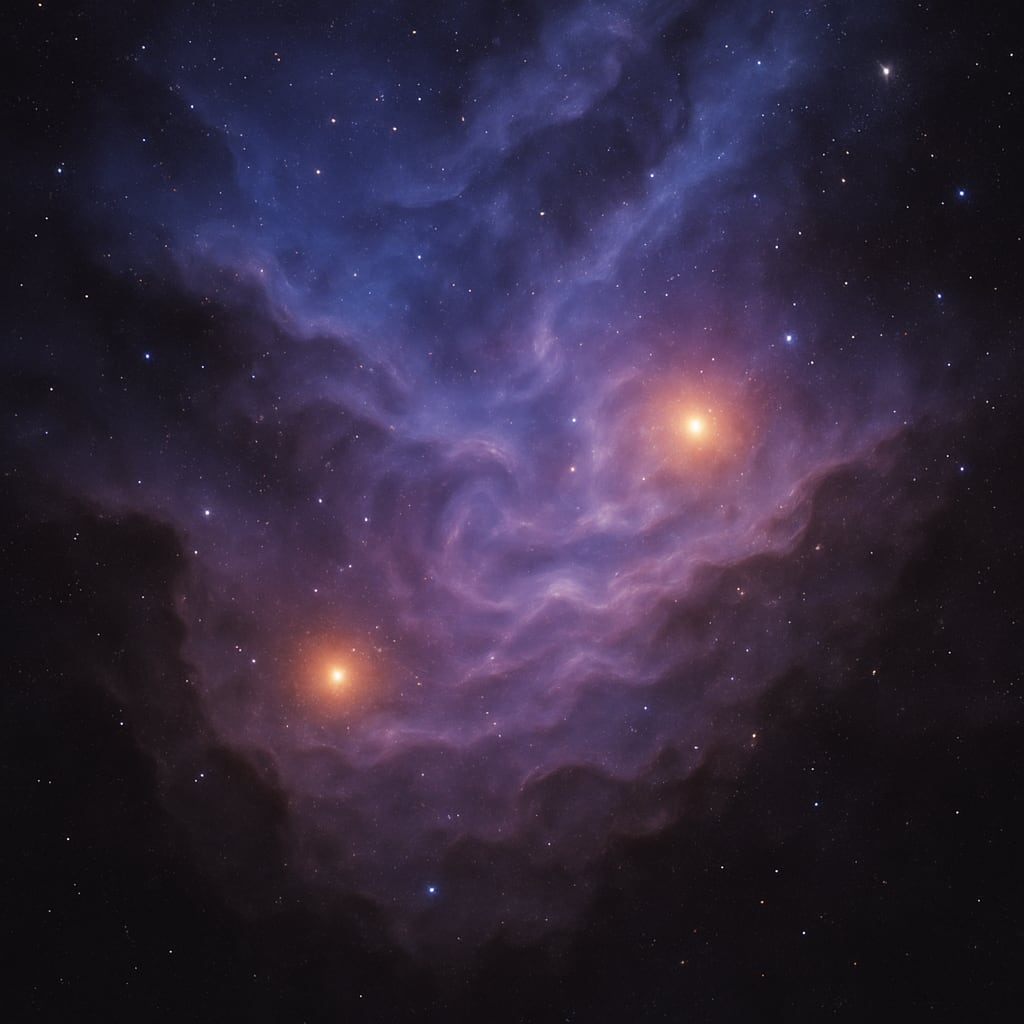
When astronomers talk about the building blocks of life, we often hear about carbon, hydrogen, oxygen, and nitrogen. These elements dominate both living organisms and the cosmos. But there is another, less talked-about ingredient that is just as crucial: phosphorus. Without it, our DNA would collapse, our cells would lose their energy currency, and life as we know it would not exist.
Recently, an extraordinary discovery has brought phosphorus into the spotlight. Using the Atacama Large Millimeter/submillimeter Array (ALMA) in Chile, scientists detected molecules containing phosphorus in a dense interstellar cloud where new stars are being born. It’s the first time this essential element has been observed in such an environment, and the implications stretch from the chemistry of space to the origins of life itself.
Why Phosphorus Matters
Phosphorus is not a flashy element. It doesn’t glow like neon, and it doesn’t sparkle like gold. But in the realm of biology, it is indispensable. DNA and RNA, the molecules that carry genetic information, are built on backbones of phosphate groups. Adenosine triphosphate (ATP), the molecule that powers nearly every cellular process, is essentially a phosphate battery. Even our cell membranes rely on phospholipids to maintain their structure.
On Earth, phosphorus usually comes from minerals and rocks, slowly released into the biosphere through geological processes. But in the vastness of space, where did it come from? And how could it have reached our young planet billions of years ago?
A Discovery Among the Stars
The ALMA observatory, perched high in the Chilean Andes, has revolutionized astronomy by allowing scientists to peer into the coldest, dustiest, and most obscure regions of the universe. By tuning into millimeter and submillimeter wavelengths, ALMA can detect faint signatures of molecules hidden in star-forming clouds.
In this case, astronomers turned their focus to a massive stellar nursery located thousands of light-years away. Within this interstellar cloud, they detected phosphorus monoxide (PO), a molecule carrying the vital element. The presence of PO in such an environment is more than just a curiosity — it shows that phosphorus can form stable compounds in the raw material of stars and planets.
Cosmic Chemistry in Action
Detecting phosphorus monoxide is a remarkable achievement because it suggests that the seeds of life’s chemistry are not rare. Instead, they may be woven into the very fabric of star formation. These molecules, drifting within gas clouds, could eventually become part of icy comets, rocky asteroids, or even planets.
Scientists believe that during the chaotic youth of the solar system, impacts from comets and meteorites may have delivered phosphorus-bearing molecules to Earth’s surface. Once here, combined with water and organic compounds, they could have contributed to the prebiotic chemistry that eventually gave rise to life.
This discovery strengthens the case that life’s essential ingredients are not unique to Earth. If phosphorus can form in stellar nurseries elsewhere in the galaxy, then rocky planets orbiting distant suns may also receive their share of this life-supporting element.
The Broader Picture: Searching for Life’s Ingredients
Astronomers have already detected other vital molecules in space — water, simple sugars, amino acid precursors, and even complex organic compounds. Phosphorus joins this growing list, highlighting how active cosmic chemistry can be.
The fact that ALMA found phosphorus in a star-forming region is especially intriguing. These are the cosmic cradles where new stars ignite and planetary systems assemble from disks of gas and dust. If life-essential chemistry is present from the very beginning, then perhaps life itself is a natural outcome of planetary evolution, not a rare cosmic accident.
A Glimpse Into Our Own Origins
This discovery also offers a poetic reminder: the atoms in our bodies were once forged in the hearts of stars and scattered across the galaxy by supernova explosions. The phosphorus in our bones and DNA likely has a similar history. By tracing molecules like phosphorus monoxide in interstellar space, we are, in a sense, retracing the journey of our own origins.
As one researcher put it, “When we study the chemistry of star-forming clouds, we are reading the recipe that might have led to life on Earth — and could lead to life elsewhere.”
What Comes Next?
The next challenge is to search for phosphorus in other star-forming regions and to see whether its abundance changes depending on the environment. Are phosphorus compounds common in the galaxy, or is their presence relatively rare? The answer could have profound consequences for our understanding of how widespread life might be.
Future observatories, such as the James Webb Space Telescope and upcoming ground-based giants, will continue probing these cosmic nurseries. With every new detection, the chemical map of the universe becomes richer — and the story of life’s cosmic origins becomes a little clearer.
Final Thought
The discovery of phosphorus molecules in a stellar nursery is not just an astronomical milestone; it’s a reminder that the universe is constantly preparing the ingredients for life. From the cold depths of interstellar space to the warm cradle of Earth, the journey of phosphorus ties us to the stars. The fact that this element, so vital for our own existence, has been found in the birthplace of new worlds makes the universe feel just a little bit more alive.
About the Creator
Keep reading
More stories from Holianyk Ihor and writers in Futurism and other communities.
Oxygen in the Atmosphere of Exoplanet K2-18b: A Possible Glimpse of Alien Life
Astronomy never ceases to surprise us. Recently, researchers confirmed the presence of molecular oxygen in the atmosphere of a distant world: the exoplanet K2-18b. This discovery is more than just a scientific milestone—it raises profound questions about whether life, in some form, could exist far beyond our solar system.
By Holianyk Ihor4 months ago in Futurism
About Binding Prometheus
I want to start actively advocating on behalf of my own work, and the most valuable part of my canon is, without a doubt, Binding Prometheus, the play I have been working on since 2019 and only finished in 2023 as part of my MA. The play itself is an amalgamation of a million different inspirations. On one end, it evokes the Ancient Greek myth-play, deriving its own title from the earliest extant work of Western drama we have, Aeschylus’s Prometheus Bound. On the other end, it borrows significantly from the sci-fi bulwarks from over the years, namely Mary Shelley’s Frankenstein and Karel Capek’s Rossum’s Universal Robots. The play could be an episode of Black Mirror, I fear. I don’t know. I’ve only ever seen one episode of Black Mirror.
By Steven Christopher McKnight18 days ago in Futurism
Saudi Arabia Packaging Market: FMCG Demand, Lightweight Solutions, Innovation Drive & Vision 2030
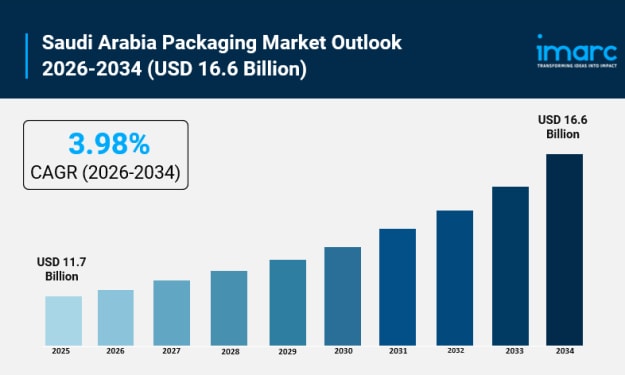
According to IMARC Group's latest research publication, Saudi Arabia packaging market size reached USD 11.7 Billion in 2025. The market is projected to reach USD 16.6 Billion by 2034, exhibiting a growth rate of 3.98% during 2026-2034.
By Jeffrey Wilson7 days ago in Futurism


Comments
There are no comments for this story
Be the first to respond and start the conversation.