
Parker Solar Probe: Unveiling the Fiery Secrets of the Sun’s Corona
Space

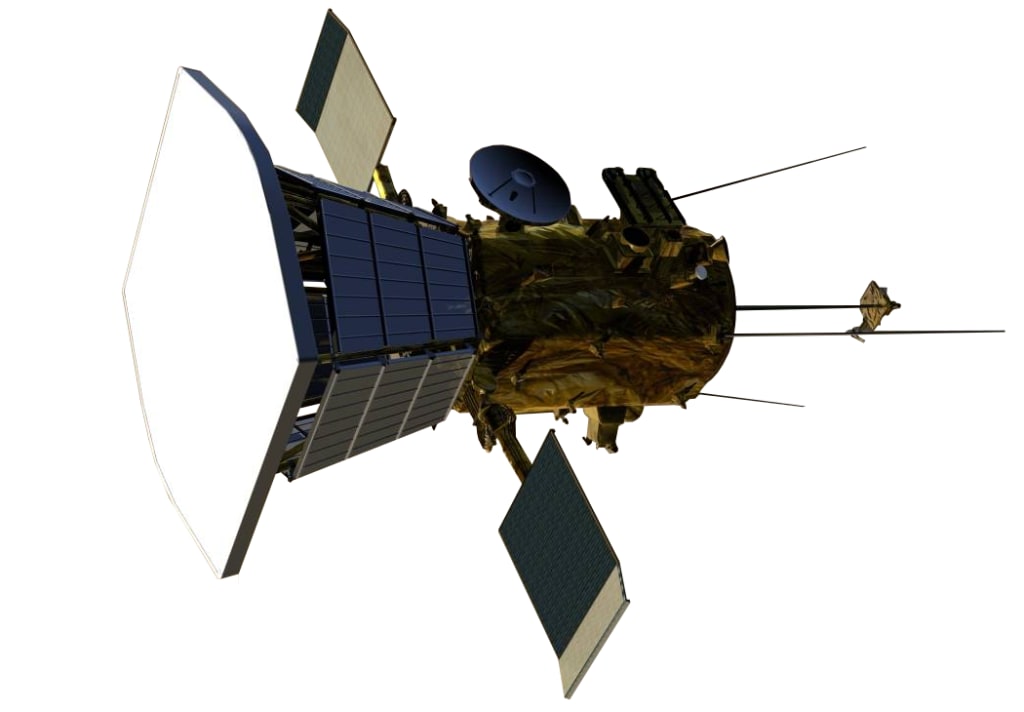
When NASA’s Parker Solar Probe launched in August 2018, it set out on one of the most daring missions in space exploration: to “touch” the Sun. For the first time in human history, a spacecraft would fly directly through the Sun’s outer atmosphere—the corona—collecting data from a region that had always been seen, but never experienced.
Now, several years and more than two dozen close flybys later, Parker has returned with discoveries that are transforming our understanding of how the Sun works. These revelations go beyond academic curiosity—they’re reshaping how we understand space weather, magnetic fields, and even the protection of our planet’s technology from solar storms.
The Great Solar Mystery
For decades, astronomers have been baffled by a paradox: the Sun’s corona is millions of degrees hotter than its surface. Imagine standing next to a campfire where the air around it is hotter than the flames themselves—that’s roughly what happens on the Sun.
The Sun’s visible surface, called the photosphere, is “only” about 5,500°C. But the corona, extending millions of kilometers into space, can reach temperatures over 1,000,000°C. How is this possible? What heats the outer atmosphere to such extremes, and how does it accelerate the solar wind—the stream of charged particles that constantly flows through the solar system?
These were the central mysteries Parker was built to explore.
Flying Into Fire
During each orbit, Parker Solar Probe dives closer to the Sun than any spacecraft before it, shielded by a 12-centimeter-thick carbon-composite heat shield that withstands temperatures over 1,400°C.
In late 2024, Parker made a record-breaking pass just 6.1 million kilometers from the Sun’s surface—closer than Mercury’s orbit—and hit a staggering top speed of 687,000 km/h (430,000 mph). By mid-2025, it had completed its 24th perihelion (closest approach), coming within reach of the solar corona itself.
For the first time ever, humanity’s probe wasn’t just observing the Sun—it was flying through it.
Revealing a Rough, Dynamic Corona
One of Parker’s most striking findings is that the boundary of the corona is not smooth and uniform, as once believed. Instead, it’s full of “spikes” and “valleys,” like a turbulent ocean of plasma and magnetic fields.
This outer layer, known as the Alfvén surface, marks the region where the Sun’s magnetic field can no longer hold on to its charged particles. Beyond this boundary, those particles escape freely into space as the solar wind.
By crossing this layer, Parker provided the first in-situ measurements showing how chaotic and irregular this boundary truly is—reshaping models of how the solar wind begins its journey.
Magnetic Whiplashes: The Switchback Phenomenon
Another major discovery came when Parker detected abrupt reversals in the direction of the magnetic field, known as switchbacks. These magnetic “whiplashes” had been seen before from afar, but Parker’s proximity revealed them in unprecedented detail.
Imagine the magnetic field lines of the Sun as taut strings suddenly snapping and curling back on themselves—these switchbacks twist and redirect the solar wind, influencing its speed and structure.
Initially, scientists thought these reversals originated deep in the solar surface. But Parker’s observations suggest that they may form higher up, within the corona itself, through complex magnetic interactions. This insight helps explain part of how the solar wind gains energy, though the full picture is still unfolding.
The Helicity Barrier: A New Clue to the Corona’s Heat
In mid-2025, Parker detected evidence of a previously theoretical structure called the helicity barrier. This phenomenon occurs when magnetic turbulence in plasma becomes so “twisted” that it prevents energy from dissipating normally.
Instead of simply fading into heat, the magnetic energy gets recycled in complex ways, possibly explaining why the corona remains so intensely hot. It’s as if the Sun’s atmosphere has its own internal recycling system for magnetic chaos—a discovery that could help scientists model other cosmic plasma environments, from stellar winds to black hole accretion disks.
Two Types of Solar Wind
Parker also confirmed that the solar wind isn’t a single uniform flow—it comes in two main varieties:
- Alfvénic wind, rich in magnetic waves and switchbacks,
- Non-Alfvénic wind, smoother and less turbulent.
These winds likely originate from different solar regions. The slower, steadier wind emerges from massive helmet-shaped structures called coronal streamers, while the faster, more chaotic wind seems to burst from coronal holes—openings in the magnetic field where energy and particles escape freely into space.
Understanding these differences is crucial. The solar wind shapes the heliosphere—the vast magnetic bubble surrounding our solar system—and drives geomagnetic storms that can affect Earth’s satellites, navigation systems, and even power grids.
Why It Matters
Beyond its sheer scientific achievement, Parker Solar Probe’s discoveries have real-world implications.
By understanding how the Sun’s magnetic fields twist, break, and accelerate particles, scientists can better predict space weather—the storms of radiation and plasma that can disrupt modern life. The more we know about the Sun’s moods, the better we can protect spacecraft, astronauts, and the technology we depend on every day.
Moreover, the mission’s findings are shaping broader physics. Plasma processes similar to those in the solar corona occur throughout the universe—in the atmospheres of other stars, in nebulae, and in the swirling disks around black holes. Parker’s close-up look at the Sun provides a kind of laboratory for understanding the most common form of matter in the cosmos: plasma.
A Glimpse of the Future
As Parker continues its journey, it will get even closer to the Sun—eventually reaching within 6 million kilometers of the surface. Each flyby brings more surprises, more data, and more insight into the forces that shape our solar system.
The mission reminds us that even after millennia of watching the Sun rise and set, we’re still only beginning to understand the star that gives us life.
And thanks to the daring voyage of Parker Solar Probe, humanity is not just watching the Sun anymore—we’re finally touching it.
About the Creator
Keep reading
More stories from Holianyk Ihor and writers in Futurism and other communities.
New Frontiers in Space: How Microsatellites and CubeSats Are Revolutionizing Space Technology
In the past, sending something into space was a privilege reserved for national space agencies and billion-dollar aerospace companies. But in the last decade, a quiet revolution has been unfolding — one driven by tiny, affordable, and surprisingly powerful satellites known as microsatellites and CubeSats. These small wonders are reshaping everything we know about space exploration, communication, and even climate research.
By Holianyk Ihor3 months ago in Futurism
About Binding Prometheus
I want to start actively advocating on behalf of my own work, and the most valuable part of my canon is, without a doubt, Binding Prometheus, the play I have been working on since 2019 and only finished in 2023 as part of my MA. The play itself is an amalgamation of a million different inspirations. On one end, it evokes the Ancient Greek myth-play, deriving its own title from the earliest extant work of Western drama we have, Aeschylus’s Prometheus Bound. On the other end, it borrows significantly from the sci-fi bulwarks from over the years, namely Mary Shelley’s Frankenstein and Karel Capek’s Rossum’s Universal Robots. The play could be an episode of Black Mirror, I fear. I don’t know. I’ve only ever seen one episode of Black Mirror.
By Steven Christopher McKnight19 days ago in Futurism
Global Brain Computer Interface Market Size & Forecast 2025–2033
Introduction: When the Human Brain Meets the Digital World The idea of controlling machines with the human mind once belonged strictly to science fiction. Today, that idea has become reality through Brain Computer Interface (BCI) technology—a revolutionary innovation that allows direct communication between the brain and external devices without the need for muscle movement or speech.
By Aaina Oberoia day ago in Futurism
How to Succeed at the Benson Directory®
Congratulations and welcome to the Benson Directory® employee #22391! As our newest call handler, you will have the privilege of speaking with dozens of unique and interesting people on a daily basis as well as the opportunity to earn bonuses for high performance. Contained within this handbook you will find a set of ease to follow instructions designed to help you settle in to your new role and begin paving the way to success.
By S. A. Crawford3 days ago in Fiction



Comments
There are no comments for this story
Be the first to respond and start the conversation.