
Navigating the Future: Addressing Challenges and Risks of Flying Cars
Paving the Way for Safer Skies and Sustainable Transportation. Are we ready?
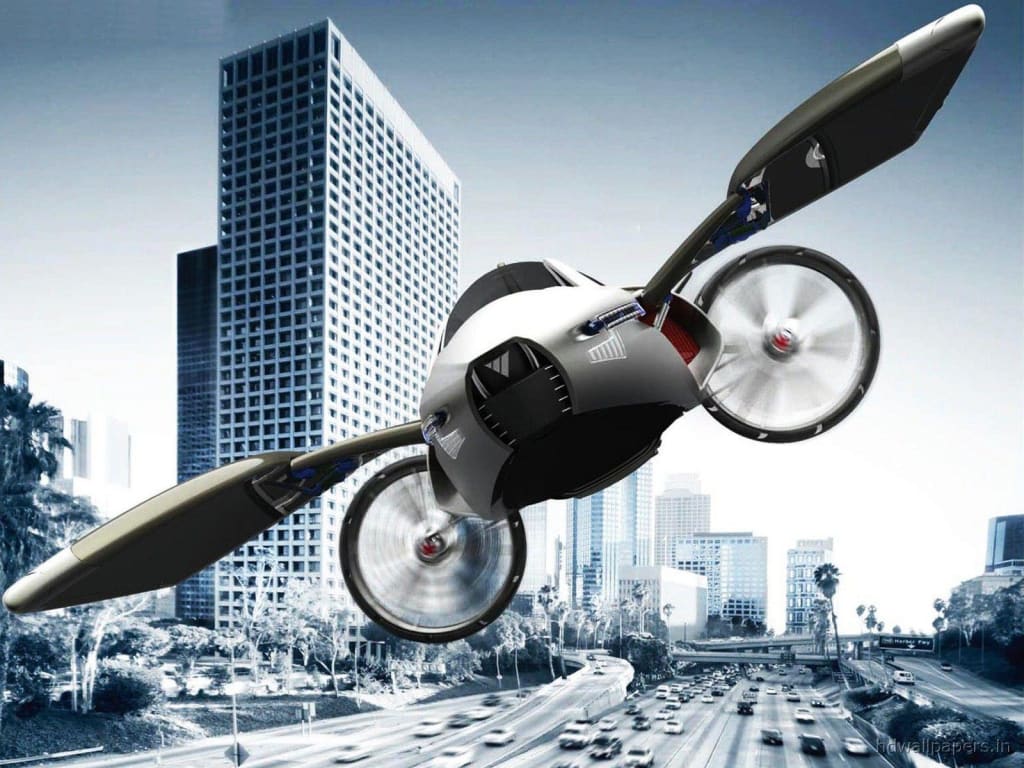
Flying cars, often hailed as the epitome of futuristic transportation, possess the potential to revolutionize travel as we know it. Yet, amid the excitement and anticipation, it is imperative to acknowledge the potential hazards they might bring to the future. The integration of flying cars into our daily lives could present several challenges that necessitate meticulous consideration and thoughtful planning.
One substantial concern revolves around airspace congestion. With an increasing number of flying cars taking flight, managing air traffic could quickly become a formidable undertaking. The question arises: How can we ensure safe navigation in a densely populated aerial environment? This challenge calls for a comprehensive evaluation of the necessary infrastructure and regulations to prevent collisions and guarantee smooth aerial flow.
Another critical aspect that demands attention is pilot training and experience. Operating a flying car necessitates advanced skills and knowledge, and there might be a surge of inexperienced pilots taking to the skies. Addressing this concern requires a diligent implementation of rigorous pilot training and licensing procedures to ensure competent and responsible flying. Additionally, exploring mechanisms to continually assess and enhance pilot proficiency becomes vital.
Safety during emergencies constitutes another paramount consideration. Like any other vehicle, flying cars can encounter technical failures or unforeseen situations. Establishing comprehensive emergency procedures for flying car pilots and determining best practices for mid-air emergency landings and rescues will be instrumental in ensuring safety and preventing potential disasters.
In an increasingly connected world, cybersecurity emerges as a growing concern. As flying cars become more technologically advanced, they could become vulnerable to cyber-attacks. The pressing question is: How can we safeguard flying cars from potential hacking and malicious interference? Implementing robust security measures to prevent unauthorized access to flight controls becomes a crucial priority.
Furthermore, the environmental impact of flying cars cannot be disregarded. While they may alleviate ground traffic congestion, they could also contribute to noise pollution and carbon emissions. Striking a balance between convenience and environmental responsibility poses a significant challenge. How can we minimize the ecological footprint of flying cars and promote sustainable transportation alternatives?
The integration of flying cars carries broader societal and economic implications. Ensuring affordability and accessibility for the masses is paramount to prevent them from becoming a luxury reserved for the privileged few. Addressing these social inequalities is a critical aspect of envisioning a future with widespread equitable access to this transformative technology.
Moreover, incorporating flying cars into existing urban landscapes may necessitate substantial changes in infrastructure and urban planning. Are cities adequately prepared to accommodate aerial transportation? Identifying the infrastructural investments required to facilitate safe takeoffs, landings, and charging stations for flying cars becomes a crucial consideration.
Public acceptance and readiness for flying cars are also key factors that will influence their successful integration. Addressing public concerns related to safety, privacy, and noise pollution from potential landing zones is essential. Developing strategies to garner widespread public support and trust in this new mode of transportation is imperative for its successful implementation.
In conclusion, while flying cars hold the promise of an innovative and efficient transportation system, their integration requires a cautious and meticulously planned approach. Careful examination and proactive measures to address challenges related to airspace congestion, pilot training, safety protocols, cybersecurity, environmental impact, societal implications, infrastructure, and public acceptance are paramount. By tackling these complex questions with foresight and diligence, we can work towards a future where flying cars become a safe, sustainable, and transformative mode of transportation that elevates human mobility to new heights.
Despite the allure of flying cars and their potential to revolutionize transportation, the idea of people zooming through the skies in their vehicles leaves me with a sense of hesitancy.
Now, as we envision this futuristic prospect, I can't help but wonder: Are we truly prepared for the soaring reality of people flying around in cars?
About the Creator
Rose Sanders
Rose Sanders, born May 21, '88 in Harmonyville, passionate violinist, nature lover, hiker, baker, and writer. Grateful for your love and support! 🌸✨
Keep reading
More stories from Rose Sanders and writers in Futurism and other communities.
Digital Twin Technology: Revolutionizing and Unveiling Questions for the Future
Digital twin technology has emerged as a transformative innovation, bridging the physical and digital worlds to create virtual replicas of real-world assets, processes, or systems. With the potential to revolutionize various industries, this cutting-edge technology brings forth both exciting opportunities and thought-provoking questions for its future.
By Rose Sanders2 years ago in Futurism
About Binding Prometheus
I want to start actively advocating on behalf of my own work, and the most valuable part of my canon is, without a doubt, Binding Prometheus, the play I have been working on since 2019 and only finished in 2023 as part of my MA. The play itself is an amalgamation of a million different inspirations. On one end, it evokes the Ancient Greek myth-play, deriving its own title from the earliest extant work of Western drama we have, Aeschylus’s Prometheus Bound. On the other end, it borrows significantly from the sci-fi bulwarks from over the years, namely Mary Shelley’s Frankenstein and Karel Capek’s Rossum’s Universal Robots. The play could be an episode of Black Mirror, I fear. I don’t know. I’ve only ever seen one episode of Black Mirror.
By Steven Christopher McKnight17 days ago in Futurism



Comments
There are no comments for this story
Be the first to respond and start the conversation.