
Mind-Blowing Inventions You Probably Never Heard Of
Revolutionary Tech You’ve Never Heard Of—But Definitely Should.
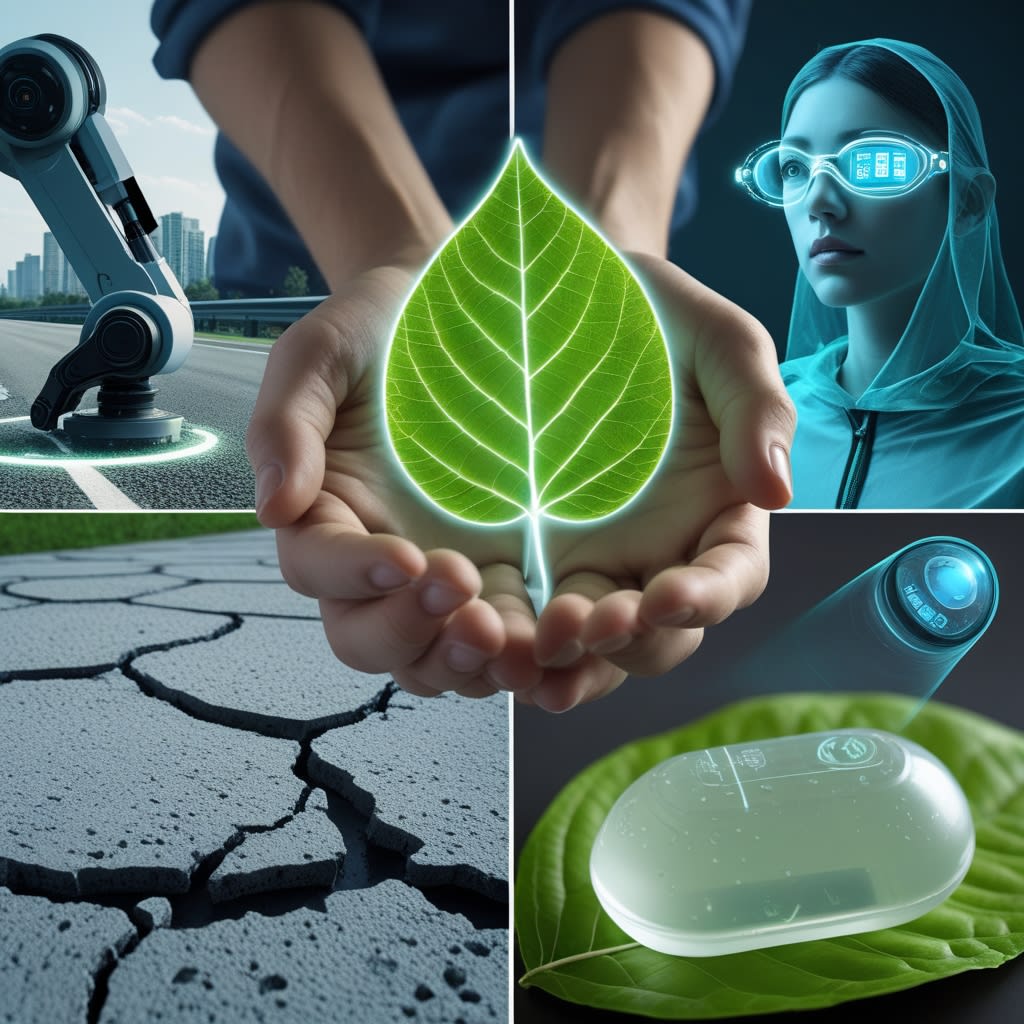
Introduction: The Hidden World of Unbelievable Innovations
In a world obsessed with the latest iPhones, electric cars, and AI chatbots, countless revolutionary inventions slip through the cracks of public awareness. While tech giants dominate headlines, scientists, engineers, and independent inventors are quietly reshaping reality with breakthroughs that sound like science fiction.
From self-repairing roads to edible water bottles, these inventions aren’t just cool—they’re game-changers for sustainability, medicine, and daily life. Yet, most people have no idea they exist.
In this 2,000+ word deep dive, we’ll uncover the most jaw-dropping, futuristic inventions you’ve likely never heard of. We’ll explore how they work, why they matter, and where they’re being used today.
Buckle up—your mind is about to be blown.
1. Self-Healing Concrete: The Future of Unbreakable Infrastructure
The Problem: Crumbling Roads & Bridges
Concrete is the second most-used material on Earth (after water), but it cracks over time, leading to costly repairs and dangerous structural failures.
The Invention: Bacteria-Infused Concrete
Dutch microbiologist Hendrik Jonkers created BioConcrete, a revolutionary material that heals itself using limestone-producing bacteria.
How It Works:
Embedded Bacillus pseudofirmus bacteria lie dormant in the concrete.
When water enters a crack, the bacteria awaken, feed on calcium lactate, and excrete limestone, sealing the gap.
The process can repair cracks up to 0.8mm wide—extending a structure’s lifespan by decades.
Why It’s a Big Deal:
✅ Saves billions in maintenance costs
✅ Reduces CO₂ emissions (cement production is a major polluter)
✅ Makes buildings and bridges safer long-term
Real-World Use:
Netherlands tested it on sidewalks with 100% success
UK and Japan are implementing it in underground tunnels
2. The Waterless Washing Machine: A Laundry Revolution
The Problem: Wasting Water
Traditional washing machines use 15–40 gallons per load, contributing to global water shortages.
The Invention: Xeros’ Polymer Bead Washer
A UK-based company developed a machine that cleans clothes with nylon polymer beads instead of water.
How It Works:
Special beads attract and absorb dirt
Uses 80% less water (just a cup per cycle)
No detergent needed—just the beads, which last hundreds of washes
Why It’s a Big Deal:
✅ Saves millions of gallons of water annually
✅ Reduces chemical pollution from detergents
✅ Gentler on fabrics, preventing wear and tear
Real-World Use:
Hotels & laundromats in the US and Europe already use it
Home versions expected by 2025
3. The Artificial Leaf: Clean Energy from Sunlight
The Problem: Fossil Fuel Dependency
Billions still rely on coal and oil, worsening climate change.
The Invention: A Device That Mimics Photosynthesis
Harvard scientist Daniel Nocera created an "artificial leaf" that splits water into hydrogen fuel using sunlight.
How It Works:
Made of silicon, nickel, and cobalt
When placed in water under sunlight, it produces hydrogen gas (a clean fuel)
10x more efficient than natural photosynthesis
Why It’s a Big Deal:
✅ Provides renewable energy to off-grid areas
✅ Zero emissions—just water vapor as a byproduct
✅ Cheap and scalable for developing nations
Real-World Use:
Pilot projects in India powering rural villages
Could replace diesel generators worldwide
4. Smart Contact Lenses: Augmented Reality in Your Eyes
The Problem: Bulky AR Glasses
Devices like Google Glass failed because they were awkward and intrusive.
The Invention: AR-Enabled Contact Lenses
Companies like Mojo Vision and Samsung are developing transparent, screen-equipped lenses.
How It Works:
Micro-LEDs project images directly onto the retina
Eye-tracking & voice controls for navigation
Can display text messages, maps, or health stats
Why It’s a Big Deal:
✅ No more clunky headsets—just normal contacts
✅ Helps visually impaired with real-time guidance
✅ Potential for instant language translation
Real-World Use:
FDA-approved medical trials underway
Expected release: 2026–2028
5. Edible Water Bottles: The End of Plastic Waste
The Problem: Plastic Pollution
Over 1 million plastic bottles are sold every minute, most ending up in landfills or oceans.
The Invention: Ooho! Seaweed-Based Water Pods
A London startup created biodegradable, edible water containers.
How It Works:
Made from seaweed extract (safe to eat)
Encases water in a gel-like membrane
Decomposes in 6 weeks if not consumed
Why It’s a Big Deal:
✅ Zero plastic waste
✅ Cheaper than plastic production
✅ Can be flavored (lemon, mint, etc.)
Real-World Use:
Sold at marathons & festivals in Europe
Major beverage companies exploring partnerships
6. Invisibility Cloaks: No Longer Just Sci-Fi
The Problem: Limitations in Optics
True invisibility was long considered physically impossible.
The Invention: Metamaterial Cloaking
UC Berkeley scientists developed ultra-thin invisibility shields.
How It Works:
Uses nanostructured materials to bend light around objects
Currently works on microscopic scales, but scaling up is possible
Why It’s a Big Deal:
✅ Military stealth applications
✅ Medical uses (e.g., hiding tumors during surgery)
Real-World Use:
Lab testing phase—full-scale cloaking within 10–15 years
7. Brain-Controlled Prosthetics: Thought-Powered Limbs
The Problem: Limited Mobility for Amputees
Traditional prosthetics are clunky and hard to control.
The Invention: AI-Powered Bionic Limbs
Companies like Open Bionics create mind-controlled robotic arms & legs.
How It Works:
Neural sensors detect muscle signals
Machine learning translates thoughts into movement
Some even provide sensory feedback
Why It’s a Big Deal:
✅ Near-natural movement
✅ Restores independence for disabled users
Real-World Use:
Already helping thousands of amputees worldwide
Conclusion: The Future Is Here (You Just Didn’t Know It)
These inventions prove that innovation isn’t always flashy—sometimes, the most groundbreaking ideas fly under the radar. Yet, they have the power to reshape industries, save lives, and protect the planet.
Which invention amazed you the most? Let us know in the comments!
Want more mind-blowing tech? Follow [Focal Media] for the latest updates!
About the Creator
Animal Wound Care Market Growth: Bioactive Dressings, Veterinary Clinics Expansion & Forecast to 2033
Rising pet humanization, increasing veterinary surgical procedures, and advancements in advanced wound care technologies are driving animal wound care demand, supported by favorable government animal welfare policies, a surge in pet insurance adoption, and the expanding global livestock industry. According to IMARC Group’s latest data, the global animal wound care market size reached USD 1.3 Billion in 2024. Looking forward, IMARC Group expects the market to reach USD 2.1 Billion by 2033, exhibiting a growth rate (CAGR) of 5.16% during 2025-2033.
By Andrew Sullivan4 days ago in Futurism
According to neuroscientists, this typical nightly ritual significantly enhances sleep.
It has been demonstrated that reading a book in bed improves sleep quality more than immediately turning out the lights. That straightforward practice simultaneously activates the systems of memory, language, and emotion, and that consistent concentration can facilitate the transition to sleep.
By Francis Dami6 days ago in Futurism


Comments
There are no comments for this story
Be the first to respond and start the conversation.